


Unanswered Prayer
June 18, 2025What are we to make of prayers that seem to bounce off the ceiling?
Do you ever feel like your prayers aren’t being answered?
You pray and you pray and you pray for something, and nothing happens? At least nothing obvious or visible. Sure, we know God works according to his own timeline, and we acknowledge with the prophet Isaiah (55:9) that God’s ways and thoughts are as high above ours as the heavens are above the earth. Who are we to question God? Yet when it seems like our earnest prayers not only aren’t producing “wonderful results” (in apparent contradiction of James 5:16) but aren’t producing any results at all, sometimes you have to wonder.
I’m tempted to think this way pretty much every day when I scroll through the headlines (as is my unfortunate morning habit) or read grantee reports from particularly tough regions (like some of the ones mentioned below). Millions of Christians around the world have been praying for an end to the war in Ukraine, and yet there is no end in sight. Christians and Jews have been praying for millennia—at least since David penned Psalm 122—for the peace of Jerusalem, and yet war in and around Israel persists.
Many of us have friends or family members who are suffering from chronic illness or job losses or marital difficulties, and we’ve been praying and praying for healing and comfort and reconciliation, all seemingly to no effect. Is God not listening? Are we not righteous enough for our prayers to availeth much? Or must we just chalk this up to not understanding God’s plans?
Scripture is full of examples of righteous people whose prayers seemed to be bouncing off the ceiling. Or the tent roof, in some cases. Perhaps the most obvious is Job, who lamented in the midst of his suffering, “I cry to you, O God, but you do not answer” (Job 30:20). Hannah was so tormented by God’s silence in response to her prayers for a son that she was “in deep anguish, crying bitterly” (1 Sam. 1:10)—so much so that old Eli the priest, projecting a bit here perhaps, thought she was drunk. David’s prophetic cry of distress and confusion was so poignant that Jesus himself echoed it on the cross—“My God, my God, why have you forsaken me?” (Psalm 22:1; Matt. 27:46).
There are others. The prophet Elijah, feeling isolated and unheard, cried, “I have had enough, Lord. Take my life.” Jeremiah, known as the “weeping prophet” because of how frequently he lamented God’s apparent inaction, said, “Even when I cry out, ‘Violence!’ I get no justice” (Jer. 20:8). Habakkuk opens his book with a similar cry: “How long, O Lord, must I call for help? But you do not listen! (Hab. 1:2). In the New Testament, the apostle Paul repeatedly begged God to remove the “thorn in my flesh” (2 Cor. 12:7), but it didn’t happen. Paul was stuck with the humbling ailment, whatever it was.
Whole books have been written on this topic of unanswered prayers (not to mention the Country song by Garth Brooks). Tim Keller once wrote that God’s response to every prayer is, “When a child of mine makes a request, I always give that person what he or she would have asked for if they knew everything I know.” (That’s more or less Garth Brooks’s take as well.) And fair enough—none of us pretends to know better than God what we truly need. But we know what we want, or at least what we think we want, and we for sure know what we’ve been asking for. Are we really supposed to find comfort in the knowledge that God knows better than us?
Well, yes.
I love what Paul says in the very next sentence after describing his unanswered prayers to God: “Each time he said, ‘My grace is all you need. My power works best in weakness.’” There are almost always ways to explain unanswered prayers in hindsight. Job was ultimately restored. Hannah got her son. David became Israel’s greatest king, a man after God’s own heart. Elijah was comforted in the wilderness. Jeremiah and Habakkuk both went on to prophesy hope and restoration for Israel. Paul learned to rely on God’s grace. It’s fair to say none of their fervent prayers actually went unanswered; it just seemed like it for a time.
That is no doubt true today as well. I don’t pretend to know why God is allowing the terrible injustice to persist in Ukraine, or why he didn’t protect the Christians killed in Nigeria this week, or why he hasn’t restored a former colleague’s health or my friend’s marriage. I do know I can trust in his promise: “My grace is all you need.” And so I cry out with the hurting father from Mark 9:24, “I do believe, but help me overcome my unbelief!” Lord, help us to believe in your promises, find peace in your grace, and continue to pray even when your immediate response is different from what our limited understanding demands.
Here’s what’s happening.
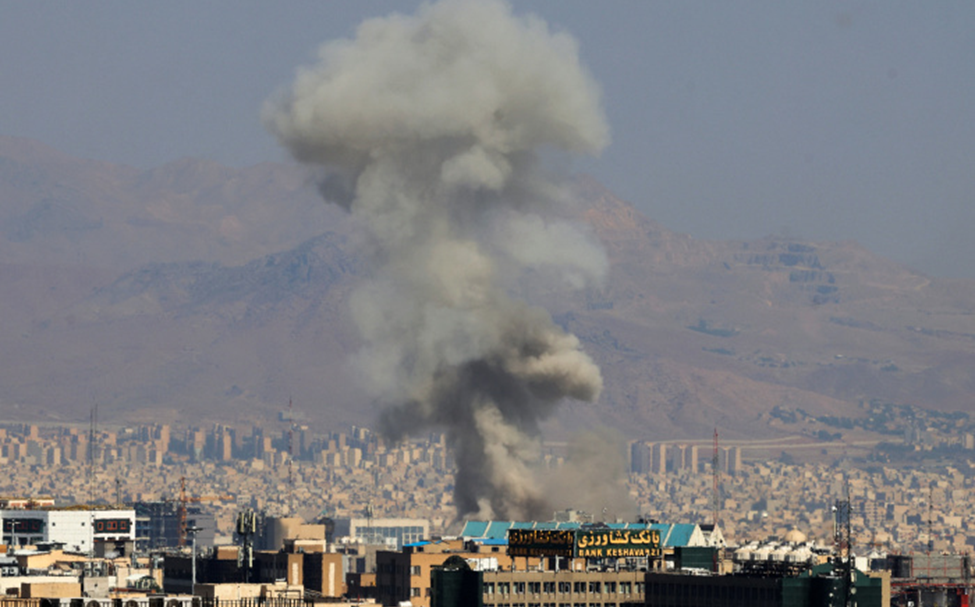
War in Iran
Well before dawn on Friday, June 13, 2025, Israel launched “Operation Rising Lion,” a large-scale military offensive targeting Iran’s nuclear facilities, missile infrastructure, military command centers, and energy sites. According to Israeli prime minister Benjamin Netanyahu, the strikes were intended “to roll back the Iranian threat to Israel’s very survival.” He said that if not stopped, Iran “could produce a nuclear weapon in less than a year.” Political analysts all over the world are now arguing about whether the Israeli attacks are justified and whether the missile exchanges will lead to a larger regional war. But I was most interested to hear from our partners who operate inside Iran. One of them, Lazarus Yeghnazar, founder and president of Transform Iran (formerly called 222 Ministries), wrote in an update this week, “Once it became clear what was happening, the overwhelming response from Iranians was one of celebration. Videos of Iranians raising glasses to the attacks, throwing parties as they watched, and sharing messages of thanks to Israel went viral.” I remember a meeting at Tyndale with Lazarus several years ago, when he told me he believed the brutal Islamic regime in Tehran would not last much longer. “The mullahs will fall,” he said, “but there will be much bloodshed and suffering first.” No one knows whether the ongoing strikes from Israel will lead to regime change in Iran. But one thing is clear: the Iranian people need our prayers. Lazarus’s email continued, “Since June 13, the realities of war have hit, and there is certainly mixed feelings in Iran. Food and gas are rationed. Those who live near Israel’s targets are shaken by the constant sounds of explosions. Houses are being burnt. There is extreme sadness for the loss of life.” What’s more, he concluded, “the sad reality is that our fellow brothers and sisters in Iran will suffer more than anyone else as the government takes out their frustrations on them.” Please pray for the Lord’s will to be done in Iran, for lasting peace, for divine mercy toward those who are suffering, and for the lost to find Jesus.
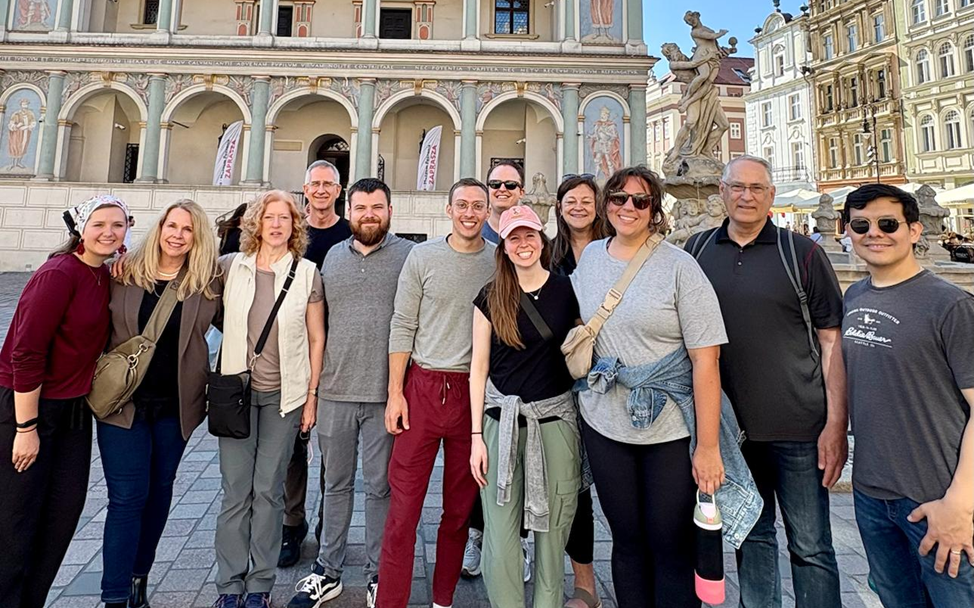
Tyndale in Poland
This week the first of two teams of Tyndale employees are on the ground in northern Poland, working with THF Partner Evangelical Poland to transform a decrepit Communist-era conference center into a Christian camp and training retreat. Twelve Tyndale people departed last Friday, arrived on Saturday, and have been scraping, sanding, painting, hammering, shoveling, and more as they work alongside our Polish friends and some American missionaries. The second team will depart for Poland this Friday and will overlap with the first group for several hours on Saturday afternoon. Andrew Gorski, president of Evangelical Poland, hopes to have the retreat center operational by mid-July, so the efforts of the Tyndale teams are timely. Evangelical Poland was started in 2018 as an ecumenical movement intent on strengthening evangelical witness in the country. You could think of it as a Polish version of the National Association of Evangelicals, although since evangelicalism makes up such a tiny percentage of the Polish population, Evangelical Poland functions more like a church-planting and gospel-mobilization movement. Training and equipping pastors and other leaders is a big part of what Andrew and his colleagues do, and this newly purchased facility, named Lake EPIC (Evangelical Poland Impact Center), will go a long way toward helping them achieve their ministry goals. Tyndale’s physical and financial assistance will help Lake EPIC become operational just in time. Please pray for safety and health for the team members and that Tyndale’s efforts will be a genuine help and encouragement to our partners.
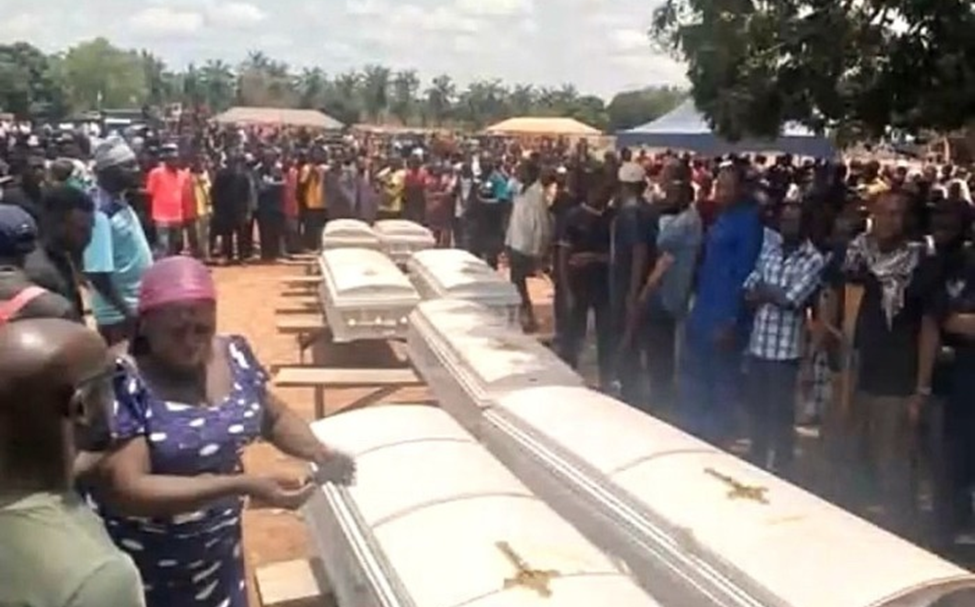
Another Brutal Attack in Nigeria
In the early hours of Saturday, June 14, 2025, armed Fulani militants attacked a community of internally displaced Christian refugees in Yelwata, Nigeria. Shouting “Allahu Akhbar,” they forced their way into a Catholic-run shelter, used fuel to set fires, and then slaughtered victims with firearms and machetes as they tried to escape the flames. Others, including whole families, were murdered as they slept. Initial reports estimated 100 dead, but later investigation by the Diocese of Makurdi and other sources confirmed that at least 200 Christians had been killed—making this latest atrocity one of the worst in a region long plagued with religiously motivated violence against Christians. The assault follows a tragic pattern of escalating violence by extremist herdsmen against rural Christian communities in Nigeria’s central region. Nigeria has for years been listed as the world’s most dangerous country for Christians by the watchdog group International Christian Concern. This week’s attack is a reminder that we need to pray for our brothers and sisters there. Several THF partners live and work in Nigeria, including a local publisher who once told me about sending his wife and daughters to a hiding place in the hills to escape the predations of Boko Haram terrorists. We know only Jesus can change this terrible trend in Nigeria—let’s pray fervently for relief and justice for Nigerian believers.

Redeeming Local Arts
In a recent podcast recorded for the Lausanne Movement, Brazilian scholar and missionary Héber Negrão talked about the strategic missional importance of utilizing local art forms for Kingdom witness. Héber’s area of expertise is called “ethnodoxology”—a mission field that seeks to help believers worship Christ through their own cultural and artistic expressions. If you’ve ever been to a church in a different country and heard the congregation singing Western hymns, you’ve probably experienced the difference it makes when they start singing their own local praise and worship songs. Tyndale House Foundation has been a supporter of ethnodoxology and the somewhat broader field of ethnomusicology for years. Since 2013, we’ve partnered with an organization in Indonesia (name withheld due to security issues) that is working with local artists to bring indigenous music and dance back into the culture, where it has been long discouraged by the Muslim rulers. In Benin, Burkina Faso, and Nigeria, we’ve been working with Daniel Dama and his team of local artists at Africa Sings since the organization’s founding in 2018. But our ethnomusicology roots go back even farther, to when THF board chair Becky Wilson became a pop sensation in Indonesia in the 1990s for singing Sundanese songs on TV—the first white woman ever to honor local culture in such a way. I encourage you to listen to the Lausanne podcast and then pray for the people Héber and many others, including current THF partners, are ministering to with their own indigenous artistic expressions.
That’s it for this week’s briefing. Please send any questions, comments, and birthday greetings (that’s right, for anyone who actually reads this, it’s my birthday—mark your calendars for next year) to [email protected]. I send out this email resource most weeks primarily for a Tyndale audience, but you should feel free to share it with others who may be interested, inside or outside of Tyndale. Thanks for continuing to pray for and support our partners around the world.
Jeremy Taylor
President | Tyndale House Foundation
The THF Weekly Briefing provides information about significant events happening in the wide universe of Tyndale House Foundation partner organizations as well as an occasional peek behind the scenes of THF’s operations. It is available to anyone at Tyndale who’s interested in learning more about the Foundation side of the organization. Was this email forwarded to you? Contact [email protected] to be added to (or removed from) the distribution list.