

End-Times Mission?
September 4, 2025What does it mean to fulfill the Great Commission?
“We believe it’s our job to make Jesus come back.”
I have heard variations of that statement from multiple leaders of ministry organizations through the years. You probably have too. Another common refrain in global mission these days is “completing the Great Commission in our generation.” I have seen this phrase in the promotional materials of Bible translation organizations, evangelistic organizations, and humanitarian relief organizations, not to mention in the pages of some Tyndale books.
When you look around at what’s happening in the world today—including the kinds of things I’m reporting on below—it’s not hard to see why some people believe the end could be near. In Matthew 24, Jesus described horrific events that would take place before his return: “You will hear of wars and threats of war. . . . Nation will go to war against nation, and kingdom against kingdom. There will be famines and earthquakes in many parts of the world. But all this is only the first of the birth pains, with more to come.”
Since Jesus said those words two thousand years ago, there have been many “birth pains,” but does it kind of seem like things are getting worse and worse, and maybe even accelerating? When you think about what’s happening in Ukraine and Afghanistan and Congo and elsewhere, doesn’t it seem like we must be well past “the first of the birth pains” at this point? Christians have been praying, “Come, Lord Jesus” ever since the Ascension! Surely one of these days, that prayer is going to be answered.
What does all this have to do with “fulfilling the Great Commission”? Recall that in Matthew 24:14, Jesus said, “The Good News about the Kingdom will be preached throughout the whole world, so that all nations will hear it; and then the end will come.” In a parallel passage in Mark 13, Jesus similarly emphasizes the importance of the gospel being spread throughout the world as a sign of the eschaton: “The Good News must first be preached to all nations.”
So it makes sense that Christian organizations intent on translating the Bible into all the languages of the world and proclaiming the gospel in all the nations of the world and planting churches for every unreached people group in the world must be laboring in order to fulfil the requirements, clearing the way for Jesus’ return. It’s biblical. Right?
Maybe not.
I react pretty negatively when I hear ministry leaders talking about “completing the Great Commission” and “making it possible for Jesus to return.” For one thing, it’s not as is God is sitting around, frustrated that his people haven’t accomplished the necessary tasks that will allow him to bring about the end of history. We certainly have work to do while we wait for the final fulfillment of God’s promises, but although God invites us to participate in the work of making disciples, he doesn’t need us to accomplish his purposes.
For another thing, the Great Commission is part of a much larger biblical mandate. Chris Wright, one of my missiological heroes, writes in his magnum opus The Mission of God that God’s mission includes much more than evangelism alone and must be understood in the context of the whole biblical narrative. He writes, “The Great Commission is an expanding and self-replicating task, not a ticking clock for the end times.”
Lesslie Newbigin, another prominent missiologist, warns against a “managerial” view of mission that assumes the church can measure and deliver the Kingdom’s arrival. In his book The Open Secret, he criticizes the view that the Great Commission is a human-managed project, writing, “It is wholly in God’s hands. It is not a matter for calculation or speculation, or techniques for reaching unreached peoples.”
This is not to say that as Christians, we shouldn’t be working hard to ensure that the gospel is indeed proclaimed everywhere on earth, or to somehow suggest that we shouldn’t be doing our very best to follow Christ’s command to make disciples of all the nations. But I don’t believe the Great Commission is something we should be trying to accomplish. Rather, I view the Great Commission as something we engage. I like what David Bosch says in his book Transforming Mission about our task as Christians today: mission is not primarily about triggering the end times but about faithfully embodying the Kingdom in every era.
How do we do that? Bosch writes, “If the church is to impart to the world a message of hope and love, of faith, justice, and peace, something of this should become visible, audible, and tangible in the church itself.” In other words, our task is not to complete the Great Commission but to live in such a way that clearly communicates the Good News in service of the Great Commission. We have been called to make disciples, not count down the days and hours till Christ’s return. At Tyndale, our mission is meeting the spiritual needs of people, not collecting conversions or ticking off items on a divine to-do list clearing the way for Jesus to gloriously transcend the boundary between heaven and earth.
Yes, there are terrible things happening in the world. Yes, these are a kind of birth pain of the new era. Yes, we should look forward to the day when Christ will return and bring an end to all suffering and tears and death. But no, it’s not our job to “make him come back.” It’s our job to make him known—and to make his Kingdom visible in the way live, love, give, and serve—until the day he does.
Here’s what’s happening.
Devastating Earthquake in Afghanistan
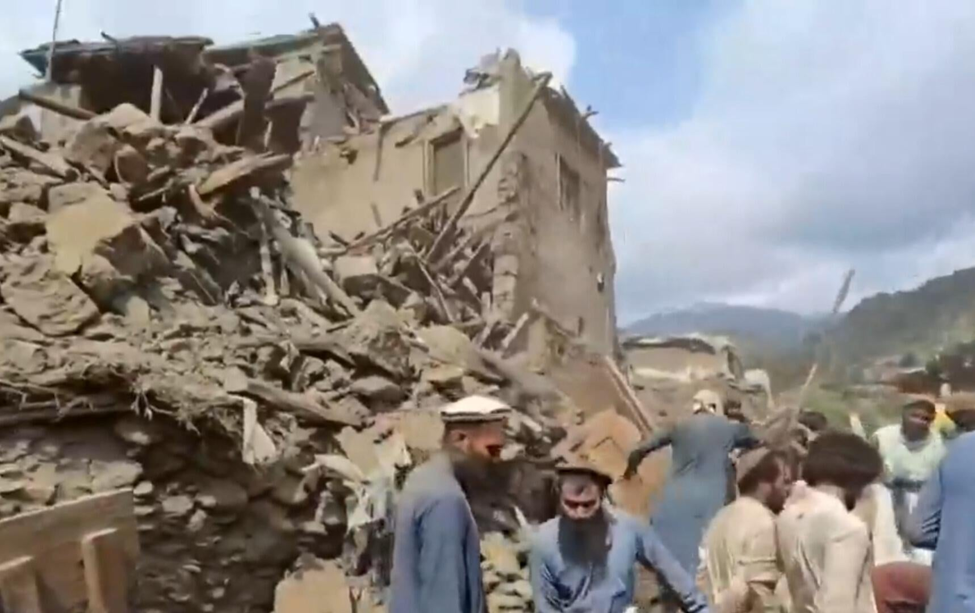
At 11:47 p.m. local time on Sunday, August 31, an earthquake struck eastern Afghanistan, near the Pakistani border. Compared to some of the stronger earthquakes on record, this magnitude 6.0 event wasn’t all that severe, but because the quake’s epicenter was relatively shallow (less than 15 km below the surface), it proved devastating for the mountain villages in the vicinity. The death toll is currently above 1,400 and will likely continue to rise. More than 3,000 people have been injured, and many thousands of homes have been destroyed or significantly damaged, meaning tens of thousands of Afghanis have been displaced. Hundreds are still trapped beneath the rubble, but rescue efforts have been hampered by the remote, mountainous terrain along with roads blocked by bad weather in the region. Add to all of this the fact that Afghanistan was already suffering from chronic instability and humanitarian shortages under Taliban rule, and this earthquake couldn’t have happened at a worse time in a worse place. Very often, it’s the Christian organizations that leap into action to provide relief in the aftermath of a catastrophe like this. But in Afghanistan, it’s difficult if not impossible for overtly Christian organizations to operate at all, and the Taliban has imposed severe restrictions on even secular NGOs in the country, for example banning any organization that employs women. In addition, since the Taliban took over in 2021, most countries have reduced or eliminated their aid to Afghanistan. It’s proving very difficult for international aid organizations to provide relief, so local residents are doing whatever they can to help. It’s a terrible situation without a clear solution in the short term. Please pray for God’s mercy for the people of Afghanistan, and pray that the light of Christ will shine in the darkness there as the country recovers from tragedy.
Protests in Indonesia
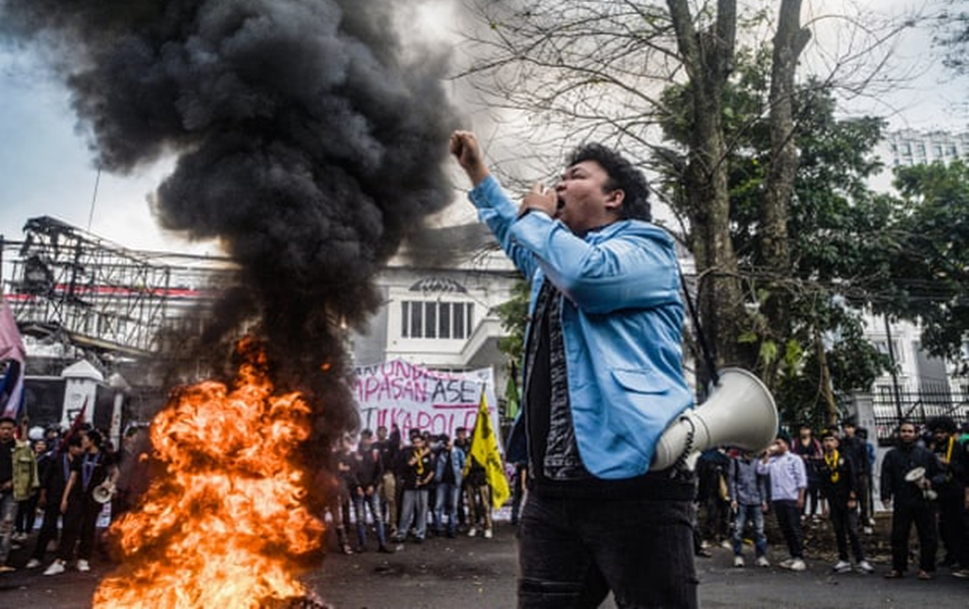
On August 25, the Indonesian parliament approved a controversial housing allowance for MPs worth nearly ten times Jakarta’s minimum wage. The decision, added to longstanding frustrations over corruption, economic inequality, and recent allegations of police brutality, sparked massive protests in Jakarta and several other major cities around the country. Thousands of people gathered outside the parliament building in the capital, while demonstrators elsewhere set some official buildings and police posts on fire. At least eight people have been killed in the chaos, and hundreds more have been injured. The Indonesian government has arrested over a thousand people as President Prabowo Subianto ordered security forces to take firm action against violent demonstrators. THF partners in Indonesia are not yet reporting any direct negative effects on their ministry operations, but in a climate where Christian NGOs already have to carefully navigate strict government oversight, heightened tensions could increase the risk of scrutiny or restrictions. Please pray for peace to be restored and for our partners in Indonesia to discern how best to meet the urgent physical and spiritual needs of the people in their communities.
Report from the Warzone
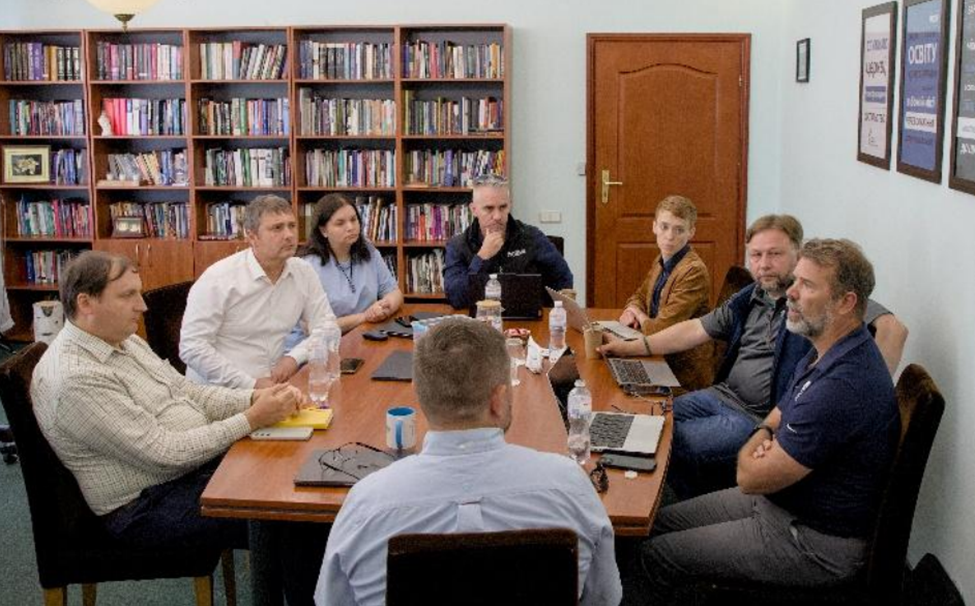
THF board member Evan Hunter, along with a team of colleagues from THF partner organization ScholarLeaders International, has been in Ukraine for the past week, visiting seminaries and strategizing with leaders about the future of theological education in the country. One particular highlight was celebrating the opening of the new theological library at Tavriski Christian Institute, which also operates a publishing house that THF has supported. TCI had to rebuild its library from scratch after the campus in Kherson was destroyed by the Russian army early in the war. If you’ve been following news out of Ukraine, you may be aware that Russian drone attacks have ramped up significantly in the last couple of weeks, including while Evan has been there. He wrote in an email on Sunday, “Indicative of the challenges faced by all Ukrainians during this time, our team endured one of the worst nights of shelling in Kyiv since the war began. Yet even so, our Ukrainian partners continue with a mission that remains unchanged and continue to do amazing work for the church and the people of Ukraine and beyond.” Please continue to pray for our partners in Ukraine and for an end to the war. Pray also for safety for Evan and his colleagues as they travel home.
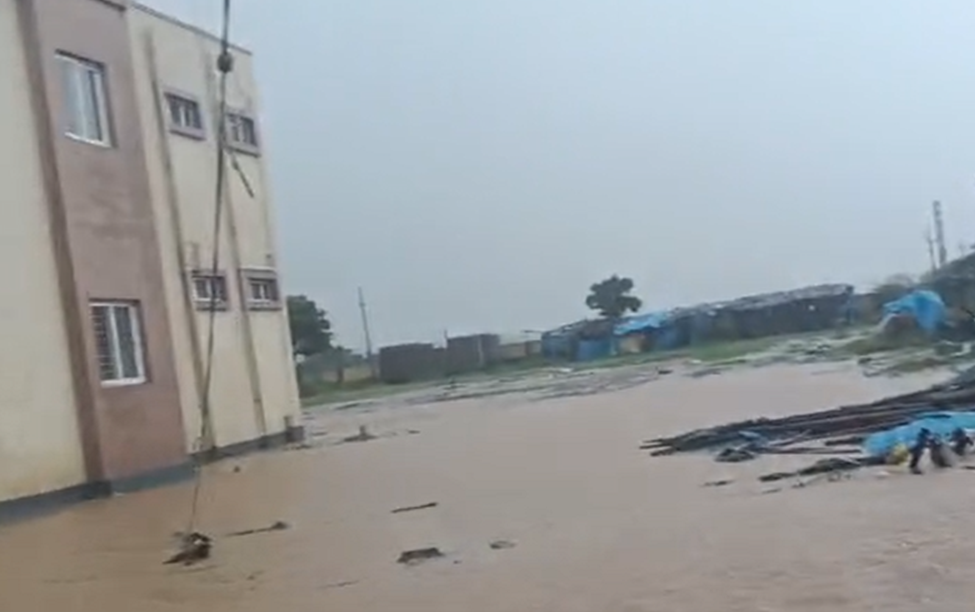
Flooding in India
The John Foundation is a THF partner in India that operates a broad ministry across multiple campuses providing humanitarian relief, vocational training for women, education for children, and training for pastors and church planters. Last Wednesday, August 27, founder and director Saji John wrote from India, “We are experiencing heavy rains and flooding near our campus in Ramanthpur. Right now the campus is fully underwater and boundary walls have collapsed this morning. Appreciate your prayers for the safety of the children and staff on the campus.” He sent a couple of videos showing fast-moving water flowing past campus buildings. It looks like the entire facility is in the middle of a huge river. I can’t easily post Saji’s videos, but if you search “India flooding” on YouTube, you’ll quickly get the picture of what’s happening in Ramanthpur. Saji reports that a construction crew consisting of 25 families was staying on the campus and doing some renovation work, and they have lost everything in the flood. Some exterior walls of buildings have collapsed, as has part of the border wall surrounding the campus. In addition to addressing the damage on the John Foundation campus, Saji and his fellow leaders are also looking for ways to help meet needs in nearby villages. Please pray for our partners in India as this difficult situation continues.
That’s it for this week’s briefing. Please send any questions, comments, and refutations of end-times predictions to [email protected]. Do you enjoy reading the THF Weekly Briefing? Make sure you’re subscribed to the email distribution list to get access to this resource the same day it’s published each week, and feel free to share it with others who may be interested, inside or outside of Tyndale. Thanks for continuing to pray for and support our partners around the world.
Jeremy Taylor
President | Tyndale House Foundation
The THF Weekly Briefing provides information about significant events happening in the wide universe of Tyndale House Foundation partner organizations as well as an occasional peek behind the scenes of THF’s operations. It is available to anyone who’s interested in learning more about Tyndale’s philanthropic commitments, partners, and operations. Contact [email protected] to be added to (or removed from) the distribution list.