


A Question of Confidence
September 22, 2025Where should our true confidence lie?
CEOs aren’t as confident about the economy as they were a few months ago.
According to Chief Executive’s September CEO Confidence Index, only 46 percent of CEOs surveyed said they expect the economic outlook to improve in the coming year, while 29 percent expect a recession in the next six months. On a scale of 1 to 10, CEOs on average rate current business conditions in the US at 5.1, which doesn’t seem great, but it’s an especially dim assessment when you consider that the average was close to 7 as recently as January of this year.
This data raises three questions for me. First, why does anyone care what CEOs think about the economy? Second, what are these CEOs basing their confidence, or lack of confidence, on? And third, what should they be basing their confidence on? And I suppose a useful fourth question would be, what should we be basing our confidence on?
The answer to question one is pretty straightforward. CEOs make all kinds of business decisions depending on whether they think economic conditions are improving or deteriorating. And the decisions CEOs make tend to have a big impact on their employees, their customers, their stockholders, and their stakeholders. Since all these people have families to support and buying habits to continue and bills to pay and decisions to make about how they spend whatever discretionary money they may have, it’s not an exaggeration to say that CEO decisions drive the economy as much as they react to it, sometimes at the same time. So yes, people who pay attention to market trends and economic forecasts care what CEOs think.
So why have CEOs have lost confidence in the US economy over the last eight months? What were they basing their rosier outlook on back in January that is no longer giving them positive vibes?
If there’s a one-word answer, I think it would be stability. When markets, governments, and consumer bases seem relatively stable, CEOs and other economic forecasters are going to be optimistic about the future. But when markets are volatile, when governments are unpredictable, when consumer spending is all over the place, pessimism is going to rule the day, and CEOs are going to respond to confidence polls with a 5.1 rather than a 7. It makes sense.
What about the third question? Is stability what CEOs should be basing their confidence or lack of confidence on?
I think the answer is probably yes. CEOs are people who have been elevated to senior leadership positions in large part because of their ability to make decisions that are good for their businesses based on what’s happening around them. Loss of confidence in economic conditions does not mean smart CEOs are going to make bad decisions; they’re just going to make different decisions than they would if they felt like things were going in a good direction overall. Maybe they’ll be slower to hire new employees, or maybe they’ll be a little more risk-averse in their growth strategies. These kinds of trends can affect markets, which is why pollsters ask CEOs how they’re feeling about market stability in the first place. But I think I want business leaders making business decisions based on business metrics.
But what about the rest of us? Where should we be looking for confidence? What should we be basing our decisions on?
Maybe the most well-known passage in the Bible about where our confidence should and should not come from is Psalm 121, which for poetic reasons I feel like needs to be quote from the KJV. The psalm begins, “I will lift up mine eyes unto the hills, from whence cometh my help. My help cometh from the Lord, which made heaven and earth.” Rogers and Hammerstein botched the meaning of the word whence in The Sound of Music; the psalmist is not saying his help comes from the hills. Just the opposite—he’s saying his help doesn’t come from the mountains but from the Lord who made the mountains. The rest of the psalm backs this up with reason after reason that we should find our confidence in God.
The rest of the book of Psalms is filled with similar exhortations to find confidence in the Lord. Psalm 16:1—“Keep me safe, O God, for I have come to you for refuge.” Psalm 18:2—“The Lord is my rock, my fortress, and my savior; my God is my rock, in whom I find protection.” Psalm 27:1—“The Lord is my light and my salvation—so why should I be afraid?” Psalm 46:1-2—“God is our refuge and strength, always ready to help in times of trouble. So we will not fear when earthquakes come and the mountains crumble into the sea.” Psalm 56:4—“I trust in God, so why should I be afraid?” Psalm 91:1—“Those who live in the shelter of the Most High will find rest in the shadow of the Almighty.” Psalm 118:8—“It is better to take refuge in the Lord than to trust in people.”
Many of the New Testament writers pick up this theme. Paul, writing to the Romans: “If God is for us, who can be against us?” (Rom. 8:31). The writer of Hebrews says that because Christ is our great High Priest, we can “come boldly to the throne of our gracious God” (Heb. 4:16). John, writing to believers everywhere: “I have written this to you who believe in the name of the Son of God, so that you may know you have eternal life” (1 Jn. 5:13). And Jesus himself, speaking to speaking to his Heavenly Father about his followers: “I give them eternal life, and they will never perish. No one can snatch them away from me (John 10:28).
All of these passages could be paraphrased as though they were written to would-be CEOs about their source of confidence (like “why should I be afraid of market volatility?” or “it is better to trust in the Lord than in economic forecasts”), but at least one verse lays it out perfectly with no need for revision. In Matthew 6:31-33, Jesus specifically warns us against placing our confidence in earthly concerns. After describing how perfectly God cares for birds and lilies and flowers, he says, “So don’t worry about these things, saying, ‘What will we eat? What will we drink? What will we wear?’ These things dominate the thoughts of unbelievers, but your heavenly Father already knows all your needs. Seek the Kingdom of God above all else, and live righteously, and he will give you everything you need.”
CEOs can go ahead and base their business confidence in stability. For the rest of us, it’s perfectly fine to pay attention to market conditions and CEO polls, but our ultimate confidence comes not from markets or 401(k)s or balance sheets or bottom lines. We can lift our eyes to the hills—and the C-suite skyscrapers—all we want, as long as we end up exclaiming with the psalmist that our help comes not from there but from the Lord who made heaven and earth. That’s worth a 10 out of 10 on every confidence poll there is.
Here’s what’s happening.
True Religion in San José
James 1:27 says, “Pure and genuine religion in the sight of God the Father means caring for orphans and widows in their distress and refusing to let the world corrupt you.” This week the entire Tyndale executive team is in Costa Rica, visiting long-time THF partner Casa Viva, an organization focused on caring for orphans and other children-at-risk by ensuring they are placed in families, not orphanages, to receive ideal care when they need it most. Founder and president Phil Aspegren walked us through an exercise to demonstrate the importance of family-based care. You can do it with me. Close your eyes, and picture a child you love deeply. Maybe it’s your child, or maybe it’s someone else’s. Either way, if the worst happened, and you or the child’s parents were for whatever reason no longer able to care for that child, what would you want to happen? Would you want that child to be placed in an orphanage? Of course not. Even the best orphanages run by the most godly, well-meaning saints can’t provide the kind of personalized care, attention, and love that children need. No, you would want the child you love placed in a family that would love him or her with the kind of parental love every child craves. That’s what the amazing team at Casa Viva is helping to ensure happens in Costa Rica and increasingly throughout Latin America as other governments and child-advocacy agencies see what’s happening here and ask Casa Viva experts to help them do something similar in other countries. I’ll have more to say about Casa Viva and caring for at-risk children in Costa Rica next week. For now I’ll just say that our time here has been rich and rewarding and challenging and heartbreaking all at the same time. It’s a privilege to partner with organizations like Casa Viva who are acting as Christ’s hands and feet on the front lines of international ministry and living out “pure and genuine” religion by caring for the most vulnerable.
A Miracle in Zimbabwe
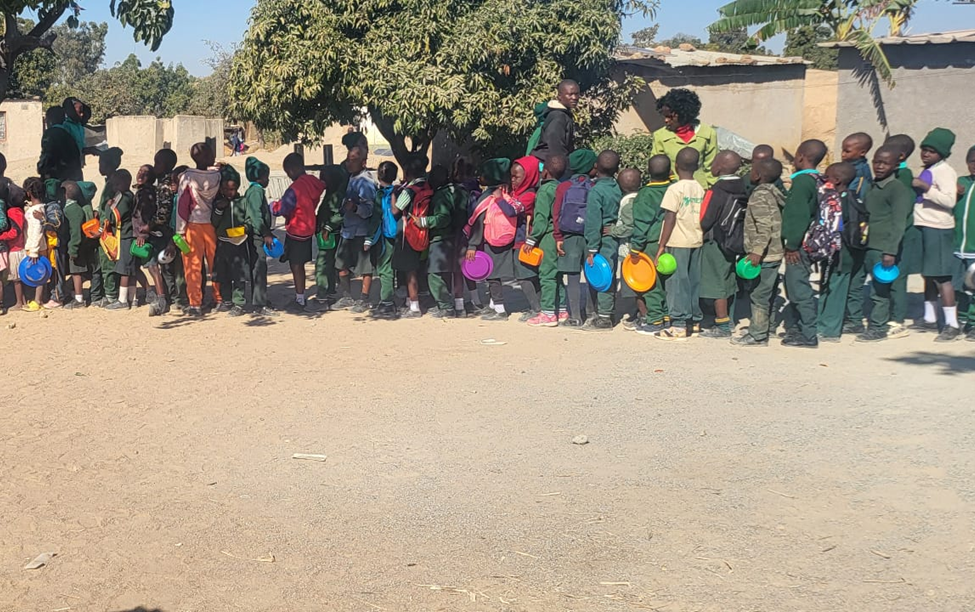
One of the best parts of my job is when I get to hear from partners about what God is doing through their efforts. Stories of impact are always gratifying and often exciting, but every now and then, they’re genuinely miraculous. That is the case with a report I received last week from a partner who operates kids’ camps in the south-central African country of Zimbabwe. Tarcisio Magurupira is a native Zimbabwean with a passion for ministering to underserved kids in his community. Our first grant to his organization was in December 2022, with a follow-up grant last year to help with expenses related to the camps. Last week he wrote to express his gratitude for the financial assistance and to tell about something amazing that happened at one of the camps. He wrote, “Due to a harsh economic climate, most low-income earners here struggle to feed their families. Beginning in May, we started giving a plate of mid-morning porridge to close to 500 kids. We feed these children on a daily budget of $20. Every morning, I read a verse and pray with the children just before they receive their porridge. One morning, I saw a long line of kids eagerly waiting to receive their meal, and I was concerned. I could see that the number of children was more than our usual number. I then asked the children to be quiet as we needed to pray, and I told them the story of Jesus feeding the 5,000. Then I turned to the kids and asked if our two pots would be enough if we prayed, considering the overwhelming number of kids that morning. They all shouted a resounding affirmation. After I prayed, with a lot of doubt in my heart, I stood close to the pot, avoiding looking directly into it, and watched each kid walk away with a plate full. After half an hour, more than 500 kids received a plate. I was humbled, and I prayed to thank God after asking for forgiveness for my lack of faith. After the event, I reflected on the miracle that had unfolded before my eyes. The faith of the children had surpassed my own, and their unwavering belief had been rewarded. It was a powerful reminder of the importance of trust and the boundless possibilities when we place our faith in the divine.”

Focus on Literature
One of the things Tyndale House Foundation is known for internationally is our commitment to funding organizations and projects with a literature focus. That’s not terribly surprising, given our history and close association with Tyndale House Publishers through the decades. Literature is not all we focus on, but it is a priority for THF, and that makes us unique in the world of Christian philanthropy where most funders are focused on things like evangelism, church planting, and humanitarian care. We care about those things too, but I’m not aware of any other foundation that intentionally prioritizes Christian literature over other funding targets. A drawback to being unique is it can make collaboration difficult. There are no big coalitions of resource partners lining up to participate with us in our Africa Speaks program, for example. Not yet, anyway. But having a reputation for prioritizing literature gives us an advantage when it comes to, for example, identifying and building relationships with indigenous publishers around the world. And it gives us a seat at the table with big organizations and networks talking about things like Bible translation. The four subcategories within our Literature grantmaking priority are indigenous publisher support, resource development, Bible translation, and distribution. By funding organizations and projects working in these areas, we help to ensure that every culture has Scripture in their language along with local writers, published by local publishers, writing for the good of the local church.
Reconciliation and Interfaith Dialogue
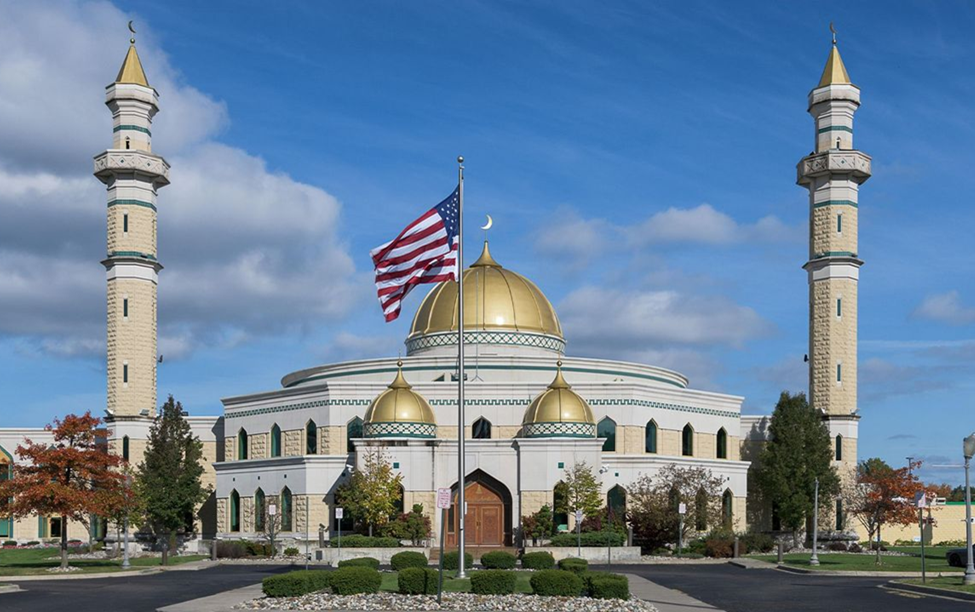
Two weeks ago, the Muslim mayor of Dearborn, Michigan, made national headlines when he told a Christian resident during a City Council meeting, “Although you live here, you are not welcome here.” The resident had objected to two intersections being renamed after the publisher of Arab American News, a weekly bilingual newspaper published in Dearborn. The resident commented that it would be inappropriate to name an intersection after a man who had made public statements that seem to support terrorist organizations like Hamas and Hezbollah. He said that as a Christian, he wanted to encourage peace rather than provocative comments. The mayor responded that perhaps the resident should simply avoid driving on those streets or should close his eyes when doing so if he didn’t like the names. Then he said resident was “a bigot, and you are racist, and you’re an Islamophobe. . . . And the day you move out of the city will be the day that I launch a parade celebrating the fact that you moved out of the city.” This incident is remarkable to me because it highlights the need for ongoing reconciliation work between religious groups in the US, not just internationally. Tyndale House Foundation has several partners engaged in reconciliation ministry, including between Christians and Muslims, in places like Benin and Pakistan and Nigeria and Indonesia—places where conflict between religious groups is nearly always contentious and all-too-often violent, with deadly consequences especially for Christian minorities. I’m glad the interaction at the Dearborn City Council meeting was limited to hostile words and did not erupt into hostile actions, but it highlights the need for peacemaking in all contexts. Pursuing peace is a biblical imperative (Ps. 34:14; Matt. 5:9; Rom. 12:18) and a social necessity. Please pray for THF partners who are communicating the gospel in Muslim-majority communities, and pray for more peacemakers to respond to Christ’s invitation to work for peace and be called children of God.
That’s it for this week’s briefing. Please send any questions, comments, and optimistic CEO confidence poll numbers to [email protected]. Do you enjoy reading the THF Weekly Briefing? Make sure you’re subscribed to the email distribution list to get access to this resource the same day it’s published each week, and feel free to share it with others who may be interested, inside or outside of Tyndale. Thanks for continuing to pray for and support our partners around the world.
Jeremy Taylor
President | Tyndale House Foundation
The THF Weekly Briefing provides information about significant events happening in the wide universe of Tyndale House Foundation partner organizations as well as an occasional peek behind the scenes of THF’s operations. It is available to anyone who’s interested in learning more about Tyndale’s philanthropic commitments, partners, and operations. Was this email forwarded to you? Contact [email protected] to be added to (or removed from) the distribution list.