


Nostalgic Misgivings
October 8, 2025Am I going soft? Or was pop culture always this bad?
Taking an Uber ride in a country where you don’t speak the language is a good opportunity for some silent reflection.
On the other hand, depending on the listening preferences of the driver, it may be an opportunity for some extended listening to the “Greatest American Hits of the 80s” on satellite radio. This turned out to be the option for me on a long Uber ride across the city of San José to the airport last week.
Since I don’t speak Spanish, and my driver didn’t speak English, after exchanging greetings (using the few words I do know) and handing over the Uber security pin, I settled in for a silent, reflective 45 minutes. Except that this particular Uber driver was a big fan of American radio hits from previous decades, so solitary silent reflection turned into mutual appreciative synchronized head bobs.
It was great, for a while. We couldn’t communicate verbally, but my driver and I were sharing a moment of connection fueled by the 80s pop filling the space between us in the otherwise silent car. As we crawled through traffic past the Teatro Nacional, the Plaza de la Cultura, and the Catedral Metropolitana, “If You Leave Me Now” by Chicago gave way to Billy Joel’s “Just the Way You Are” followed by the sweet, romantic synthesizers of “Into the Night” by Benny Mardones. It was both a blast from the past and a little oasis of familiarity in a foreign city.
And then I started paying attention to the words.
“She’s just 16 years old,” Benny Mardones crooned. “Leave her alone, they say.” Uh, yes. Definitely leave her alone, Benny. “Separated by fools who don’t know what love is yet.” Hang on there, pal. You were 42 in 1989 for crying out loud. Stay away from the teenagers. Don’t even think about taking anyone into the night to show her a love like she’s never seen before. Gross.
Then came “Obsession,” the 1984 New Wave pop anthem by Animotion. “I will have you,” sang Astrid Plane. “I will collect you and capture you.” Um, okay. “You’re my obsession.” Seems a tad unhealthy but at least self-aware, I guess. “Who do you want me to be to make you sleep with me?” Wait, what?! Then the chorus turned into Bill Wadham’s response, and somehow it only got worse. “My need to possess you has consumed my soul.” Good grief. I hope the driver can’t understand these lyrics.
This is not an unfamiliar phenomenon for people of my generation trying to enjoy some pop-culture nostalgia. Some of the best music from back in the day turns out to be totally raunchy. Some of my favorite movies when viewed with my kids are cringy at best and downright objectionable at worst. What’s going on? Am I going soft? Or was this content always this bad and I just didn’t realize it?
Obviously the correct answer is Option B. Those lyrics were always there; I just never paid attention before. The songs and movies haven’t changed. But I have—and not just because I’m 30 years older than when I was first watching and listening as a junior-higher. It turns out “nostalgic” content all too often carries messages I no longer want shaping my mind and heart.
Romans 12:2 serves as a biblical warning against succumbing to the siren call of pop culture. “Don’t copy the behaviors and customs of this world, but let God transform you into a new person by changing the way you think.” In some cases, transformation means turning away from sinful habits or foul language or practices that don’t honor God. But sometimes, transformation is as simple as seeing, hearing, and valuing things differently as Christ reshapes our desires over time.
Philippians 4:8 provides an alternative to filling our minds with garbage—“Fix your thoughts on what is true, and honorable, and right, and pure, and lovely, and admirable. Think about things that are excellent and worthy of praise.” Proverbs 4:23 puts it even more succinctly: “Guard your heart above all else.”
Lyrics are powerful because they bypass reason and go straight through emotion to memory. Especially when combined with a catchy melody and a head-bobbing beat, songs can shape us, often without our noticing. Guarding our hearts doesn’t necessarily mean retreating from culture, but it does mean engaging it with awareness. Of course we should be able to enjoy music, movies, art, and other media as good gifts that enhance our lives, but we shouldn’t do so uncritically. We need to exercise discernment and spiritual alertness.
By the time we finally reached the airport, the playlist had thankfully moved on to the mildly self-sacrificial proclamations of Kevin Cronin in REO Speedwagon’s “Keep on Loving You,” and I had been afforded a reprieve from my lyrical analysis. As I walked away from the car and awarded my music-loving driver with five stars in the Uber app, it occurred to me that while we do need to be careful what we’re filling our minds with, the call to personal holiness shouldn’t necessitate guilt over things we used to enjoy.
Yes, we should pay attention to what causes shame in our lives or in our memories. And we should definitely find better things to occupy our minds. But conviction isn’t condemnation; it’s evidence of grace. And that is absolutely worth singing about.
Here’s what’s happening.

Terrorism in Southeast Africa
Mozambique is a country of about 35 million people on the southeastern coast of Africa, directly opposite the island nation of Madagascar. With over 1500 miles of coastline along the Indian Ocean, Mozambique is known for its pristine white-sand beaches, world-renowned archipelagos, and diverse marine life. Yet despite rich natural resources, the country consistently ranks among the ten poorest in the world. Weak infrastructure, government corruption, and decades of conflict have led to rampant poverty—a common theme among Africa’s Portuguese-speaking countries. In 2017, an Islamist insurgency erupted in the northern region of Cabo Delgado. Two years later, a locally rooted group known as Ansar al-Sunna was recognized as an African branch of the terrorist group ISIS. Fighting in Cabo Delgado has resulted in thousands of deaths and the displacement of nearly 1.5 million people in less than a decade. Within the past two months, violence has risen dramatically as ISIS forces have turned their attention to Christian communities. Christian villages have been attacked, and multiple churches have been burned. On September 30, Muslim extremists released a set of 20 photos documenting recent attacks. The graphic photos showed churches and homes burning as well as operatives beheading some captives and shooting others at close range. Yesterday I wrote to a THF partner who lives in Mozambique. He replied, “The situation is as bad as you’ve read. We used to be based in that area, but it’s been next to impossible to do ministry there for a few years. Please be praying for the ministries involved in the north, the pastors, and the missionaries. There are still a few courageous people in the area, and quite a few go in briefly, do ministry, and then leave.” Please pray for our brothers and sisters in Mozambique who are facing violence, and pray for THF partners there who are trying to figure out how to be the hands and feet of Christ amidst horrific violence.
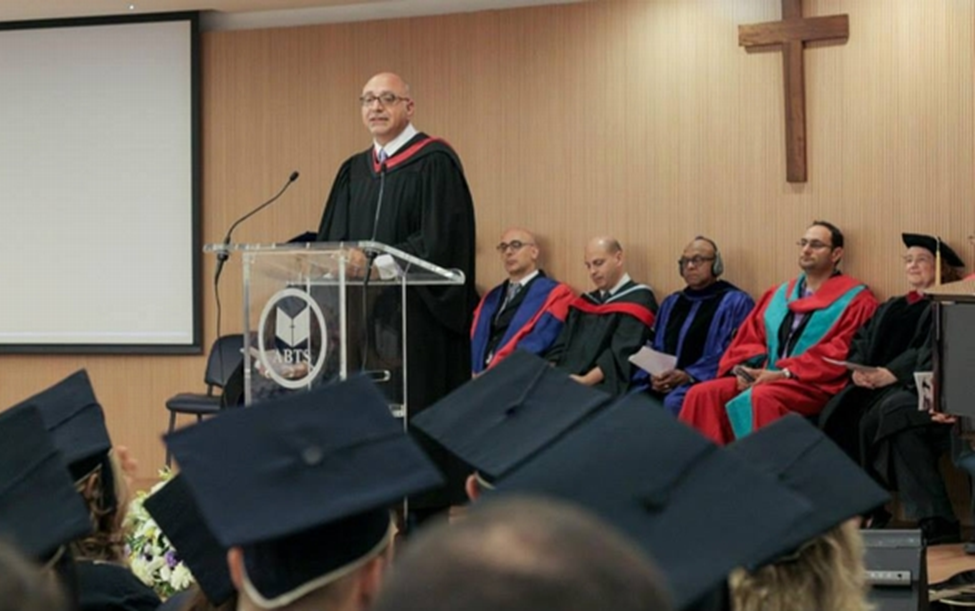
Leadership Change at ABTS
Arab Baptist Theological Seminary (ABTS) was founded in 1960 by Finlay Graham, a Scottish missionary who moved to Lebanon in the 1940s. Stories about Graham’s bold approach to mission work are legendary. In the 1950s, Graham served for a time as headmaster of Beirut Baptist School. During one period of particularly heavy fighting between government-supported factions and Muslim nationalist groups in 1958, the school’s bus driver declined to drive into neighborhoods where violence was a major threat. So Graham jumped behind the wheel and drove the bus himself. Years later, during the Lebanese Civil War in the 1970s, Graham kept the school open even when bombs and rockets were literally landing in the courtyard. Those years of danger and disruption deepened Graham’s conviction that Lebanon needed strong, biblically trained leaders who could shepherd the church in the times of crisis. In 1960, he founded ABTS, where courageous faith and sound theology would be taught together. Graham retired from leadership in the 1980s, but his pioneering spirit remained a defining characteristic of the seminary. Over the following decades, hundreds of church leaders have graduated and gone on to serve in leadership positions throughout the MENA region. Tyndale House Foundation has given regular grants to ABTS to support theological education in the Arab world for over a decade, and THF board member Evan Hunter serves on the ABTS board, so we have strong organizational connections. On September 28, 2025, Wissam Nasrallah was inaugurated as the seminary’s fifth president, taking the leadership baton from Elie Haddad. I encourage you to read Wissam’s thoughtful comments here. Please pray for Wissam as he steps into this new role and for Elie as he transitions into retirement. And pray that ABTS will continue to effectively train young men and women for leadership in the years to come.
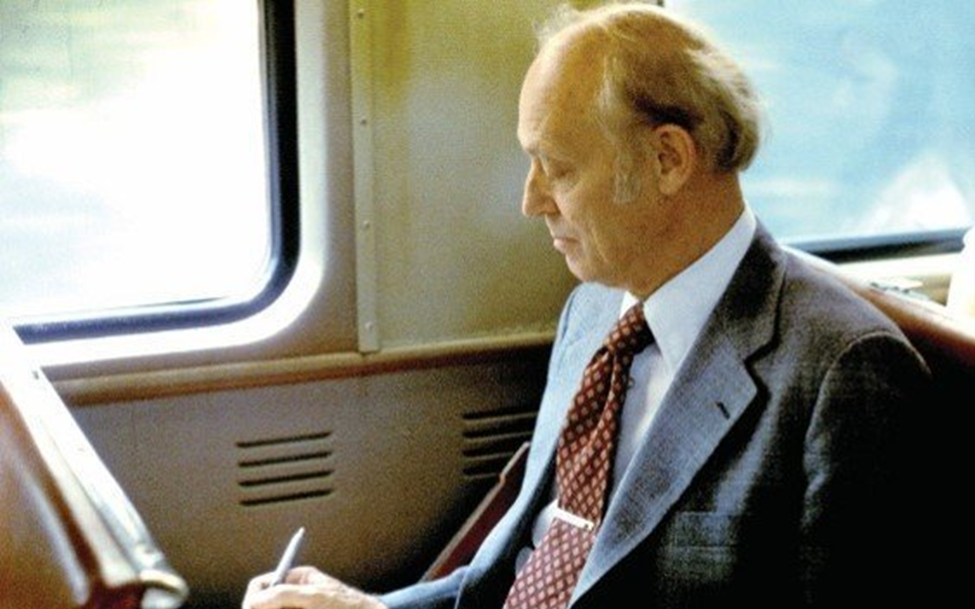
Tyndale Story Still Resonates
Last Sunday, I was getting ready to preach in a church in San José, Costa Rica. Sitting in the congregation, experiencing the escalating exuberance of the charismatic worship (which included an energetic interpretive dance by one of the pastors and an impromptu rap by one of the congregants), I found myself second-guessing my message. I had prepared a talk about God’s plan for our lives, and I was planning to work in the story of Ken Taylor and Tyndale House. The connection is that Ken believed God had a plan for his life, but he couldn’t see what it might be when he too poor to provide for his family and when his children couldn’t even understand God’s Word. I think all of us feel that way sometimes. We want to contribute to God’s Kingdom, but we can’t see the path forward. The story of Tyndale is aspirational and invitational, and people almost always enjoy hearing it, but I didn’t know if it would be appropriate in that particular context. By the time I got up to speak, I still wasn’t sure. So after I was introduced, I said through a translator, “I haven’t decided whether I should tell you a story or look at a passage of Scripture together. What do you think?” The overwhelming response was “Both!” So I decided not to worry about contextualization and just told the story of Tyndale House through the scriptural lens of God’s Portion, God’s Promise, and God’s Provision from Malachi 3. After the service, multiple people told me (still through a translator) how much they appreciated hearing the story of Ken and Margaret Taylor obediently turning over the very first returns from Living Letters to the Lord. Furthermore, when the pastor who had performed the interpretive dance learned that the NTV (Spanish version of the NLT) has its roots in the very story I had just told, he beamed as he described how impactful that translation has been in his ministry work. Even after all these years, the story of Ken Taylor’s commitment to radical generosity and making God’s Word understandable is meaningful for international audiences.

Ministry Connections
Theologian John Stott founded Langham Partnership in the late 1960s out of the conviction that God’s people need to work together in order to equip pastors, resource theological education, and multiply biblically grounded leaders for every nation. Kärin Butler Primuth, CEO of VisionSynergy, wrote in a 2015 EMQ article, “In our interconnected and globalized world, mission networks are playing an increasingly important role in shaping Great Commission strategies.” What do these THF partners have in common? Their commitment to creating networks and partnerships in service of gospel proclamation and expansion. At Tyndale, we often say that providing financial support is the least valuable thing we do. The real impact comes from our commitment to praying for our partners, spending time with people, and connecting leaders with one another. When I was in Carpio, a precario in San José, hearing a ministry leader’s plans to offer training for local entrepreneurs, I immediately thought of another organization I know that does similar work in Kenya. The other day, talking with another leader about an upcoming conference where Majority World scholars will receive training in how to write for a popular audience, I asked for an invitation to the conference—not for myself but for several African leaders I know who could provide meaningful connections for the scholars. Ecclesiastes 4:9 says, “Two people are better off than one, for they can help each other succeed.” Money funds ministry, but connections drive true impact. At Tyndale, we view every connection we make as an act of stewardship that is as valuable if not more so than the grant checks we write. Ideally, both turn out to be investments with an eternal return.
That’s it for this week’s briefing. Please send any questions, comments, and appropriate 80s lyrics and movie recommendations to [email protected]. Do you enjoy reading the THF Weekly Briefing? Make sure you’re subscribed to the email distribution list to get access to this resource the same day it’s published each week, and feel free to share it with others who may be interested, inside or outside of Tyndale. Thanks for continuing to pray for and support our partners around the world.
Jeremy Taylor
President | Tyndale House Foundation
The THF Weekly Briefing provides information about significant events happening in the wide universe of Tyndale House Foundation partner organizations as well as an occasional peek behind the scenes of THF’s operations. It is available to anyone who’s interested in learning more about Tyndale’s philanthropic commitments, partners, and operations. Was this email forwarded to you? Contact [email protected] to be added to (or removed from) the distribution list.