

On Fear
October 31, 2025What are you afraid of?
“The only thing we have to fear is fear itself.”
When President Franklin D. Roosevelt said those words during his first inaugural address in March of 1933, he was speaking against the general feeling of panic and malaise felt by many Americans during the Great Depression. He wanted people to understand that the real danger wasn’t rampant unemployment, failing banks, and collapsing businesses; it was the psychological contagion of fear that made people stop spending, investing, and trusting one another.
Fair enough. But is it really true that fear is all we need to be afraid of?
Today is Halloween, which seems like a good day for examining what the Bible has to say about fear. The reality is that there are lots of things we can be afraid of. The world is a dangerous place, and that’s no less true today than it was when the Bible was being written thousands of years ago. Fear is a perfectly rational response to the world’s many problems.
And yet, “fear not” (or differently worded imperatives that mean the same thing) appears perhaps more often than any other command in Scripture. This doesn’t mean should ignore the very real dangers that provoke fear; it does mean we should be careful to put fear in its proper context.
In the Bible, instructions not to be afraid are generally accompanied by a reason for fearlessness. “Don’t be afraid, for I am with you” (Isa. 41:10). “Don’t be afraid, for you have found favor with God” (Luke 1:30). “Do not be afraid, for I will protect you” (Gen. 15:1). “Do not be afraid or discouraged. For the Lord your God is with you wherever you go” (Josh. 1:9). “Take heart,” Jesus said, “for I have overcome the world” (John 16:33).
The power of the phrase isn’t just in the command; it’s in the assurance of God’s presence.
Yet interestingly enough, while reassuring to God’s people, God’s presence is anything but reassuring for God’s enemies. Pastor Steven White wrote in this week’s Lausanne blog, “We have begun to recognize that it is not we as Christians who are to be afraid of dark places, but rather, more truly, it is the strongholds of darkness that are legitimately terrified of the power of Jesus in their midst.”
Pastor White was talking about the spiritual warfare he has faced as a church planter in Salem, Massachusetts, a pilgrimage destination of sorts for practitioners of wicca (witchcraft) and home of the global headquarters of the Satanic Temple. His claim that the powers of darkness are afraid of the light of Christ is well supported by Scripture.
The apostle James wrote that the demons “tremble in terror” (2:19) as they acknowledge the One True God, and the Gospels unpack at least some of the reason for this fear. In Matthew 8, two demon-possessed men scream at Jesus, “Why are you interfering with us, Son of God? Have you come here to torture us before God’s appointed time?” The corresponding accounts in Mark 5 and Luke 8 contain a similar demonic reaction to Jesus’s presence. The demons knew—and know—that divine judgment will seal their eternal fate, and they were terrified at the thought that it might be starting sooner than they anticipated.
Mark 3:11 says of Jesus, “Whenever those possessed by evil spirits caught sight of him, the spirits would throw them to the ground in front of him, shrieking, ‘You are the Son of God!’” And earlier, in Mark 1, a possessed man in the synagogue in Capernaum asked Jesus in terror, “Have you come to destroy us?” The demons are well aware that whenever Jesus is around, their power is meaningless. They are right to be afraid, and they have no choice but to obey when he casts them out of the people they are possessing.
Demons are fearsome creatures, no question. Have you noticed that people are generally terrified when they encounter angels in the Bible? How much more terrifying would it be to encounter a demon? Yet demons recognize Jesus’s divinity, submit to his commands instantly, and fear his authority and power over their destiny. The Gospel writers clearly wanted their readers to understand this truth, as they repeatedly emphasized Jesus’s actions in casting out demons as well as the demons’ response.
What’s amazing is that although this power over the forces of evil comes from Jesus, it is not limited to Jesus. In Matthew 10:1 and Luke 9:1, Jesus explicitly gave his disciples power and authority to cast out demons. And that’s not all. The amazing reality of the gospel is that the same authority once embodied in Christ and exercised by the apostles is now extended to all believers through the Holy Spirit.
This truth is articulated powerfully in Romans 8:11—“The Spirit of God, who raised Jesus from the dead, lives in you.” And Jesus made it clear that those who believe in him have spiritual authority over the powers of darkness in this world (Mark 16:17-18). James talks about this as well when he says, “Humble yourselves before God. Resist the devil, and he will flee from you.” Even the prince of darkness himself can’t stand up to an agent of the light.
Of course, there’s a warning here as well. Acts 19 gives the account of the seven sons of Sceva, who tried to cast out a demon “in the name of Jesus, whom Paul preaches.” The evil spirit said in reply, “I know Jesus, and I know Paul, but who are you?” The encounter ended badly for the would-be exorcists who were relying on the name of Jesus alone without possessing the authority that comes from truly following Christ. The forces of darkness are afraid of the light, but they aren’t too worried about those who are only pretending.
The question that keeps coming to mind for me is this: What am I afraid of? The demonic armies are afraid of God’s presence, and rightly so. But for followers of Christ, the biblical instruction to “fear not” is explicitly linked to God’s presence. The Bible tells us not to be afraid for exactly the same reasons that the powers of darkness need to be afraid. God is with us, so we should not fear. God is with us, so God’s enemies should be afraid.
This Halloween, whatever fears are lurking in your life, it’s worth taking a little break from trick-or-treating to reflect on the powerful reality of God’s presence. There’s a reason Jesus is called Immanuel—God with us. And when God is with us, as the apostle Paul writes in Romans 8:31, “who can ever be against us?”
With all due respect to FDR, I don’t think it’s true that the only thing we have to fear is fear itself. The only thing we should truly fear is a life apart from God. But the amazing message of the gospel is that God is with us—always. So it turns out that for Christians, the only thing we have to fear is nothing at all.
Here’s what’s happening.
Crisis in Sudan
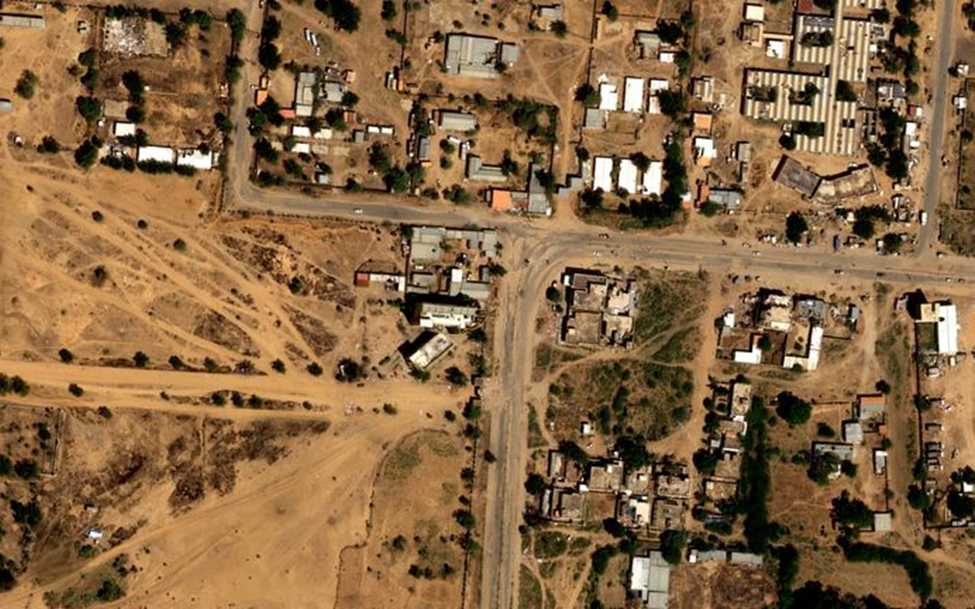
The World Health Organization is reporting that more than 460 people have been murdered by RSF forces in a hospital El Fasher, Sudan. This latest atrocity comes on the heels of a string of alleged war crimes and crimes against humanity committed by the Sudanese paramilitary group since April 2023, when fighting broke out between the RSF and the Sudanese army. The conflict has been devastating for Sudan. More than 14 million people have been displaced from their homes, and some estimates put the total death toll at as many as 150,000. A UN fact-finding mission has accused both sides of an “appalling range of harrowing human-rights violations and international crimes.” The city of El Fasher, the largest in western Sudan, was captured by the RSF earlier this week, and there are already reports of mass killings of thousands of people, which the UN Human Rights Office has labeled a genocide. Piles of bodies and blood-stained sand can be seen in satellite photos, indicating the horrific scale of the violence. According to the Human Rights Watch, the US State Department has determined that the RSF has engaged in the “systematic murder of men and boys and targeted rape of women and girls from specific ethnic groups.” This is a catastrophic situation with no end in sight. Please pray for the Lord’s intervention in Sudan, for an end to the killing, and for peace and justice to be restored.
Hurricane Melissa Devastates the Caribbean
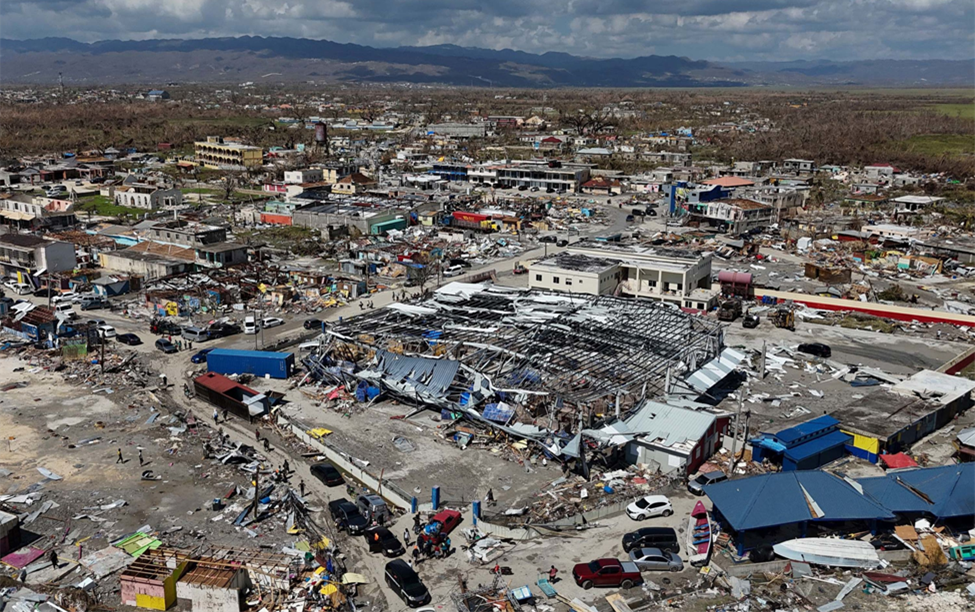
Hurricane Melissa, one of the strongest Atlantic hurricanes on record, smashed into Jamaica on October 28 before hitting southeastern Cuba on October 29. Most of Jamaica is still without power, and the prime minister has declared the entire country a disaster area. Flooding in Haiti and the Dominican Republic has killed at least 25 people and disrupted water supply systems, leaving hundreds of thousands of people without access to clean water. In Cuba, more than 750,000 were evacuated from their homes in advance of the storm’s arrival, and President Miguel Díaz-Canel has described the damage there as “extensive.” Yesterday I received an email from Teo Babun, president of THF partner ECHO Cuba, predicting that the ongoing US government shutdown will restrict aid dollars flowing to affected areas, so relief efforts will largely be funded by the private sector, at least initially. Tyndale House Foundation has partners in all of these countries, and I’m starting to receive reports from them regarding damage in their areas and how THF may be able to help. I’ll pass along more information when I receive it. Meanwhile, please pray for those whose lives have been upended by this storm, for the first responders who are doing their best to provide immediate aid, for wisdom for government officials formulating a response, and for the recovery efforts that will no doubt be underway for a very long time.
FEUER Conference Kicks Off
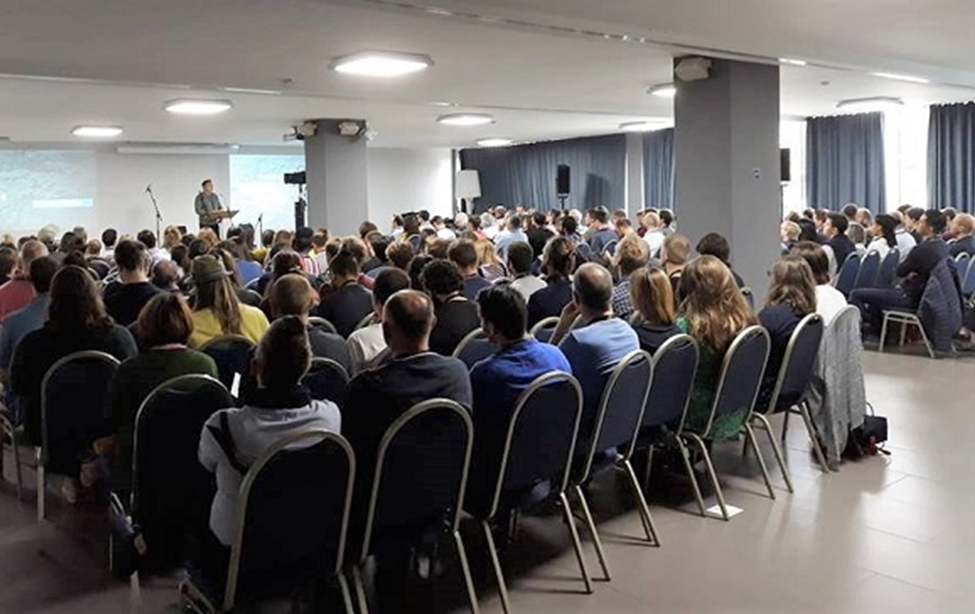
I’m in Spain this week for the annual conference of the Fellowship of Evangelists in the Universities of Europe (the acronym they use is FEUER, which is also the German word for fire). FEUER was started in 2008 by Lindsay Brown, the former international director of IFES (International Fellowship of Evangelical Students) and also the Lausanne Movement. I met Lindsay at the European Leadership Forum several years ago and learned about FEUER from him. The organization’s purpose is to equip and mobilize evangelists to engage university campuses with the public proclamation of the gospel. Tyndale House Foundation gave a grant to FEUER last year to provide scholarships for students from Eastern European countries to come to this conference. I’m participating in many of the conference sessions, but mostly what I’m doing here is meeting with lots of people—every meal, coffee break, and evening time slot is booked, so I’m having tons of great conversations and learning a lot about evangelism on European campuses! Some of the meetings are with existing partners, but most of them are people I’m meeting for the first time to hear about their work. Please pray for the 200 or so participants who are here in Spain to receive training and encouragement in their work of proclaiming the gospel on university campuses across Europe.
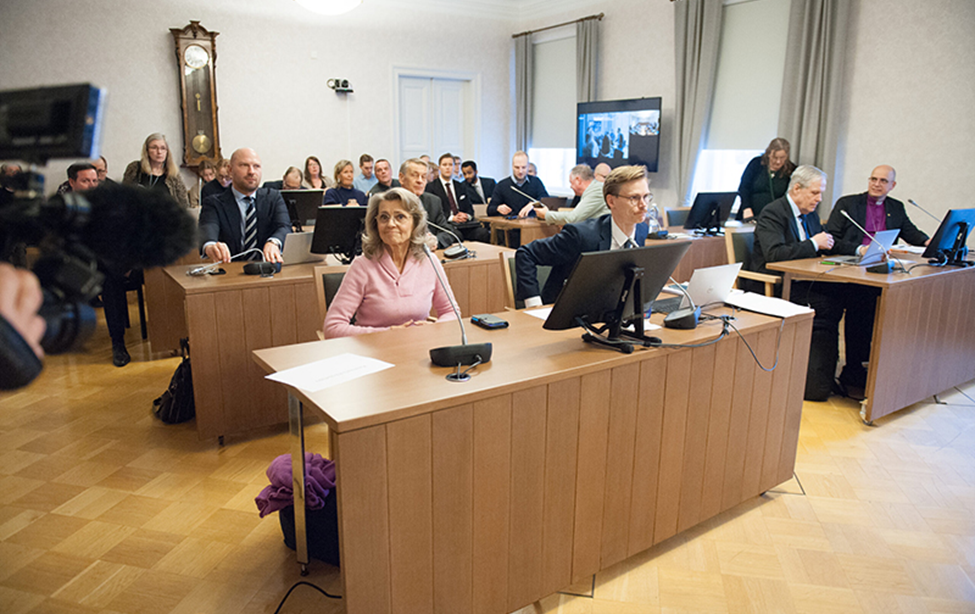
Religious Freedom on Trial in Finland
In a case widely seen as precedent-setting for freedom of religion and freedom of expression in Finland and throughout Europe, the Finnish Supreme Court heard oral arguments yesterday in the trial of Päivi Räsänen, a Finnish Member of Parliament, and Juhana Pohjola, a bishop in the Evangelical Lutheran Mission Diocese of Finland. Dr. Räsänen and Bishop Pohjola have been charged with hate speech in connection with public expressions of their Christian convictions on sexuality and marriage. Specifically, in 2019, Räsänen tweeted a Bible passage (Romans 1:24-27) in criticism of her church’s involvement with an LGBT pride event, and Pohjola was involved in the publication of a 2004 booklet about biblical sexuality written by Räsänen. If found guilty, Räsänen and Pohjola could face heavy fines and censorship. But Paul Coleman, executive director of THF partner ADF International, believes the stakes are much larger. He wrote, “This case isn’t about one tweet or a small booklet that was written over 20 years ago. It’s about whether quoting the Bible and standing on its teachings can be criminalized in 21st-century Europe.” This has already been a years-long ordeal for these Finnish Christians, and the final decision likely won’t be issued for several more weeks. Please pray that the court will uphold the rights of people in Finland to speak freely about their faith.
That’s it for this week’s briefing. Please send any questions, comments, and Halloween candy to [email protected]. Do you enjoy reading the THF Weekly Briefing? Make sure you’re subscribed to the email distribution list to get access to this resource the same day it’s published each week, and feel free to share it with others who may be interested, inside or outside of Tyndale. Thanks for continuing to pray for and support our partners around the world.
Jeremy Taylor
President | Tyndale House Foundation
The THF Weekly Briefing provides information about significant events happening in the wide universe of Tyndale House Foundation partner organizations as well as an occasional peek behind the scenes of THF’s operations. It is available to anyone who’s interested in learning more about Tyndale’s philanthropic commitments, partners, and operations. Was this email forwarded to you? Contact [email protected] to be added to (or removed from) the distribution list.