


Active Gratitude
November 29, 2025In addition to being thankful, how about actually saying thank you?
Have you ever heard of the Three Napkin Movement?
I read about it last week in a travel blog I subscribe to. The idea is that during Thanksgiving weekend, when tens of millions of people are traveling through airports and train stations and bus depots and approaching rental-car counters and signing travel waivers and using mileage credit cards and cashing in vouchers, on their way to visit family and friends all over the country and maybe the world, travelers should bring along three thank-you notes written on napkins to give to three random people you meet on your journey.
You use napkins because of the association with feasting and because the purpose of the exercise is not to spend any money on a fancy card. You don’t know the recipients; you’re not buying them a gift. You’re simply saying thank you, and if there’s one thing just about everyone would agree we could all use a little more of these days, it’s gratitude.
Specifically, the Three Napkin Movement calls for giving thank-you notes to TSA workers or baggage handlers or flight attendants or anyone else involved vocationally in the travel business. These are professionals who are working on what is annually the biggest travel weekend of the year so that you can get from point A to point B and probably back again safely and with maximum efficiency. The workers are being paid, so it’s not like they’re volunteering, but still, a thank-you note never hurts.
Importantly, the purpose of the exercise is not to somehow gain advantage through gratitudinous flattery. This isn’t about what you can get in return for passing someone a nice note. And anyway, if you think a thank-you note is going to get you upgraded on your next flight, either you’re uncommonly lucky and have unrealistic expectations, or you haven’t traveled very much.
Either way, if you thank someone because you’re expecting to be rewarded for an act of common decency, you’re doing it wrong. Quid pro quo is not what gratitude is supposed to be about.
I love the idea of the Three Napkin Movement. And I don’t think it necessarily should be limited to Thanksgiving.
If such a thing caught on, not only could it lead to a much-needed rise in civility in our society; it could begin to alter the way we think about gratitude. Because while being thankful is good and necessary and even biblical, there’s something about saying thank you that changes the whole dynamic.
The Bible has plenty to say about the importance of remembering God’s goodness (Ps. 103:2), being thankful in the peace of Christ (Col. 3:15), choosing thankfulness (1 Thess. 5:18), maintaining inner joy (Ps. 118:24), and cultivating a heart of gratitude (Phil. 4:6).
But God’s Word also tells us to express gratitude—to God and to each other. I think this is part of what Jesus means when he says in Luke 6:45, “What you say flows from what is in your heart.” If your life is characterized by gratefulness, you should, and naturally will, say so. This is also what the apostle Paul is talking about in Colossians 2:7 when he says that a life of faith “will overflow with thankfulness.”
Here are some other passages to consider when thinking about the importance of expressing gratitude and not just feeling it.
Psalm 107 begins, “Give thanks to the Lord, for he is good! His faithful love endures forever.” Giving thanks implies articulation of gratitude. And verse 2 says it explicitly: “Speak out! Tell others he has redeemed you from your enemies.” Gratitude to God for physical and spiritual salvation should result in verbal thanksgiving.
Other Psalms have similar themes: “I will praise you, Lord, with all my heart; I will tell of all the marvelous things you have done” (Ps. 9:1). “Give thanks to him and proclaim his greatness. Let the whole world know what he has done” (Ps. 105:1). “Let each generation tell its children of your mighty acts; let them proclaim your power” (Ps. 145:4). Each of these instructions mandate not just acknowledgment of God’s might and power in our lives but public expression of thanksgiving for what he has done. In the New Testament, thanking God is done in the context of singing and public worship (Eph. 5:19-20; Col. 3:15-16). Thanksgiving is not a private attitude of the heart; it’s a public expression.
And it’s not just God who is to be a recipient of our verbal thanks. Expressing gratitude to one another is one way we “delight in honoring each other” (Rom. 12:10) and “encourage each other and build each other up” (1 Thess. 5:11). The apostle Paul frequently went out of his way to express direct, verbal appreciation for people (see Rom. 16:1-16; Phil. 2:19-30; Col. 4:7-15). We should do likewise.
This Thanksgiving weekend, and throughout the holiday season, as you travel and gather with family and think about buying gifts and maybe endure the time-honored tradition of going around the table and saying what you’re thankful for, consider not just being thankful but actually saying, “Thank you!”
You don’t even have to write it on a napkin.
Here’s what’s happening.

Ups and Downs of Christian Engagement
Is Bible reading on the rise around the world? Or is it on the decline? Are young people more interested in learning about Jesus than ever before? Or is the rising generation the least religious in history? Is church attendance growing, or shrinking? Do more or fewer people than ever share the view that the Bible is an important and useful book? You can find headlines proclaiming the veracity of all these competing claims. According to Axios, faith levels in the US have plummeted to all-time lows. Yet a recent Pew Research Center study indicates a growing share of US adults believe religion is gaining influence in American life. Barna reports that “Millennials and Gen-Z are driving a Bible reading comeback.” On the other hand, Lifeway Research finds that while most Americans view the Bible positively, they don’t implicitly trust it. Christianity Today recently reported that Gen-Z now leads in church attendance. Yet Gallop reported as recently as 2021 that church attendance in the US had fallen below the majority for the first time ever. Which reports should be believed? I suspect they are all accurate, just in slightly different ways. We should not view statements by people like Richard Dawkins and Elon Musk about being “cultural Christians” as indications of a revival. But we also shouldn’t read gleeful articles by left-leaning bloggers about the decline of religion and assume that the US is suddenly a fully post-Christian country. Whether we’re encouraged or discouraged about news reports and studies, what we must not do is lose sight of the fact that part of our responsibility as followers of Christ is to proclaim the gospel to each new generation.
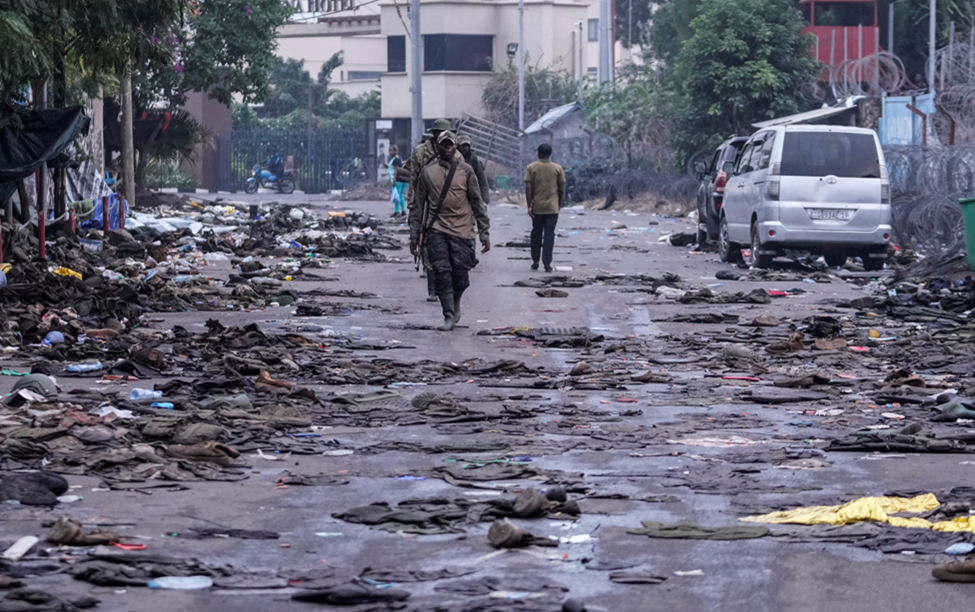
Hope amidst Conflict
Back in July, I wrote about the ongoing fighting in the Democratic Republic of Congo and passed along an update from a THF partner there. Last week I received a renewed prayer request from that same partner. He wrote, “The fightings continue in our area. During the week of war in January 2025, when more than 9,000 innocent civilians were killed, we found ourselves in great danger. My children saw bullets flying above their heads and others passing right before their eyes as they went to fetch water. Yet the Lord shielded us. Since then, urban criminality has increased, and our family has not been spared. The second semester of 2025 has been especially hard on us. Evil seems to have tightened its grip on our community. We have endured five nighttime intrusions. During two of them, our windows were shattered, and armed men shone blinding lights into the house and pointed a lethal weapon into the bedroom. We earnestly pray that these days of evil will soon come to an end. Please continue to uphold us in your prayers.” Yet even amidst violence and destruction, ministry work continues and is bearing fruit! Our partner reports that 300 students have committed their lives to the Lord through the student ministry in Goma. A 350-page teaching book has been produced in four languages for use in 1,000 local churches. Christian e-books are being distributed through various online platforms and have reached 1,500 readers within the past year. Local Bible translation continues, evangelistic radio broadcasts are gaining an audience, and a Bible-study movement is training 500 young leaders for ministry in the DRC’s “Triangle of Death” in the Ruwenzori Mountains. Please continue to pray for our partners in the DRC.
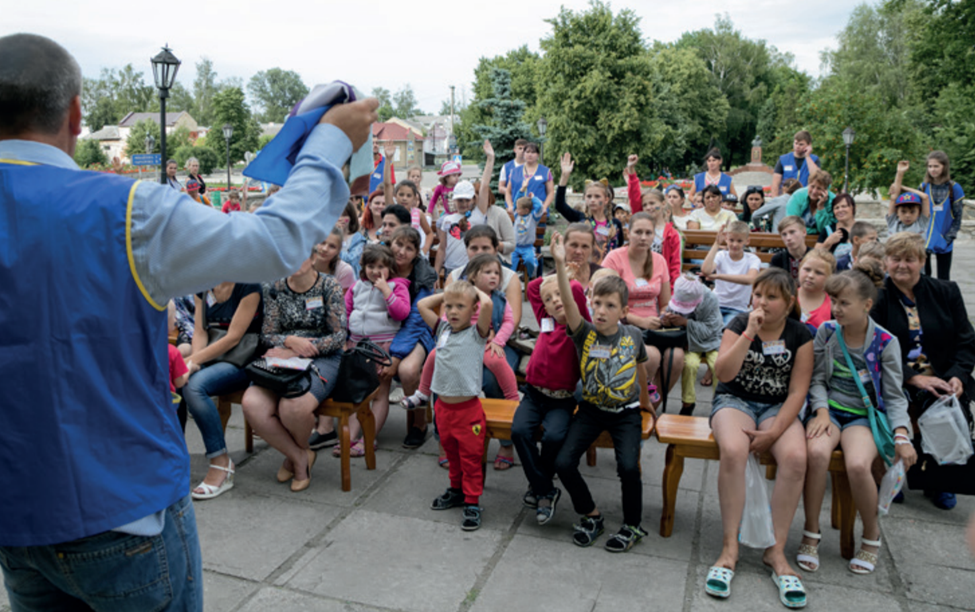
Joy in the Warzone
Ukraine is back in the news this week with more peace talks underway, though a true ceasefire remains elusive. Our partners in Kiev and throughout the country are hopeful but not overly optimistic. Meanwhile, Russian drones and missiles continue striking civilian targets every day and every night. Between November 15 and 21, according to our Ukrainian sources, Russia “terrorized Ukraine with 77 ballistic, hypersonic, and cruise missiles, 376 air strikes, 870 aero-guided bombs, 26,725 artillery and mortar shellings, 695 MLRS salvos, and 25,637 FPV kamikaze drones.” At least 45 people were killed, including women and children, and 180 people injured, just in that one week. Peace talks are a good development, but right now peace seems very far away. Yet even during war, God is active in Ukraine. Last week I received a report from a publishing partner in Ukraine who is also involved in a country-wide family ministry. As he described it, “A group of Christians eager to share the gospel go to a region of Ukraine and work in cooperation with local churches to have a time of fun and interesting games that families can do together, all leading to a time of evangelism. The program lasts for 4 or 5 hours, and our team is exhausted at the end, but it is so exciting to see lives changed and churches revived to reach people for Christ.” Just a month ago, one of these events was held in Odessa, a city in the southern part of the country where the bombing has been particularly brutal. Looking at the photo above, you would never know these kids endure nightly missile strikes, unending bomb sirens, and the constant threat of homes being destroyed and loved ones killed. Please pray that as leaders negotiate for peace, our partners will continue to find ways to minister to the innocent victims of war and proclaim the gospel to children and families throughout Ukraine.
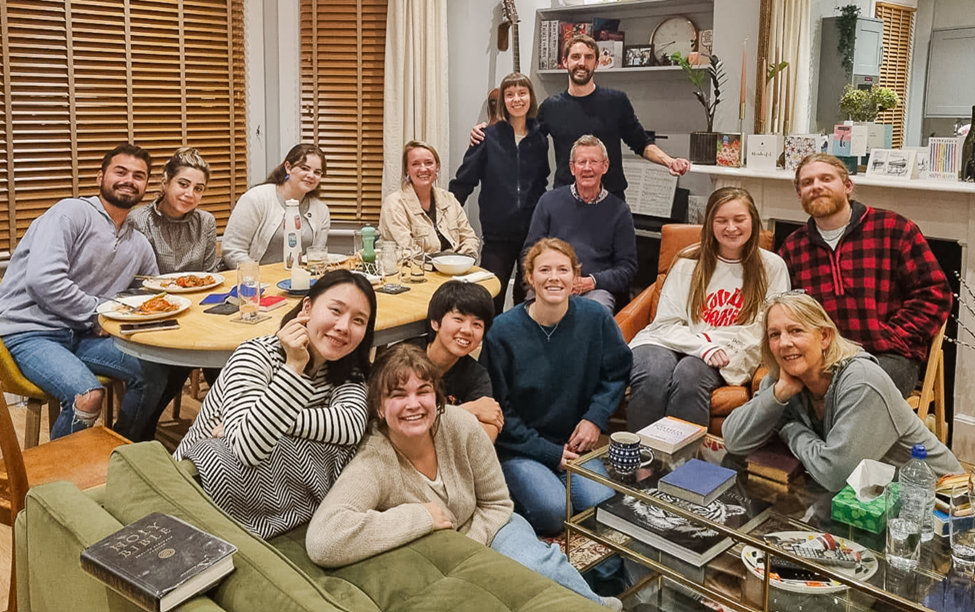
Thanksgiving Fruit in Shepherd’s Bush
Shepherd’s Bush is a district in West London that is known for being especially multicultural and vibrant with a wide variety of nationalities and cultures reflected in its population. Many Irish, Polish, North and West African, Middle Eastern, and South Asian immigrants call Shepherd’s Bush home. In 2023, a small group of families out of THF partner Trinity Church Central London planted Shepherd’s Bush Church in an effort to make the Great Shepherd known to the Shepherd’s Bush community. Tyndale House Foundation supported this church plant with a seed grant in 2023 and a small follow-up grant last year. I meet with Pastor Dave Seckington once or twice a year, usually in London or in Poland at the European Leadership Forum, and have been encouraged by the progress of this young fellowship. Last week I received an update email from Shepherd’s Bush Church thanking God for a successful Thanksgiving event that drew 100 local people—twice as many as they were hoping for! Now the church leaders are praying that some of those Thanksgiving guests will come to know Jesus and that God will use Shepherd’s Bush Church in their spiritual journey. They’re specifically praying for 10 conversions in the next year. Let’s pray that God will exceed their wildest dreams (Eph. 3:20) and bring remarkable revival to Shepherd’s Bush.
That’s it for this week’s briefing. Please send any questions, comments, and thank-you notes written on napkins to [email protected]. Do you enjoy reading the THF Weekly Briefing? Make sure you’re subscribed to the email distribution list to get access to this resource the same day it’s published each week, and feel free to share it with others who may be interested, inside or outside of Tyndale. Thanks for continuing to pray for and support our partners around the world.
Jeremy Taylor
President | Tyndale House Foundation
The THF Weekly Briefing provides information about significant events happening in the wide universe of Tyndale House Foundation partner organizations as well as an occasional peek behind the scenes of THF’s operations. It is available to anyone who’s interested in learning more about Tyndale’s philanthropic commitments, partners, and operations. Was this email forwarded to you? Contact [email protected] to be added to (or removed from) the distribution list.