

Biblical Leadership
August 6, 2025Five leadership principles from 1 Thessalonians 2
What makes a biblical leader?
I don’t mean what are the identifiable characteristics of leaders in the Bible. I mean what are some elements of leadership we can apply to our own lives and ministry roles based on what the Bible says about leadership?
This was one of the issues addressed at the LEAD Africa conference I attended in Zambia last week. Various speakers, including the vice president of Zambia, talked about the need for transformative leaders, godly leaders, bold leaders, leaders of character. These are all good and important characteristics of the kind of leaders Africa needs for the church to flourish there. But how can we be sure leaders are not just well meaning but truly biblical in their approach?
One of the things we learned from the Africa Leadership Study is that education is important for effective leadership. As Bishop Emmanuel Chikoya said at the conference, “An ignorant religious leader is a danger to themselves, a danger to the church, and a danger to the nation.” But as important as education is for combating ignorance, education alone is not the answer. I would argue that it’s not even enough to pursue godliness apart from Scripture. If we desire to be effective and transformational, our lives and leadership must be firmly and completely rooted in God’s Word.
So what does that look like?
One of the best ways to learn about leadership is to study great leaders, and in 1 Thessalonians 2, one of history’s all-time great leaders basically gives a short autobiography of his leadership experience and strategy. At the end of the LEAD Africa conference, I had the great honor of speaking about biblical leadership, and I used 1 Thessalonians 2:1-12 to point out five principles that illustrate what it means to be a biblical leader. I present them here for your consideration.
1. Biblical leaders are men and women of character. In verse 3, Paul insists his preaching was never accompanied by any deceit or impure motives or trickery. If we desire to be biblical leaders, our lives must likewise be characterized by pure motives. With biblical leaders, what you see is what you get. There’s nothing lurking underneath the surface. They are bold in sharing their faith, pure-hearted in facing opposition, completely free from any deviousness in their approach. They are people of character who operate with complete integrity.
2. Biblical leaders tell the truth. Paul says in verse 5, “Never once did we try to win you with flattery.” And in verse 6: “As for human praise, we have never sought it from you or anyone else.” Biblical leaders tell the whole truth—they don’t leave anything out when they’re proclaiming God’s Word. They certainly don’t pretend sincerity just to get money, which Paul likewise rejects in verse 5. If we want to be biblical leaders, we must tell the truth. Always.
3. Biblical leaders lead under the authority of Christ. In verse 7, Paul identifies himself as an apostle of Christ. That’s an office that carries with it a significant amount of authority, and Paul says that he “certainly had a right to make some demands” because of his status. But he didn’t claim apostolic authority when engaging with the people under his care. Instead, he approached them with the humility of someone who is himself under authority.
4. Biblical leaders are caretakers. In verses 7 and 8, Paul uses some interesting and somewhat surprising metaphors to describe his leadership style. He compares himself to a nursing mother—not exactly the manly image we might expect from a man who survived shipwrecks and snakebites and multiple murder attempts. Biblical leaders care for their people like parents care for their children—or like God our Heavenly Father cares for us.
5. Biblical leaders are servants who lead by example. This is one of the most counterintuitive truths in all of Scripture, but it fits perfectly into the upside-down economy of God’s kingdom. Paul asks, “Don’t you remember, dear brothers and sisters, how hard we worked among you? Night and day we toiled to earn a living so that we would not be a burden.” Worldly leaders without exception turn out to be authoritarians who despite the best of intentions end up corrupt and petty and tyrannical. But biblical leaders are servants. They work hard. They lead by example. They never tell anyone to do something they’re not willing to do themselves.
Paul closes his leadership autobiography with these words: “We . . . urged you to live your lives in a way that God would consider worthy. For he called you to share in his Kingdom and glory.” Everything else we could say about biblical leadership boils down to this: Live for Christ, proclaim the gospel, and be passionate about the souls of your people.
All of us are leaders in some context. I believe the desire to be a transformational leader is a good desire. We should want to transform our circumstances and improve the situation for the people around us. But let’s never forget that our first priority must be to lead not as transformational leaders for the sake of change but as biblical leaders for the sake of Christ.
Here’s what’s happening.

Introducing Porpasokh, the Christian AI
I feel like we’ve talked quite a bit about AI in the THF Weekly Briefing lately. The consensus among thoughtful Christians seems to be that AI, like all technology, should be used wisely, purposefully, and in a context of dependence on God rather than human ingenuity. Christian organizations have been experimenting with and pioneering AI tools for ministry purposes for a long time. I once read that Facebook and some of the other big tech firms actually approached Christian organizations when they were building their own large-language models because the Christians were ahead of the game when it came to AI development. Now THF partner Transform Iran has released a new AI tool called Porpasokh (Farsi for “full of answers”). Porpasokh is an AI chatbot similar to ChatGPT in that users can interact with it almost like talking to another human. But Porpasokh is different in that it has been “trained” on the Bible as its primary source material, so any response it gives is going to be rooted in biblical truth. The tool is available in Farsi, English, and over 200 other languages. It’s a little clunky and repetitive (for example, most responses mention something along the lines of the Bible and Jesus being the only reliable sources of truth), but it is interesting to play with, and it’s encouraging to me that a THF partner is right there on the front lines of AI development. You can play with the free tool yourself at ai.porpasokh.com if you’re interested. I’ve found it particularly fascinating to compare the responses from Porpasokh with responses from other tools that have a broader training base.
Addressing Cultural Issues
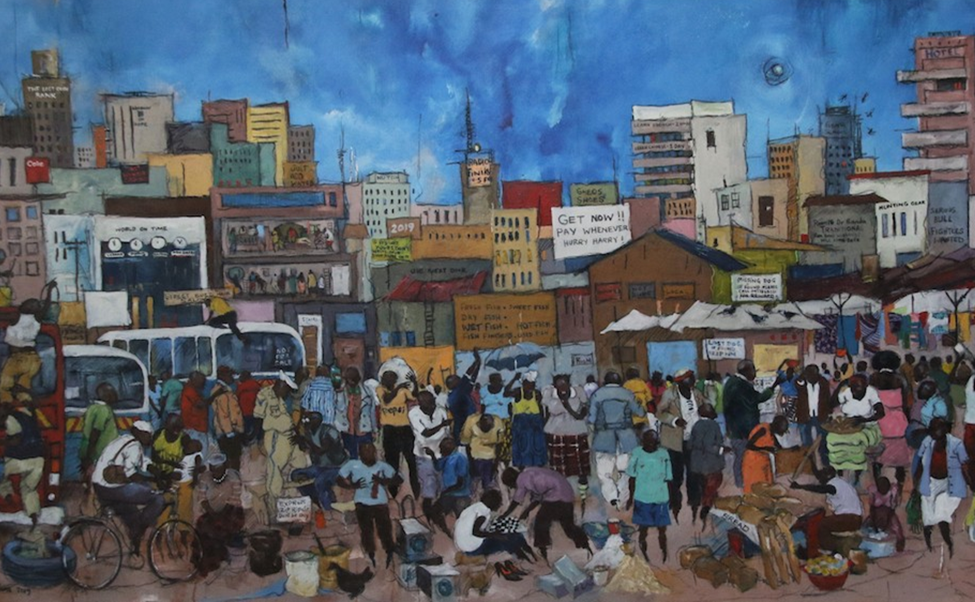
One of the key questions that came out of last week’s LEAD Africa conference in Zambia was this: How can we identify and equip emerging leaders to address Africa’s greatest challenges without threatening Africa’s greatest cultural distinctives? We do not want Africa to become like the West. We do not want to turn Lusaka into London or Nairobi into New York. But we do want to lift people out of poverty. So how can we encourage innovation without destroying culture? I was reflecting on this when strolling around downtown Lusaka, the capital of Zambia. Lusaka is a modern city, and there are elements of it that feel very familiar, like modern cities all over the world. There are big commercial buildings, fancy hotels, an international airport, plenty of Western brands all over the place. But there is a subtle underlying Africanness about Lusaka that’s there even in the downtown areas. There are smells and sounds and even things like color combinations in billboard advertisements that you just wouldn’t find in Chicago or other American cities. One of the things we look for in a ministry partner is a willingness to prioritize preserving what’s best about a culture while addressing contextual challenges. As we foster partnerships with organizations in Africa and elsewhere, our calling is not to erase what makes a culture unique but to honor and preserve people’s God-given cultural identities while empowering them to flourish in every way.
THF Program Update
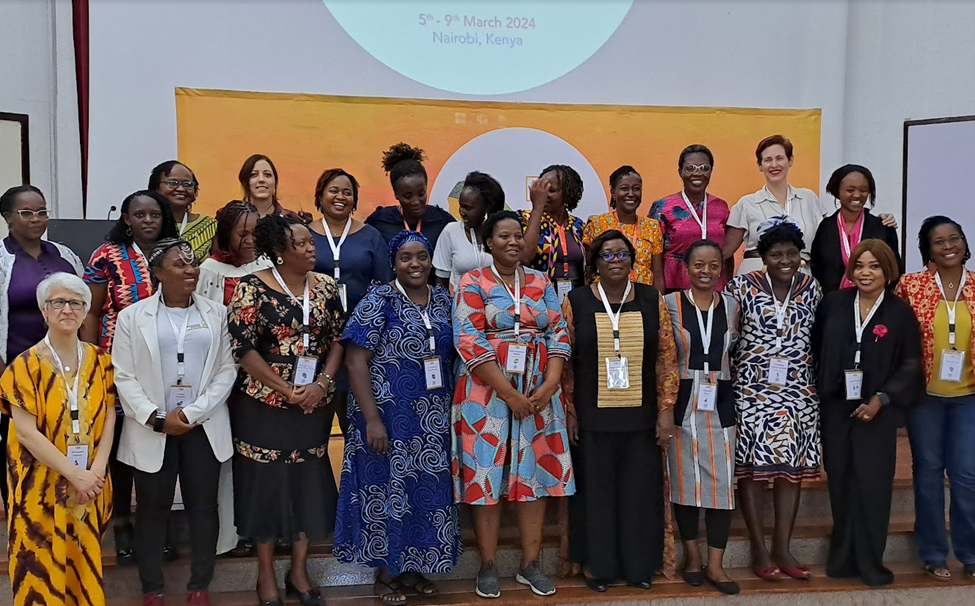
Grantmaking is the primary way Tyndale House Foundation engages with the Global Church, but another important component of our work is what we call programs—proactive, collaborative engagement with international partners in pursuit of specific goals. Last week I mentioned the Africa Leadership Study, THF’s original program. During the month of August, I’ll highlight our other four active programs, one each week. This week we’ll look at Africa Speaks. Back in 2017, the THF board commissioned a special report on the state of publishing in Africa. Through an extensive survey conducted across the continent, we learned that although there were individual publishing enterprises—including some highly successful ones—a continent-wide publishing industry really did not exist. So in March 2018, the board convened a Chicago-area conference, hosting several dozen African publishing professionals with the goal of “establishing a network of like-minded people and organizations who will commit to working together to see the establishment of a flourishing African publishing industry.” We called the conference “Africa Speaks” because of our goal of giving a voice to African writers. After three intense days of discussion and information sharing, the delegates created the Africa Speaks Accord, listing 20 commitments for publishing in Africa. A Continuation Committee was established to encourage ongoing progress and momentum. That committee eventually became the board of a newly registered Kenya-based organization called Africa Speaks. In March 2024, Africa Speaks hosted another gathering of publishing professionals, this time in Nairobi, to discuss progress toward the Africa Speaks goals. Today, THF continues to work closely with Africa Speaks, providing funding and consulting as we pursue our joint goal of a flourishing Christian publishing industry in Africa.
From the Bookshelf
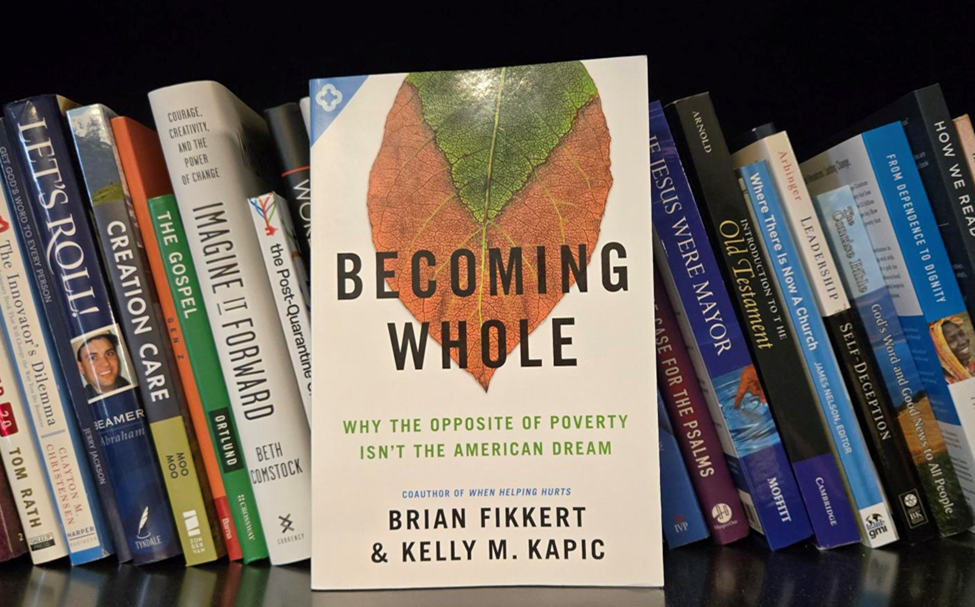
The THF staff have spent time this summer reading and discussing Becoming Whole: Why the Opposite of Poverty Isn’t the American Dream by Brian Fikkert and Kelly M. Kapic. You may be familiar with Brian Fikkert’s bestselling book When Helping Hurts, and this book is kind of a sequel to that one (although as Brian points out in the preface, it’s also kind of a prequel). We decided to read this book together to allow it to inform our team discussions about how best to engage with our international partners, and in that regard, the book did not disappoint. If there’s a central premise to Becoming Whole, it is that God’s people should approach the work of poverty alleviation with God’s priorities firmly in mind. Referencing biblical principles of generosity and caring for the marginalized, the authors argue that God’s ultimate desire is not to raise people out of material poverty but rather to bring people out of spiritual poverty and into a relationship with him. Rejecting the world views of Western naturalism and what they call evangelical Gnosticism, Fikkert and Kapic lay out a biblical model of human flourishing, where people function as “priest-kings” within God’s created order, relying on Jesus to inform and transform our engagement with God, people, and creation. This is a book for Christians, fully rooted in Scripture but making recommendations that anyone involved in philanthropy should pay attention to. If you’re interested in a biblical assessment of the kind of work Tyndale House Foundation is involved in, I commend this book to you.
That’s it for this week’s briefing. Please send any questions, comments, and Christian AI responses to [email protected]. Do you enjoy reading the THF Weekly Briefing? Subscribe to the email distribution list to get access to this resource the same day it’s published, and feel free to share it with others who may be interested, inside or outside of Tyndale. Thanks for continuing to pray for and support our partners around the world.
Jeremy Taylor
President | Tyndale House Foundation
The THF Weekly Briefing provides information about significant events happening in the wide universe of Tyndale House Foundation partner organizations as well as an occasional peek behind the scenes of THF’s operations. It is available to anyone at Tyndale who’s interested in learning more about the Foundation side of the organization. Was this email forwarded to you? Contact [email protected] to be added to (or removed from) the distribution list.