


Crime and Punishment … or Not
December 5, 2025What at first blush seems like unfairness is actually God’s grace in action.
I’ve been to court twice in the past week and a half.
The first time was the day before Thanksgiving. My son had been pulled over for speeding a few weeks earlier, and the way the law works for drivers under the age of 21 in Illinois, you have to go to court to apply for court supervision, which keeps the ticket off your record as long as you don’t get another one within 12 months. Even though the timing was inconvenient, I told my son it was worth it to keep his record clean. I went with him to provide moral support.
We showed up at 8 a.m. at the DuPage County Judicial Center, went through security, figured out which courtroom he was supposed to be in, and sat through several other cases, which included two DUIs and a parole violation. When it was my son’s turn, he approached the bench, greeted the judge politely, and said he was there to request court supervision.
The judge looked at him, then looked at me. She said to my son, “Is that your dad over there?” “Yes,” he replied. “Do you think he enjoys sitting with you in court on the day before Thanksgiving?” “No, probably not.” “Okay, don’t get sent back here. Slow it down when you’re driving. You can go.”
Just like that, the ticket was gone. The case was dismissed. My son didn’t have to pay the fine, and nothing went on his record. It was as if he had never been pulled over for speeding at all. It was a perfect picture of undeserved grace. He was guilty—he was definitely speeding—and he deserved to get a ticket and pay for it. But according to the legal system, his record is unblemished.
Five days later, I was back in court, this time on a jury summons. I had already requested and received two postponements due to travel, and I didn’t think I could put it off any longer. Once again I showed up at 8 a.m. at the DuPage County Judicial Center. Once again I made my way through security and figured out my destination. Only this time, I wasn’t headed to a courtroom. I was headed to the jury lounge, where I waited for several hours to see if I would be selected to serve on a jury.
Eventually my number was called, and I lined up with 19 other prospective jurors. We followed a bailiff to a courtroom, where a judge was waiting with a bunch of attorneys, ready to select a jury for a criminal case.
To make a long story short, I was chosen to be on the six-person jury. We sat through three hours of opening statements from both the prosecution and the defense, heard witness testimony, and then listened to the closing statements. Finally the judge gave us our instructions and dismissed us to the jury room to begin our deliberations.
It took us less than ten minutes to reach a unanimous verdict. The defendant was clearly guilty—her actions had been caught on multiple police officers’ body cams. The prosecutors had done their job well and proved her guilt beyond a reasonable doubt. We filed back into the courtroom, delivered our verdict, and were dismissed to go home.
I don’t know what sentence the defendant received—that’s the judge’s responsibility, not the jury’s, and we were specifically instructed not to allow the potential sentence to affect our verdict. Given the nature of the crime, I assume there will be some jail time. If so, that will be a harsh sentence, but it will be a just one. The defendant committed a crime, and she deserves to be punished, and now she will be. It’s not pleasant, but it’s fair. That’s the way the system is supposed to function.
So why didn’t it work that way for my son? He wasn’t any less guilty. Why was he allowed to leave the courtroom without even paying a fine?
The answer is that the judge in his case exercised judicial discretion. She was able to show leniency because someone else—not another person but the judicial system itself—absorbed the cost of the violation. The fine didn’t simply vanish; it was accounted for in a way that allowed my son to walk away without bearing the penalty himself.
It doesn’t seem fair, does it? Why should one guilty defendant be punished while another has his debt absolved and goes free?
The apostle Paul wrestles with this same question in Romans 9:13-16. He draws a distinction between the ancient patriarch Jacob and his twin brother, Esau. God showed love and mercy to Jacob but not to Esau. So Paul rhetorically asks in verse 14 whether this means God is unfair, and the answer is an emphatic “Of course not!” Why? Because, in verse 15, God says, “I will show mercy to anyone I choose, and I will show compassion to anyone I choose.” Paul then clarifies in verse 16, “So it is God who decides to show mercy. We can neither choose it nor work for it.”
What at first blush seems like unfairness is actually God’s grace in action. The reality is, none of us deserves mercy. Paul is clear about that too. Romans 3:23-24 says, “Everyone has sinned; we all fall short of God’s glorious standard. Yet God, in his grace, freely makes us right in his sight. He did this through Christ Jesus when he freed us from the penalty of our sins.”
The point is that grace isn’t ultimately about fairness; it’s about mercy, and mercy is God’s prerogative. Is it fair for some to be saved and others not to be? No. Fair would be for everyone to be condemned. But God, because of his love for us, has made a way for us to be declared Not Guilty. It isn’t fair. It’s way better than that! It’s the miracle of the gospel. Justice has been done; God’s requirements have been met. Not by us, but by Christ. And that’s the best verdict of all.
Here’s what’s happening.
Tragedy in Sri Lanka
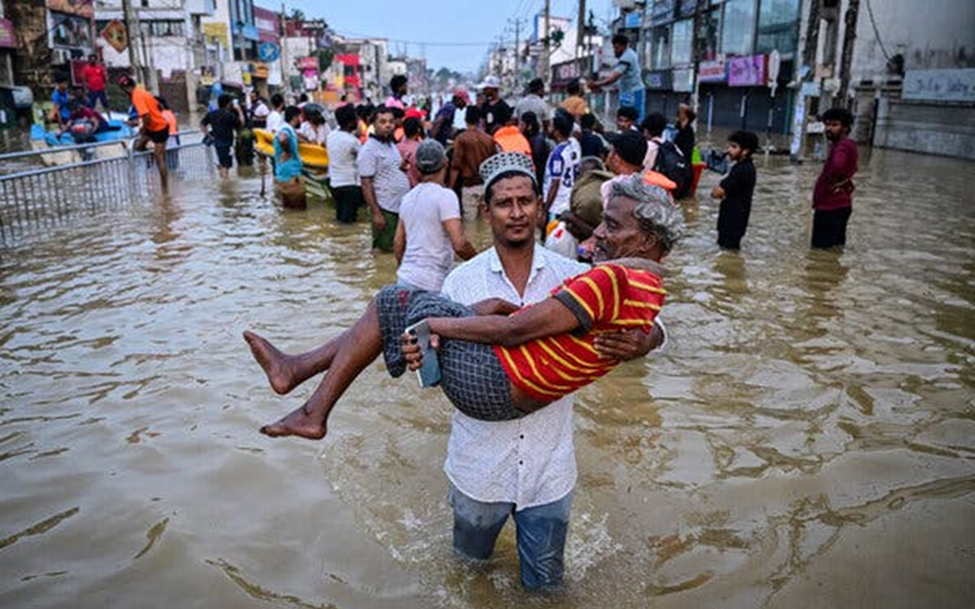
Last week, a massive tropical storm named Cyclone Ditwah made landfall in the South Asian country of Sri Lanka (the island nation to the southeast of India). The storm’s impact has been devastating. Torrential rains and landslides throughout the country have resulted in hundreds of deaths, and hundreds of thousands have been displaced and are now seeking refuge in emergency shelters. The Sri Lankan government has declared a state of emergency as international aid organizations mobilize to respond to the worst natural disaster the country has faced in decades. Some reports suggest that the destruction from this storm may even surpass the damage caused by the 2004 tsunami. Joe Handley, founder of THF partner A3 (formerly called Asian Access), emailed supporters earlier this week with an update from a missionary serving in Sri Lanka. While acknowledging the enormity and unprecedented nature of the tragedy, the missionary also expressed hope, reminding readers that God often works in the midst of tragedy to bring people to himself. The missionary wrote, “I carry a heavy burden at this hour, and I cannot deny the deep shock of what has unfolded. Yet even during devastation, I am convinced that this may be the beginning of a great move of God. The Spirit is not absent—He is preparing to pour Himself out in ways we have never seen before.” Please pray for the people of Sri Lanka as they begin what will be a very long recovery process, and pray that revival will indeed break out there as people turn to God in the midst of sorrow for comfort, strength, and hope.
Indigenous Mission in Bangladesh
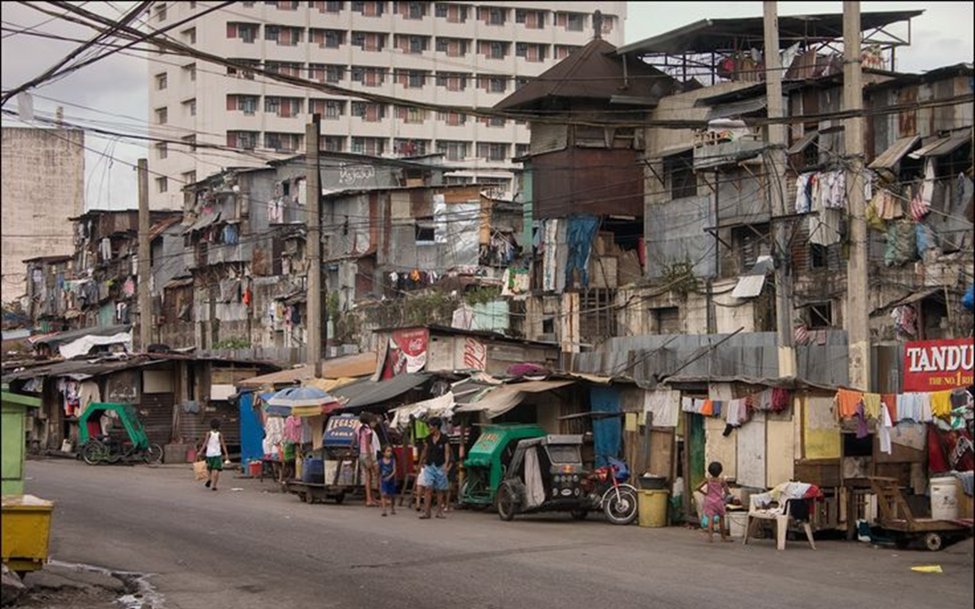
Bangladesh is a country of striking contrasts—dense cities and quiet villages, booming factories and vulnerable coastal plains, deep traditions and a young, modernizing population. From the mangrove forests of the Sundarbans to the bustling streets of Dhaka, Bangladesh is full of beauty, energy, and cultural richness. It’s also a place of tension. Bangladesh has made international headlines this week as Sheikh Hasina, the former prime minister who has been living in exile in India for the past 16 months, was sentenced to death in absentia for crimes against humanity. In 2024, she ordered a lethal crackdown on student-led protests, resulting in the deaths of up to 1,400 people and leaving thousands more wounded. The death sentence has been hailed by some as a just outcome and dismissed by others as politically motivated. Either way, the case—and the global attention it has brought—underscores the tenuous political situation in the South Asian country. There are significant religious tensions there too, especially for minorities like evangelical Christians, who constitute less than a third of one percent of the population. The vast majority (over 99 percent) of Bangladesh’s roughly 175 million citizens practice Islam, making evangelistic outreach difficult and often dangerous. Last week I received a ministry update from a THF partner organization committed to making Jesus known in the world’s hardest places. The update tells the story of one indigenous missionary working to communicate the gospel to his people in Bangladesh. I can’t share the video here, but I can encourage you to pray for this partner organization and the local workers they support who are ministering in places where there is little or no gospel access.
Twin Crises in Ethiopia
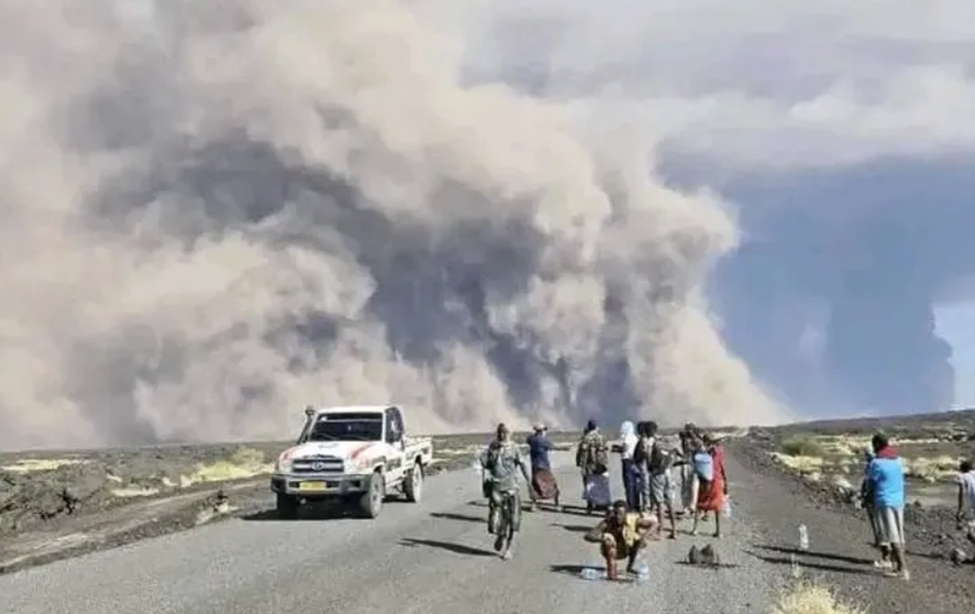
The World Health Organization has confirmed Ethiopia’s first-ever outbreak of Marburg virus in the southern part of the East African nation. As of late November, six deaths from the disease had been reported. Marburg virus is extremely serious; it is a hemorrhagic fever in the same family as Ebola with high fatality rates and no approved vaccine or widely available antiviral treatments. So far, no spread outside Ethiopia has been confirmed, but the risk remains high, given road networks and cross-border movement with neighboring countries like South Sudan and Kenya. At the same time, in the northeastern part of the country, the Hayli Gubbi volcano erupted on November 23, 2025—for the first time in recorded history. Although no deaths have been reported from the eruption, nearby communities that rely on livestock and grazing face acute challenges from falling ash, which can contaminate pastureland and water sources. Tyndale House Foundation supports several partners working in Ethiopia, including an organization that provides care for children born with club foot, a church-planting ministry, and a group that provides Bibles and training for pastors and Ethiopian Orthodox priests. Please join us in praying for the people of Ethiopia, especially those threatened by illness and displacement. Pray that in the midst of these difficult circumstances, many will encounter the comfort and saving presence of Jesus.
An Evangelical Creed
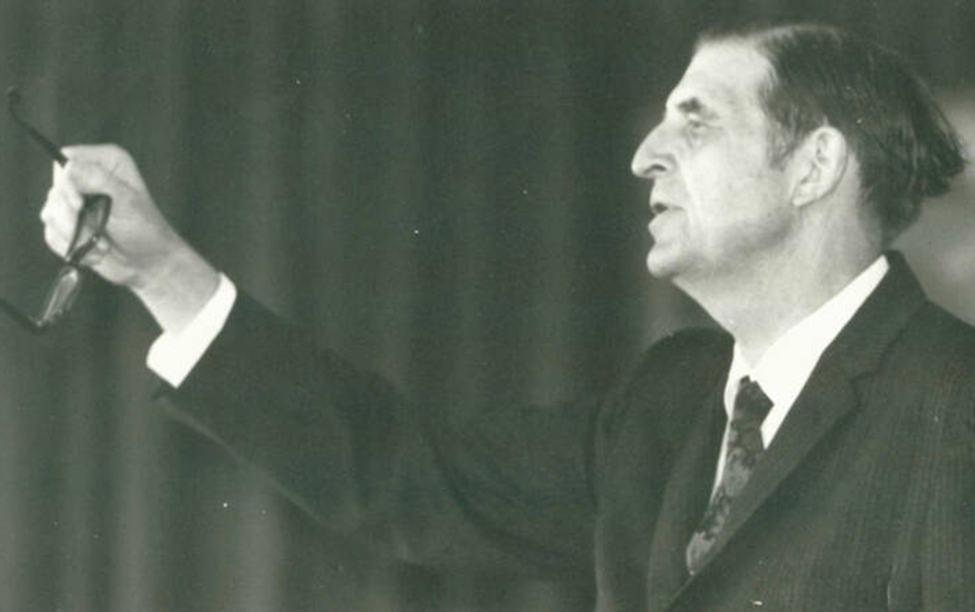
This year marks the 1,700th anniversary of the Nicene Creed, articulated at the First Council of Nicaea in the year 325. A rather less significant but still noteworthy milestone is that 2025 also marks the 36th anniversary of the Consultation on Evangelical Affirmations (CEA). In 1989, the National Association of Evangelicals and Trinity Evangelical Divinity School convened a group of theologians in Chicago to craft a clarification of what evangelicals hold as essential to the Christian faith. The consultation included prominent evangelical thinkers such as J. I. Packer, Os Guinness, D. A. Carson, Carl F. H. Henry, David Wells, and about 650 others. The document they produced is not quite a modern-day evangelical creed, but it’s close. Like the Nicene Creed, the CEA is confessional in tone, it defines core beliefs, it corrects doctrinal drift, and it is aimed at preserving essentials. At the center of the statement of evangelical identity are the three “distinctive marks” of evangelicalism: 1) belief in the Bible as the final and authoritative source of doctrine; 2) the centrality of Christ’s atoning death as the only means of salvation; and 3) the commitment to the proclamation of the gospel. It’s as good a summary of evangelical orthodoxy as you’ll find anywhere, and I commend it to you.
That’s it for this week’s briefing. Please send any questions, comments, and get-out-of-jail-free cards to [email protected]. Do you enjoy reading the THF Weekly Briefing? Make sure you’re subscribed to the email distribution list to get access to this resource the same day it’s published each week, and feel free to share it with others who may be interested, inside or outside of Tyndale. Thanks for continuing to pray for and support our partners around the world.
Jeremy Taylor
President | Tyndale House Foundation
The THF Weekly Briefing provides information about significant events happening in the wide universe of Tyndale House Foundation partner organizations as well as an occasional peek behind the scenes of THF’s operations. It is available to anyone who’s interested in learning more about Tyndale’s philanthropic commitments, partners, and operations. Was this email forwarded to you? Contact [email protected] to be added to (or removed from) the distribution list.