

Divine Recycling
December 23, 2025God shows his glory not only in making new things but also in making things new.
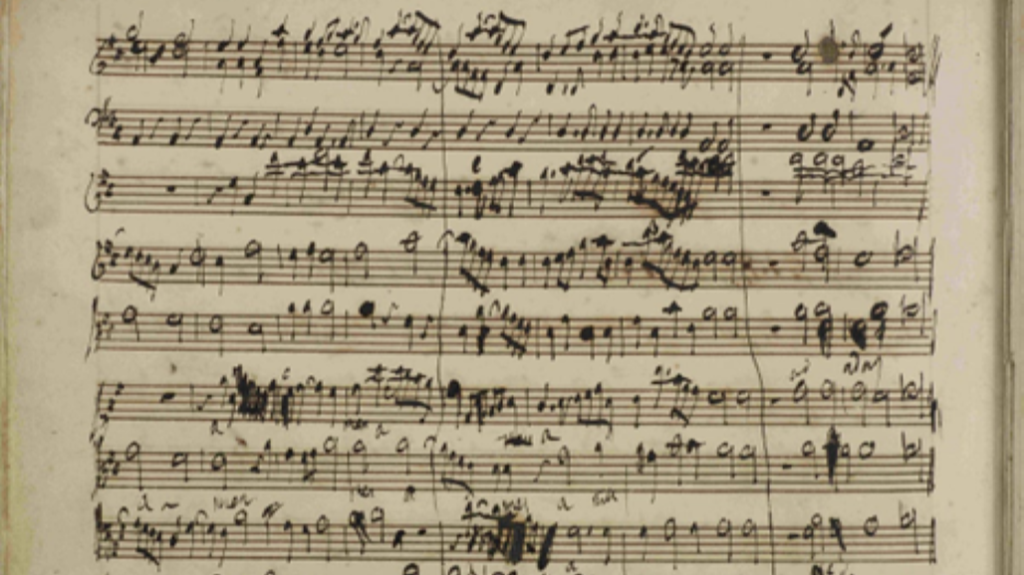
George Frideric Handel composed Messiah over the course of just 24 days.
It was late summer in London. The composer worked for 10 to 12 hours a day, sometimes more, at a writing desk in his rented home. He skipped meals. He worked late into the night. In just over three weeks of feverish intensity, he produced about 260 pages of score, representing roughly two and a half hours of music that is widely regarded as among the greatest achievements of the Baroque era.
By any measure, producing so much music in such a short time is a stunning accomplishment.
It also isn’t precisely accurate.
Why not? Because some of the music was already written. Pressed for time and operating under a tight deadline, Handel incorporated and adapted previously composed material, a common and accepted practice in the Baroque period.
If you know the tunes of some of Messiah’s better-known sections, you can easily imagine the Italian wording in context: The lyrics Nò, di voi non vo’ fidarmi from a secular love duet became the majestic proclamation “For Unto Us a Child Is Born.” The pastoral chorus “All We Like Sheep Have Gone Astray” was originally Quel fior che all’alba ride, from another duet. And the regal “The Trumpet Shall Sound” started out as an instrumental melody perhaps intended for ceremonial use.
Handel’s reuse of existing music is far from a shortcut. Rather, it was a means of bringing existing material to its fullest expression, serving a far greater theological and artistic purpose. The majority of the tunes in Messiah were brand new, and even the recycled songs were significantly reworked as simple duets were transformed into large choral masterpieces and melodic lines were reshaped to fit English biblical text. If anything, Handel’s ability to carefully select exactly which pieces to reuse, in exactly the right ways, with such a theologically and musically rich result, should enhance our appreciation of the classic oratorio.
I bring this up not just because Act I of Messiah tells the story of Jesus’ birth and thus serves as an incredible soundtrack for this week’s Christmas festivities. There’s a biblical principle at play here as well. Because God, the ultimate Composer, shows his glory not only in making new things (Isa. 43:19) but also in making things new (Rev. 21:5).
God created the world ex nihilo—out of nothing. And the theme of God’s creative action recurs throughout Scripture in passages like Psalm 33:6, Isaiah 45:18, and John 1:3, among many others. But the wonder of the Incarnation—and the entire gospel message—is that God also redeems what he has already created. Just as God’s uniqueness and glory are on full display in his creation of the heavens (Ps. 19:1-6) and the earth (Ps. 104:24), his mercy and grace are displayed through his forgiveness (Isa. 1:18) and regeneration (Tit. 3:5) of his fallen creatures.
When Christ was born as a human baby, the angel chorus proclaimed (hum along with the tune from Messiah if you like), “Glory to God! Glory to God in the highest! And peace on earth, good will toward men.” The Good News that the shepherds heard in the fields and the wise men discerned from the sight of an unexpected star is the reason we celebrate this time of year. God became a man in order to redeem humanity from sin and, through his death on our behalf, restore us to a right relationship with him. No wonder the angels sang!
This Christmas, when you hear (and maybe sing) the familiar strains of Handel’s Messiah, consider the fact that just as the human composer repurposed what he had already written to help bring the gospel to glorious musical life, the Divine Composer became what he had created to bring restoration and transformation and will come again to make all things new.
And that is worth singing about!
Here’s what’s happening.
God’s Word for Congolese Pastors
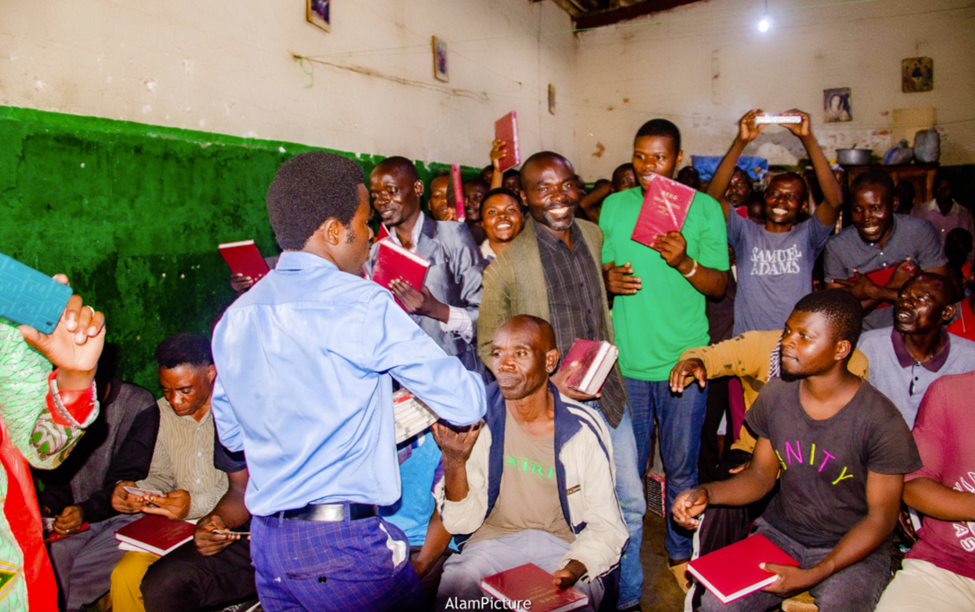
What’s happening in the Democratic Republic of Congo is perhaps the world’s most underreported atrocity. Recent attacks by the Rwanda-backed armed group M23 have drawn headlines, but the DRC has endured decades of conflict involving multiple armed groups, largely without sustained international attention. Since the 1990s, prolonged violence has contributed to millions of deaths as healthcare, food supply, and basic security systems have collapsed. Millions more have been displaced from their homes. Yet where government systems are weak or absent, the people of God continue to lead, serve, and shepherd faithfully. One THF partner serving in eastern Congo recently shared how a grant for Bible printing and distribution is bearing fruit. He wrote, “We are still living in a prolonged emergency context, marked by insecurity, instability, and deep uncertainty. Despite these realities, I would like to share an unexpected and deeply moving development. Because insecurity made it impossible for us to reach certain rural villages, we suspended those missions. However, when the pastors from these areas learned that we could no longer travel, they made the decision to walk—some for hundreds of kilometers—to our city, often at great personal risk, to collect the Bibles. This deeply shocked and humbled us. Many of them crossed zones of conflict on foot, risking their lives to ensure that their churches and villages could receive the Word of God. This became a powerful testimony of how desperately God’s Word is needed in this season of suffering.” Please pray for our partner, Christian-Joseph, and for the pastors who are risking so much to bring God’s Word to their communities.
Audio Bibles Available in Duruma
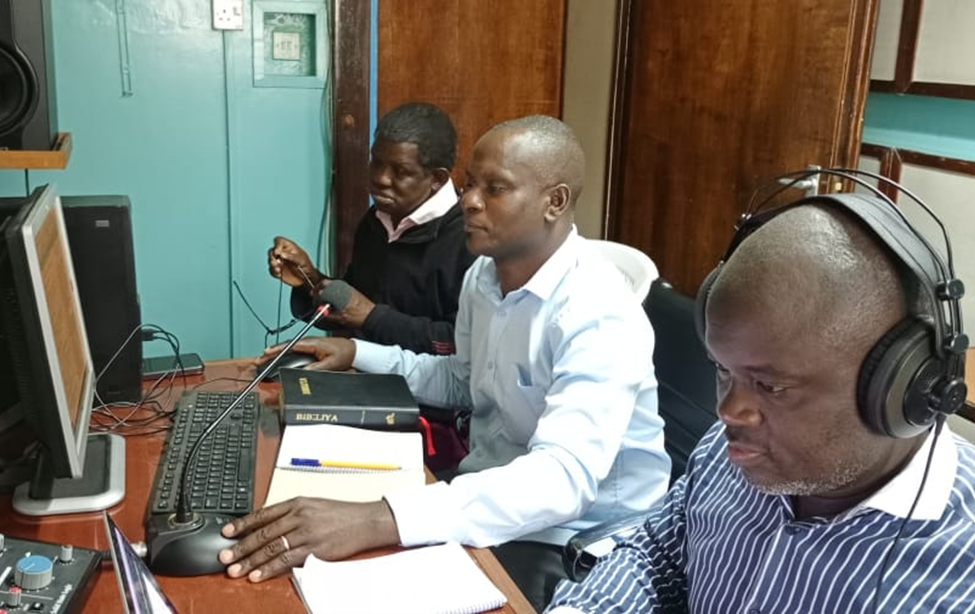
The Duruma are an ethnic group in eastern Kenya known for their strong clan-based community structure, agricultural livelihood, and resilience amid the challenges of persistent poverty. Estimates of the number of Duruma speakers vary, but it’s likely between 250,000 and 500,000. Duruma shares common origins, structures, and patterns of meaning with other African languages, but its vocabulary and pronunciation are distinct. Because of migration and cultural integration in Kenya, most Duruma speakers also speak Swahili, and many speak English as well. Even so, Duruma speakers often grasp complex spiritual or theological topics more deeply in their own language, making Bible translation in Duruma an important priority. The Duruma are also an orality-dominant culture; knowledge, values, and faith have traditionally been passed on through spoken word rather than written text. Davar Audio Bibles is a THF partner that provides Scripture in audio form for people in orality cultures around the world. By recording and distributing high-quality Bible recordings in local languages, Davar (the name is Hebrew for “word”) enables people to not only read but hear God’s Word in their heart language. Earlier this year, Tyndale House Foundation gave a grant to Davar to help fund the creation of the first ever Duruma Audio Bible, and last week we received word that the recording is complete and available for ministry use in Kenya! Praise God for his provision of Scripture in the heart language of the Duruma people, in a format that will resonate deeply within the orality-focused culture.
Positive Impact in East Africa
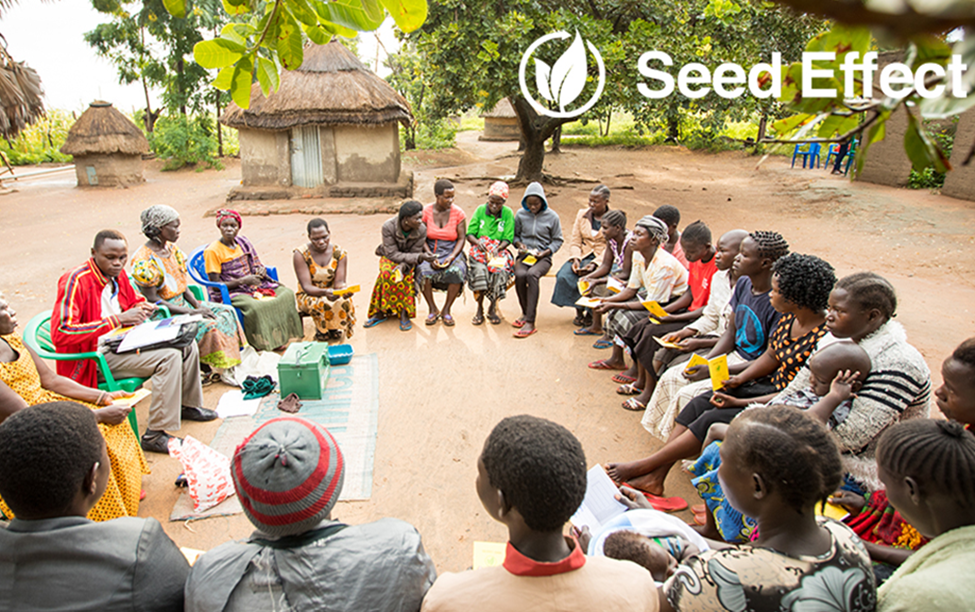
Poverty is a major obstacle to human flourishing all over the world. It is pervasive and devastating, and it involves much more than economic scarcity. Poverty is the absence of the resources, relationships, and structures people need to live with dignity, stability, and hope. Poverty exists in every culture and in every era, and it consistently harms individuals and communities. That’s why the Bible insists that God’s people care for those struggling with poverty. One place where poverty has been especially detrimental is the East African country of Uganda, where decades of political instability and rapid population growth have combined to make conditions extremely difficult for vulnerable populations. One THF partner working to make a difference is Seed Effect. Founded 15 years ago in South Sudan, Seed Effect now works throughout the region to strengthen and equip poverty-stricken communities with a biblical combination of financial training and discipleship. Their strategy centers on bringing community members together into savings groups to save resources, access small loans, receive business training, and grow in stewardship and mutual accountability. This year Tyndale House Foundation gave a grant to support Seed Effect’s work among refugee populations in northern Uganda, where the organization currently have 287 savings groups comprising 7,361 members. Poverty remains an ever-present reality, but by working with communities to overcome poverty’s effects using local resources and people’s God-given creativity and determination, Seed Effect is making a meaningful and lasting impact in East Africa.

Challenges and Opportunities in Asia
We all know the world is changing rapidly. Technological advances, international migration, and generational shifts are among the factors leading to significant global cultural upheaval. In times of disruption, the church is called to be a force for spiritual stability while adapting its outreach efforts to match the needs of the times. According to this month’s newsletter from the Asia Evangelical Alliance, seven factors are playing a key role in shaping culture and the church’s efforts to engage it. In addition to the three factors already mentioned, the AEA identifies decreasing mission workers, declining Christian market-share, increasing “unaffiliated” people, and geopolitical volatility as significant change dynamics. These realities represent challenges to Christian mission in Asia (and everywhere else too, for that matter), but they also represent great opportunities for the gospel, and multiple THF partners are already working throughout Asia to turn opportunities into impact. Here are just a few examples. The Galilean Movement is based in the Philippines and is working to create movements of discipleship training. A3 was founded in Japan and is increasing economic and social stability throughout Asia. ECHO Asia, based in Thailand, helps small-scale farmers reduce food insecurity. Multiple partners in Indonesia are working to plant churches among unreached populations. Beulah Theological Seminary, based in Myanmar, is training the next generation of church leaders. Fount of Wisdom, based in Cambodia, publishes books by local authors for the local church. Please pray for these and other partners who are meeting challenges head on and making the most of opportunities as the world continues to change.
That’s it for this week’s briefing. Please send any questions, comments, and favorite Messiah performances to [email protected]. Do you enjoy reading the THF Weekly Briefing? Make sure you’re subscribed to the email distribution list to get access to this resource the same day it’s published each week, and feel free to share it with others who may be interested, inside or outside of Tyndale. Thanks for continuing to pray for and support our partners around the world.
Jeremy Taylor
President | Tyndale House Foundation
The THF Weekly Briefing provides information about significant events happening in the wide universe of Tyndale House Foundation partner organizations as well as an occasional peek behind the scenes of THF’s operations. It is available to anyone who’s interested in learning more about Tyndale’s philanthropic commitments, partners, and operations. Was this email forwarded to you? Contact [email protected] to be added to (or removed from) the distribution list.