


European Optimism
November 7, 2025Is revival brewing in Europe?
Is the gospel on the move in a new way in Europe? Leaders I talked to in Spain last week think so.
If I had to sum up in one word the general feeling at the FEUER (Fellowship of Evangelists in Universities in Europe) conference I attended last week, it would be optimistic. Something very interesting and potentially significant seems to be happening in Europe. The 200 or so evangelists at the conference are convinced God is at work, and they are starting to see some of the seeds they have planted bearing fruit.
FEUER (pronounced “FOY-er”—the German word for fire) is a ministry of IFES, the International Fellowship of Evangelical Students. IFES is made up of 180 national movements, each independently governed by a national board and run by a general secretary. The national movements oversee structure, coordination, and training for individual campus ministries. FEUER coordinates training for individuals within the IFES Europe network who have been identified as having the gift of evangelism. The annual FEUER conference provides opportunities for evangelists to practice on each other and receive feedback and encouragement. It’s also an opportunity to study the Bible, worship together, and enjoy fellowship with likeminded people from nearly every country in Europe.
I got to sit in on some of the small-group sessions, and I can tell you that these young evangelists are passionate, articulate (even in English, which for most of them is not their mother tongue), winsome, engaging, and effective.
So what is happening in Europe? One German leader I met with at the conference said, “We’re not calling it a revival, but it could be an awakening.” Other leaders from countries that have been considered resistant to the gospel for a long time—countries like the Czech Republic and Georgia—told me they’re seeing huge interest among university students in reading the Bible and learning about Jesus.
A leader from Spain told me “mission week” events on campuses across the country are drawing record numbers of students.
Two evangelists from a country in Eastern Europe that I won’t even name for security reasons said they’re seeing campus Bible reading groups growing rapidly even though some group leaders have been imprisoned (in violation of the country’s nominal constitutional guarantees regarding religious freedom). When I asked them why they’re still there, given the increasingly hostile environment toward Christian activity, they said, “That’s our home. It’s where we’re called to be. We’re not leaving, and we’re not going to stop preaching the gospel, even if we get arrested.”
Maybe you’ve heard about the so-called “quiet revival” taking place in the UK. Tyndale House Publishers can’t print Bibles fast enough to meet the growing needs of the Bible Society there.
It remains to be seen whether rising student interest is going to lead to major transformation, but we need to pray for FEUER and other groups following the call of 2 Timothy 4:5 by engaging in proclamational gospel outreach. Pray that they will remain steadfast in following their calling. Pray for safety in places where evangelism can be dangerous. Above all, pray for God to be glorified through the preaching of his Word and the spread of the gospel across Europe, a continent that has been spiritually dry for so long but seems like it just might be turning into fertile soil at last.
Here’s what’s happening.
Unrest in Tanzania
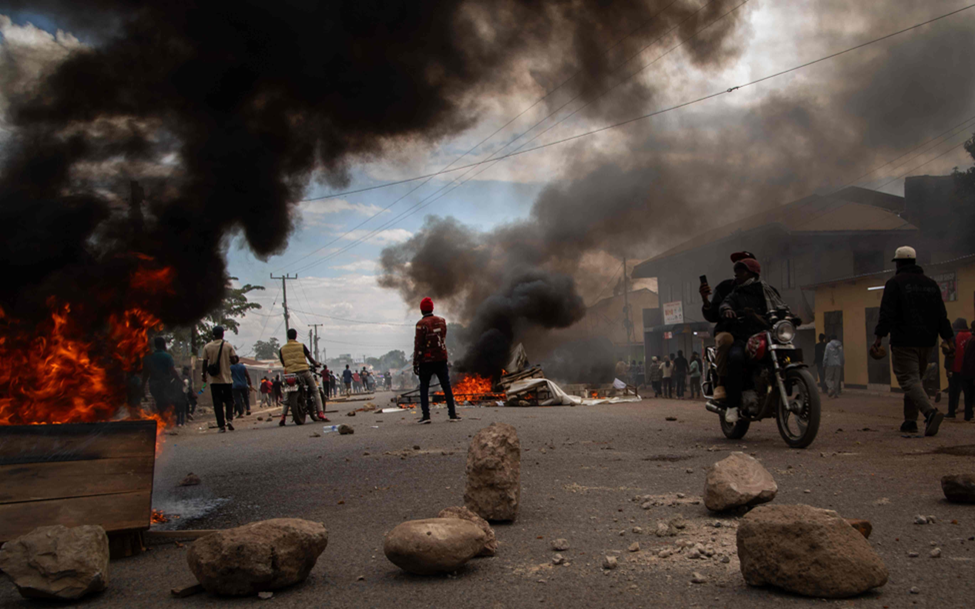
On October 29, 2025, the East African nation of Tanzania held general elections, with the official result that the incumbent president Samia Suluhu Hassan was reelected with about 97 percent of the vote. Hassan was Tanzania’s first female vice-president and became the first female president after the former president died in 2021. To say that a 97 percent electoral victory is questionable is an understatement. Opposition groups claim that other candidates were barred, detained, or harassed, making the race uncontested in in most constituencies. Protests broke out even before the election results were announced, resulting in at least 700 deaths, though some accounts put the death toll much higher (and numbers from the Tanzanian government are much lower). Then the internet was shut down nationwide. Communications from Tanzanian partners in THF’s Africa Speaks network have not been encouraging. One said, “We are safe but in great fear.” Another said, “Reports indicate that masked, armed individuals operating in unofficial vehicles are executing citizens in broad daylight, contributing to a crisis where the streets are reportedly littered with bodies.” The Africa Speaks press release reads, “Tanzania is gripped by fear after the October elections—with curfews, internet blackouts, and rising violence. Daily life has halted. The Africa Speaks community calls believers to pray for peace, protection, and the spread of hope across the nation.” Internet access was finally restored after five days, but Reuters reports that police have issued warnings against posting photos “that may cause panic.” Please pray for peace and stability in Tanzania.

Bible Distributors’ Sentence Upheld in China
In April of 2021, ten Christians were arrested in the Chinese autonomous region of Inner Mongolia on charges of illegal Bible distribution. They were found guilty and sentenced in November 2024. Sentences ranged from one year to 4 years 10 months in prison, and hefty fines (the largest was more than $140,000) were imposed as well. The rulings were appealed, but two months ago, the original verdicts were upheld by the Intermediate People’s Court of Hohhot. According to religious-persecution watchdog group International Christian Concern, the court found that the group’s actions “equated to an illegal business operation” even though the Bibles had been printed legally. Because the distribution took place through an underground house-church network and not through registered churches, the government considers it a crime. The defendants argued that their motivation was evangelism, not money-making, so their actions shouldn’t be considered business operations at all, but the court disagreed. Tyndale House Foundation has multiple partners engaged in Bible distribution in China, so we’re keeping a close eye on this troubling development. Our partners mostly operate through legal channels, so they’re not being targeted so far, but it’s discouraging to see the Chinese government becoming increasingly restrictive toward Christian activity in the country. Please pray for the believers who are facing prison time for the crime of distributing God’s Word in China.
Genocide Comments Draw Mixed Reaction
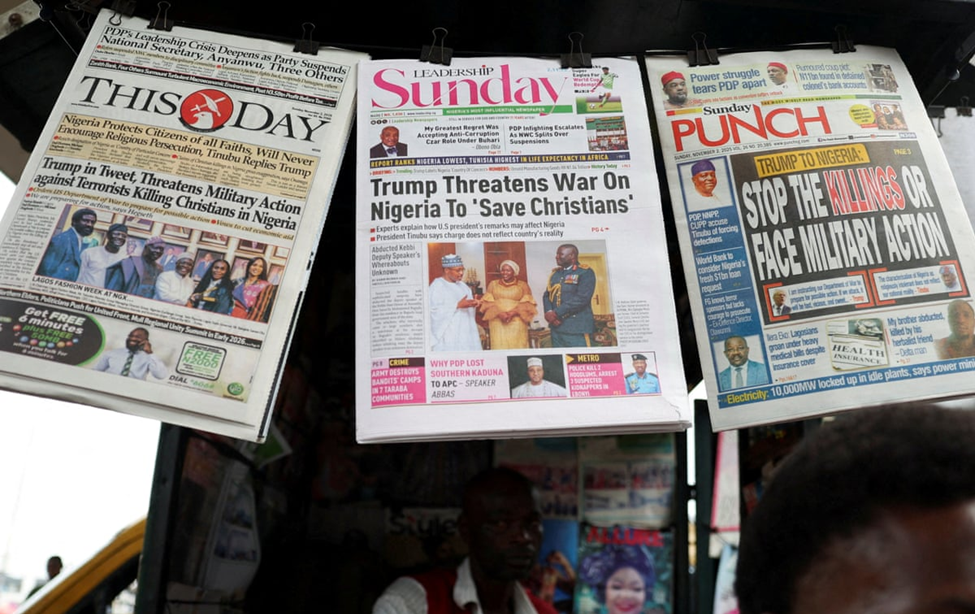
On Saturday, November 1, President Trump threatened via social media to send US troops into Nigeria “guns-a-blazing,” citing what he described as “killing of large numbers of Christians” that the Nigerian government was failing to stop. A day later, he elaborated to reporters aboard Air Force One, “They’re killing the Christians and killing them in very large numbers. We’re not going to allow that to happen.” Trump’s comments drew predictably mixed responses. Nigeria’s information minister said in a statement that claims of Christian persecution in the West African nation are “false, baseless, despicable, and divisive.” But an advisor to Nigerian President Bola Tinubu later said, “We welcome US assistance as long as it recognizes our territorial integrity.” Faith-based organizations including THF partner Alliance Defending Freedom have largely praised Trump for drawing awareness to the crisis in Nigeria. And rapper Nicki Minaj, who shall we say is not known for being generally aligned with the Trump administration politically, publicly thanked the president for his remarks on Christian persecution in Nigeria. It’s important to note that Christians are not the only victims of terrorist attacks in Nigeria; Muslims are targeted by groups like Boko Haram and ISIS-West Africa as often as Christians. Still, Nigeria has occupied the top position on the Open Doors World Watch List of countries where Christians are killed for their faith for many years. Please pray that leaders in Washington and Abuja will pursue truth, justice, and peace with discernment and a genuine concern for innocent victims of all faiths in Nigeria and everywhere else.
Euthanasia Advancing in Illinois
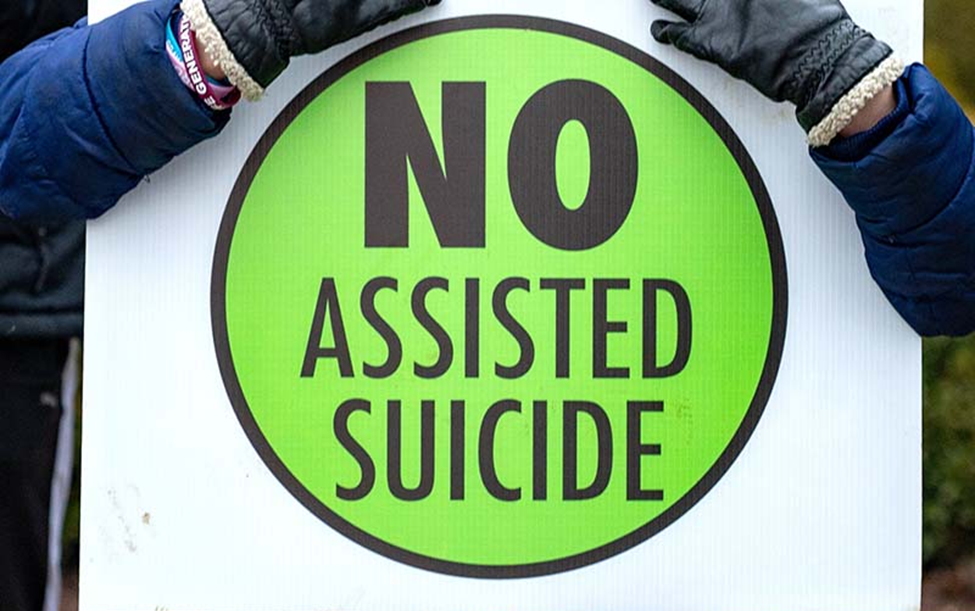
A bill called The End of Life Options Act has been passed by the Illinois House and Senate and is now headed to Governor J. B. Pritzker’s desk for a signature. The bill was passed by the House in May 2025 on a mostly party-line vote of 63 to 42 with 7 not voting. All 63 yes votes were from Democrats, and 5 Democrats joined 37 Republicans in voting no. The vote in the Illinois Senate was closer. Proponents apparently had a hard time getting the bill to the floor in the usual way, so the bill was tacked on as an amendment to a food safety bill, and the vote was held at 2:55 a.m. on October 31, 2025, the last day of the legislative session. The vote was 30 in favor (the exact number needed for the amendment to pass) and 27 against. Mary Kate Zander, president of Illinois Right to Life, wrote in First Things, “While we hope that the governor will withhold his signature, the pro-life people of our state are mourning yet another loss in our legislature. It’s a reminder of the evil that pervades our government . . . through the cruel failure to protect our society’s most vulnerable.” Those are strong words, and calling the government evil is obviously politically provocative, but the Bible is clear that humans are created in the image of God and thus possess inherent value and dignity (Gen. 1:27), that the power over life and death belongs to God alone (Deut. 32:39), that murder is prohibited (Ex. 20:13), and that we are to provide compassionate care for people who are suffering or nearing the end of their natural life (Matt. 25:36; James 1:27), not hasten death intentionally. So-called “right to die” legislation is a reflection of radical autonomy, the idea that individuals own themselves absolutely. But Scripture rejects that view, especially when it comes to life and death (Rom. 14:7-8). I don’t often use this briefing for political advocacy, but I will make an exception in this case to invite readers who live in Illinois to contact Governor Pritzker’s office and respectfully register your objection to this bill.
That’s it for this week’s briefing. Please send any questions, comments, and welcome-home gifts after a two-week trip to [email protected]. Do you enjoy reading the THF Weekly Briefing? Make sure you’re subscribed to the email distribution list to get access to this resource the same day it’s published each week, and feel free to share it with others who may be interested, inside or outside of Tyndale. Thanks for continuing to pray for and support our partners around the world.
Jeremy Taylor
President | Tyndale House Foundation
The THF Weekly Briefing provides information about significant events happening in the wide universe of Tyndale House Foundation partner organizations as well as an occasional peek behind the scenes of THF’s operations. It is available to anyone who’s interested in learning more about Tyndale’s philanthropic commitments, partners, and operations. Was this email forwarded to you? Contact [email protected] to be added to (or removed from) the distribution list.