


Language and Culture
August 29, 2025What can vocabulary tell us about culture and world view?
The Cambridge Dictionary’s editorial team has released a list of 6,000 new words recently added to the dictionary.
Some of the words reflect current cultural realities and trends. Unless you’ve been living under a rock or somehow have remained completely disconnected from the internet for the past few years, you probably already know (or can intuit) what a mouse jiggler is and could give a reasonable definition of tradwife. Other words are nonsensical outside the online forums they come from, like skibidi. The fact that the Cambridge Dictionary apparently only selects words that have “staying power” and yet decided to add lewk to the list is mildly depressing to me.
This raises an important question: what is the purpose of a dictionary? Is it simply to be a repository of words in the corpus of a language’s vocabulary, along with their meanings? Is it, in the words of one lecturer at the University of Edinburgh, merely “a public record of how people use language”? Or should a dictionary be somehow aspirational, acting as a guide for how language ought to be used, preserving standards of clarity, precision, and meaning even as language evolves over time?
Somehow I don’t see rizzler or quishing as aspirational, but maybe it’s just me.
This brings up another question: Why do words and their meanings matter so much to us in the first place?
Paul Tripp, writing for The Gospel Coalition, answers that question this way: “Words matter because they flow out of our hearts. Communication matters because what the heart is and does matters.” Or, as John Piper wrote in a collection called The Power of Words and the Wonder of God, “Words carry an immeasurable significance: by His word God created the world, and by our words we worship God.”
Why do words matter? Because words shape how we think, connect, and make sense of the world, and their meanings shape our understanding of reality itself.
But meaning can’t be divorced from culture and context. That’s why Bible translators spend years getting to know a people and their language before they can produce a meaningful translation of Scripture. That’s also why AI struggles to automate translation, at least so far, especially in languages that aren’t well represented yet in literature or online.
Hopefully it’s obvious that communication is extremely important to us at Tyndale. As a publishing company, we certainly believe words are important. Moreover, we believe there is still a need in our culture for the printed word. TikTok videos and YouTube shorts aren’t good enough media for communicating ultimate things; snackable content can’t meet the deep human need for meaning. Anyone who thinks we don’t still need words on paper is delulu.
It’s not a coincidence that the Bible is God’s Word, or that the Savior of the world is referred to as the Word by whom and through whom all things were created. God brought the world into existence with his Word, and he sent his embodied Word into that world to redeem it. The gospel is God’s good news, and we articulate that good news with words. Words that have actual meanings. Words that have true significance. As Peter said to Jesus in John 6:68, “You have the words that give eternal life.”
Language changes over time. There are 6,000 new words in the dictionary to attest to that fact. Let’s be sure that as we use words new and old to communicate meaning, we’re pointing people to the Word—God’s communication with us—and to the Word—God himself in Christ Jesus.
Here’s what’s happening.
Remembering Dr. Dobson
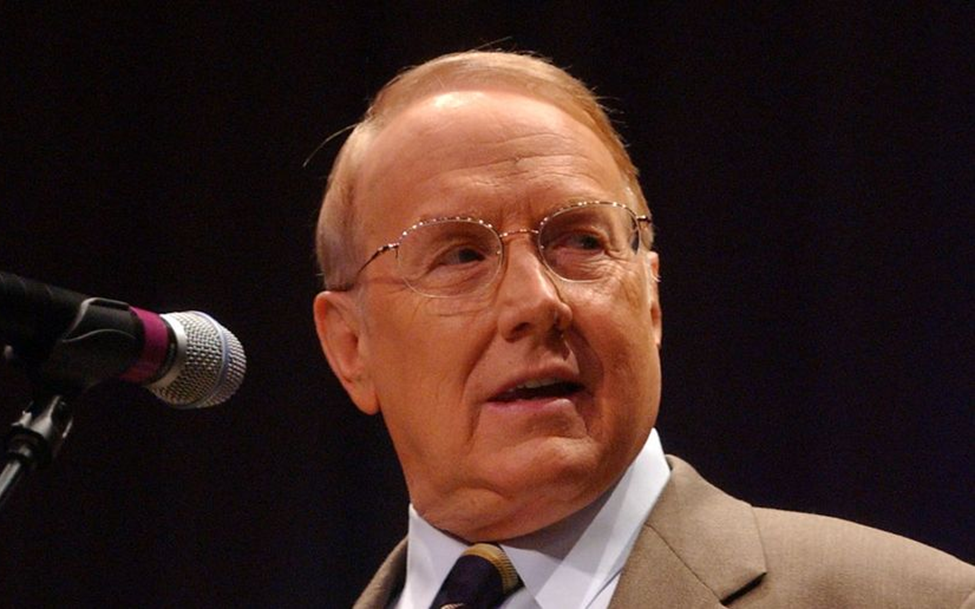
In 1969, a 33-year-old psychologist just two years out of grad school approached Ken Taylor, founder and president of Tyndale House Publishers, with a book idea. He wanted to create a resource for parents that would give practical, biblically grounded advice for raising children in an increasingly complex world. The book was called Dare to Discipline. It was published in 1970 and would go on to sell more than 2 million copies. Fifty-five years later, it is still in print. That book struck a chord with parents in the early 1970s and quickly established its author, Dr. James Dobson, as a national voice on parenting and family issues. In 1975, Tyndale signed a new contract with Dr. Dobson for a book that would eventually be titled The Strong-Willed Child. As part of the publishing agreement, Tyndale agreed to contribute $35,000 to help Dr. Dobson start a new radio program called “Focus on the Family,” and a full-fledged organization with the same name was officially founded in 1977. Over the next decade, James Dobson became known as the go-to expert in all things related to Christian parenting, and Focus on the Family became a trusted resource for parents throughout the U.S. and even around the world. In 1988, Tyndale began publishing a periodical called Focus on the Family Bulletin with content prepared by FOTF’s editorial staff. A year later, another partnership between Tyndale and Focus launched with the first episode in the wildly popular McGee and Me! video series. In 1993, Tyndale published Dr. Dobson’s latest book, When God Doesn’t Make Sense, which would sell 500,000 copies in its first year. In 1998, Tyndale became a major publishing partner not just for James Dobson but for the entire Focus on the Family publishing enterprise—a relationship that continues to this day. In 2001, Tyndale released yet another Dobson bestseller with Bringing Up Boys, followed in 2010 by Bringing Up Girls. On August 21, 2025, Dr. James Dobson went home to be with the Lord at the age of 89. He leaves a rich legacy of faithful service to families across multiple decades. As we at Tyndale celebrate his life, we are also grateful for the many years of fruitful partnership we have enjoyed with Dr. Dobson and Focus on the Family, including millions of books and other products sold and tens of millions of dollars generated for ministry impact globally.
Hope in Haiti
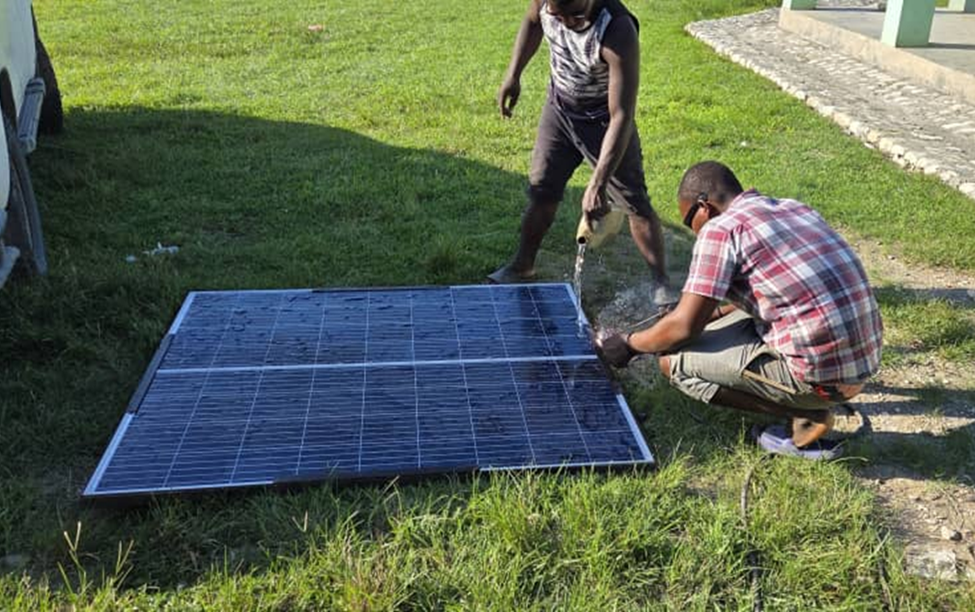
The Caribbean nation of Haiti has been a hot zone of governmental dysfunction for generations, but since the 2021 assassination of President Jovenel Moïse, the rise of armed gangs and the simultaneous breakdown of state authority have led to thousands of deaths and the displacement of hundreds of thousands of Haitians. In the midst of this chaos, however, there are pinpricks of hope, including a rural school operated by a THF partner organization called New Life for Haiti. Former Tyndale employee Erin Smith serves on the NLFH board and wrote recently to give an update on how THF grant money has been used in the past year, including the purchase of solar panels to provide electricity for the school. She wrote, “There is no electrical grid for our school. For the past couple of years, our school administrator has used a single solar panel to run the one laptop we’ve had at the school. He’s set the panel out on the ground each day to collect enough solar energy to run the laptop, and then it’s brought inside at the end of the school day. A couple of weeks ago, our field director used THF funds to purchase more solar panels, and some friends helped him install them on the school roof. He wired each of the ten classrooms with light sockets. Prior to this, students have just relied on whatever natural light makes its way into the classrooms through open doors and windows. One classroom also has electrical outlets for 15 laptops we are purchasing for our tenth graders. This is the first year the school will have any sort of technology in the classroom. There will be about 270 students at the school in the fall. Most of these students are first-generation learners; few of their parents are educated beyond sixth grade. When the school first opened, the biggest dream parents had was that their kids would learn to read. Now parents are saying their children can be doctors, engineers, nurses, teachers—whatever they want to be!” Please pray for these students as they learn this year with the aid of electricity for the first time, and pray for peace and stability in Haiti, where these things have been elusive for so long.
THF Program Update
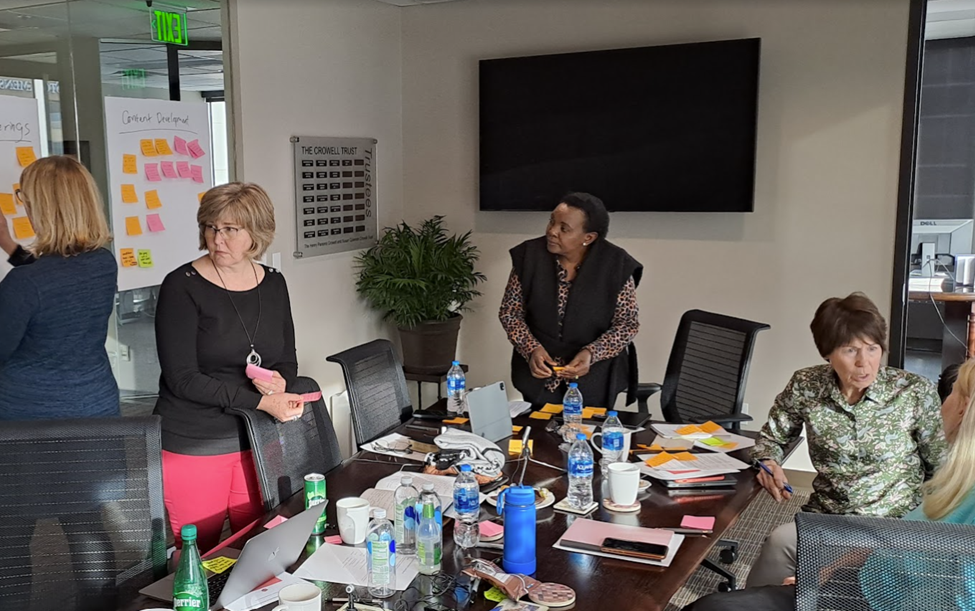
During the month of August, I’ve been highlighting a different THF program each week. Programs are a way for us to engage proactively and collaboratively with certain partners to meet specific needs. This week we’ll look at our African Women Empowerment (AWE) program. In January of 2023, leaders from four foundations met together in Colorado Springs to brainstorm answers to this question: What would it look like to empower more women in Africa to assume leadership roles in nonprofit organizations? There was no set agenda, no assumed outcome, just a shared desire to empower female leaders in Africa to fulfil their God-given leadership calling. We met for an entire day, and over dinner together that night, we prayed about what collaborative engagement could look like. Over the next several months, three of the four foundations (including THF) made grants to two field partners to help extend existing programs to train African women for leadership. Then, in April of 2024, the THF board set aside funding to begin the process of creating a framework for mentorship in Africa to help develop the next generation of women leaders in the most effective way possible—through mentoring by older women. Today, we are still in the planning phase, working on convening a leadership team of women from several African countries to develop a mentorship curriculum and strategize about creating a mentorship platform. The other foundations that were involved in the initial strategy meeting are still engaged as well; we’re hoping that by the end of this year, with the Lord’s help, we’ll be much closer to the goal of mentoring women across Africa to take their place within the next generation of African leadership.
Scripture Engagement Linked to Flourishing
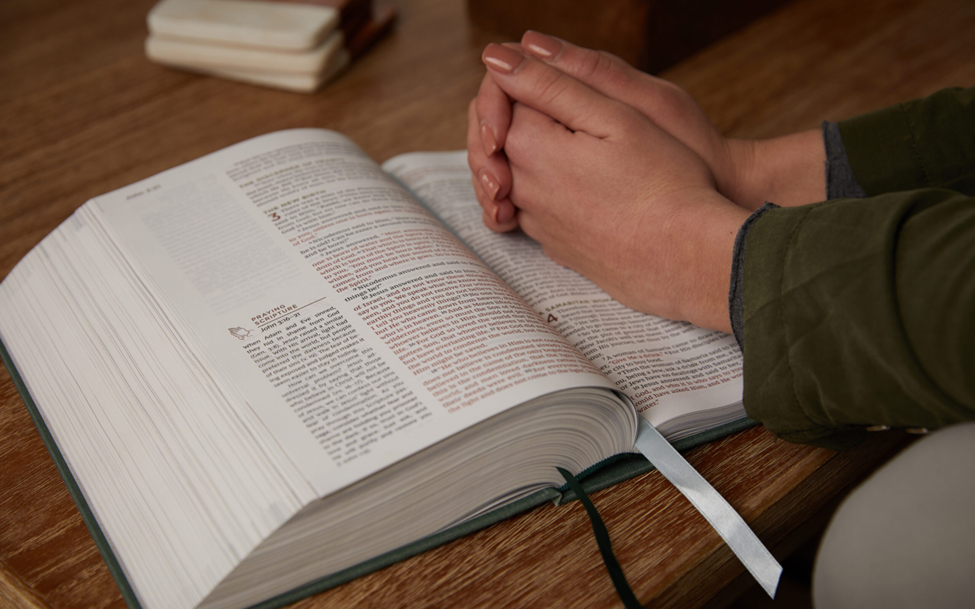
Are you flourishing? Are your neighbors flourishing? What about your coworkers and family and friends? What about your church? What does flourishing even look like in these contexts? The Institute for Qualitative Social Science at Harvard University has been working on a metric for measuring human flourishing across six domains: happiness and life satisfaction, mental and physical health, meaning and purpose, character and virtue, social relationships, and financial stability. You might think that wealthier people who are more financially stable would rank higher on the flourishing index. But what researchers are discovering is that as a whole, wealthier Western countries actually rank lower than countries like Indonesia, Nigeria, Kenya, and India, where nonfinancial factors play a larger role in social engagement and general happiness. Knowing this, the American Bible Society conducted research to determine how Scripture engagement affects flourishing scores on Harvard’s index. They found, unsurprisingly, that Christians tend to rank higher in flourishing than non-Christians, and Christians who regularly read the Bible and are actively connected to a vibrant church typically rank highest of all. In fact, daily Bible readers scored fully 10 percent higher than people who never read the Bible, and Boomers (the most Scripture-engaged generation in the US) scored higher than Gen Z (the least Scripture-engaged generation) by almost 20 percent! The connection between declining Scripture engagement in the US and a dropping overall score on the human flourishing index across generations is obvious. Tyndale has multiple partners on both the publishing side and the foundation side who are working to increase Bible engagement in young people in the US and around the world. Please pray that more and more people especially in younger generations will encounter God through engagement with his Word.
That’s it for this week’s briefing. Please send any questions, comments, and solar-panel hardware to [email protected]. Do you enjoy reading the THF Weekly Briefing? Make sure you’re subscribed to the email distribution list to get access to this resource the same day it’s published each week, and feel free to share it with others who may be interested, inside or outside of Tyndale. Thanks for continuing to pray for and support our partners around the world.
Jeremy Taylor
President | Tyndale House Foundation
The THF Weekly Briefing provides information about significant events happening in the wide universe of Tyndale House Foundation partner organizations as well as an occasional peek behind the scenes of THF’s operations. It is available to anyone who’s interested in learning more about Tyndale’s philanthropic commitments, partners, and operations. Contact [email protected] to be added to (or removed from) the distribution list.