

National Tragedy
September 11, 2025America mourns again
It’s 9/11 once again.
Every year on this date, Americans pause to remember the horrific events of September 11, 2001. We honor the brave first responders who rushed toward danger, and we mourn the thousands whose lives were snuffed out in the worst terror attack in US history.
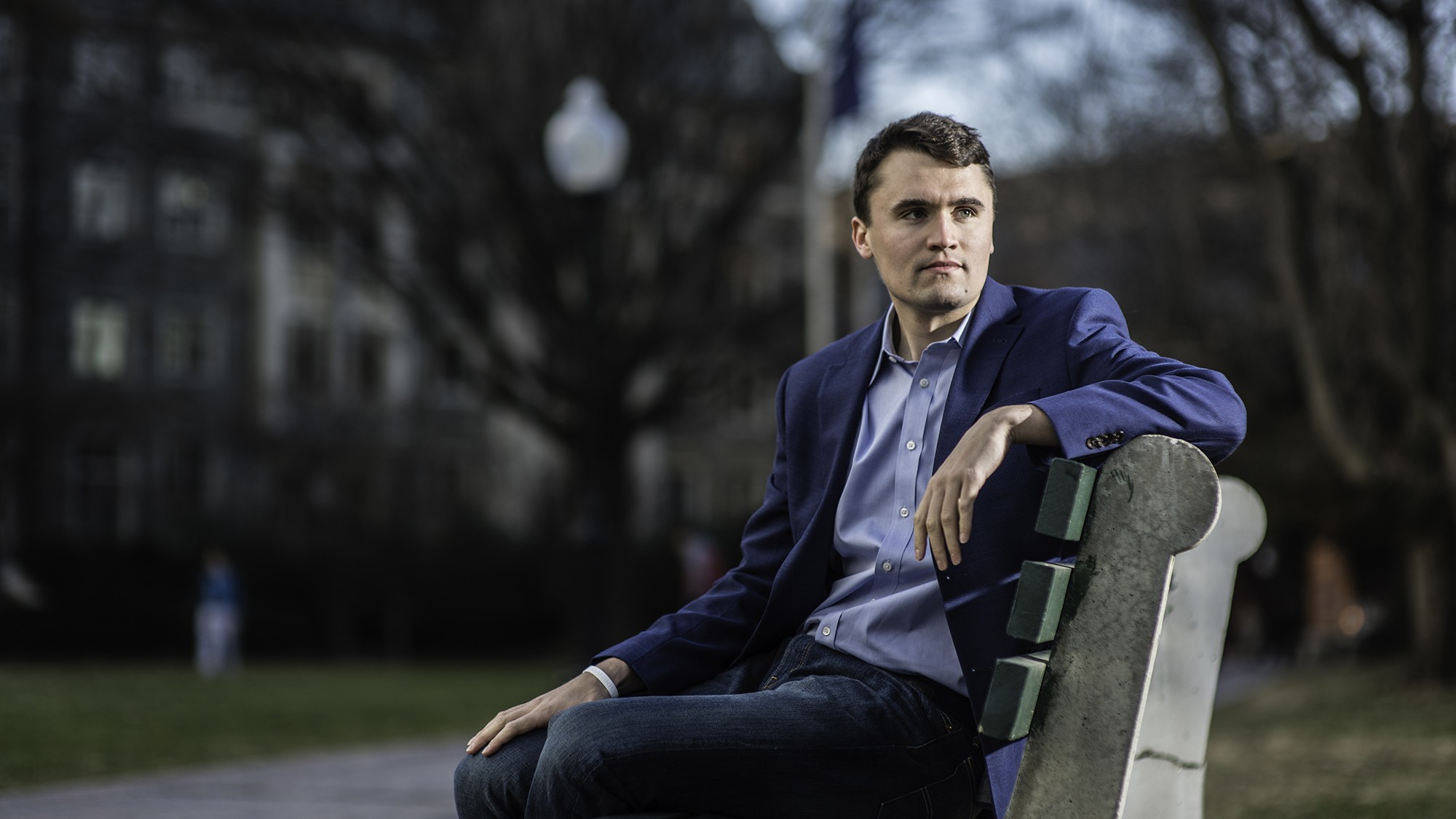
This year the anniversary feels even darker because of fresh tragedies that confront us with the persistence of evil in our world: yesterday’s murder of Charlie Kirk, the school shooting at Evergreen High in Colorado, and the recent stabbing death of Iryna Zarutska.
I did not know Charlie Kirk. I did not follow his work closely, and I would not agree with him on every issue—though I suspect I am more aligned with his positions than not. But regardless of how a person feels about Charlie Kirk’s political activities, his murder marks a dark day in the history of our nation. Not because one political voice has been silenced, but because civil discourse itself is endangered. If we can’t disagree strongly, even vehemently, and yet still treat each other with respect and dignity, we will not hold together as a nation for long.
Twenty-four years ago, America was attacked by outsiders driven by false beliefs. Yesterday our way of life was attacked by an insider, an assassin operating under the false belief that violence is an acceptable form of disagreement. Such acts are not only tragic; they are evil. Isaiah 5:20 says, “What sorrow for those who say that evil is good and good is evil.” Reports that some actually celebrated Kirk’s death only deepen the sorrow. I was glad to see leaders from both the right and the left quickly denounce the shooting.
We should pray for the Charlie Kirk’s family, especially his wife and two young children, and I think we should pray for our country in this moment as well. I hope yesterday does not mark the beginning of a descent into even more violence but rather can spark an acknowledgment by people of all political persuasions that we need to move collectively back toward civility.
Tragically, on the very same day, another evil act took place in Colorado, where a 16-year-old student walked into Evergreen High School and opened fire, wounding two classmates before turning his gun on himself. And just weeks earlier, Iryna Zarutska, a 23-year-old refugee from Ukraine, was brutally murdered on a train in North Carolina while other passengers stood by, helpless to intervene and seemingly indifferent to her suffering.
What is going on?
The answer, of course, is that evil acts are an inevitable reality in a world so thoroughly tainted by sin. We can argue about the extent to which the criminal justice system failed Ms. Zarutska, and we can bemoan the callousness of a society where people wouldn’t immediately rush to her aid. We can debate the merits of gun control and talk about the origins of the mental-health crisis crippling an entire generation of young people who now have to worry about school shootings in addition to everything else wrong in the world. We can and should lament the tenor of discourse that has led to an increasing culture of political violence—and we should discount any statement from either the political left or the political right that blames only the other side for the reality we find ourselves in.
On September 11, 2001, we saw both the depth of human evil and the power of human courage. Today we see the same contrast. Yes, evil persists, and we need to call it what it is. False beliefs have consequences, and Christians need to tell the truth. And the truth is that hope persists as well and will triumph over evil in the end. Christ still reigns, and he alone offers forgiveness, transformation, and the promise of a world made new.
Here’s what’s happening.
Global Publishing Symposium Report
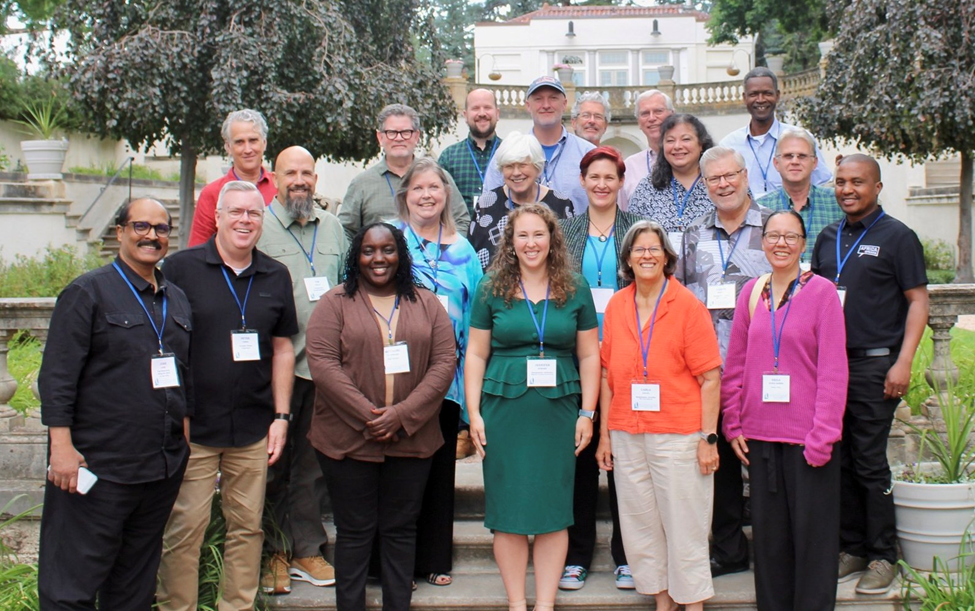
In August 2025, more than two dozen publishing professionals from ten countries gathered in Colorado Springs for a two-day strategy session focused on a collaborative approach to addressing opportunities, challenges, and best practices related to Christian publishing on a global scale. This week, THF partner and conference host Magazine Training International sent out a news briefing that was featured in ECPA’s Rush to Press. You can read the official bulletin at your leisure, but here are my reflections from the conference, which I thought had a wonderful collaborative feel. Various players in the Christian publishing industry have been talking for years about international collaboration, but it seems like the time for action may have now arrived. During the gathering, delegates decided we need to collectively focus on six primary issues: publisher sustainability, integration of technology, cross-border distribution, educating the Church about the importance of publishing, investing in training and mentorship, articulating and executing mission, and instituting standards of quality and excellence. If global publishers can really work together to address these priorities, I think we’ll start to see significant progress in coming years.
Church Revitalization in Chicago
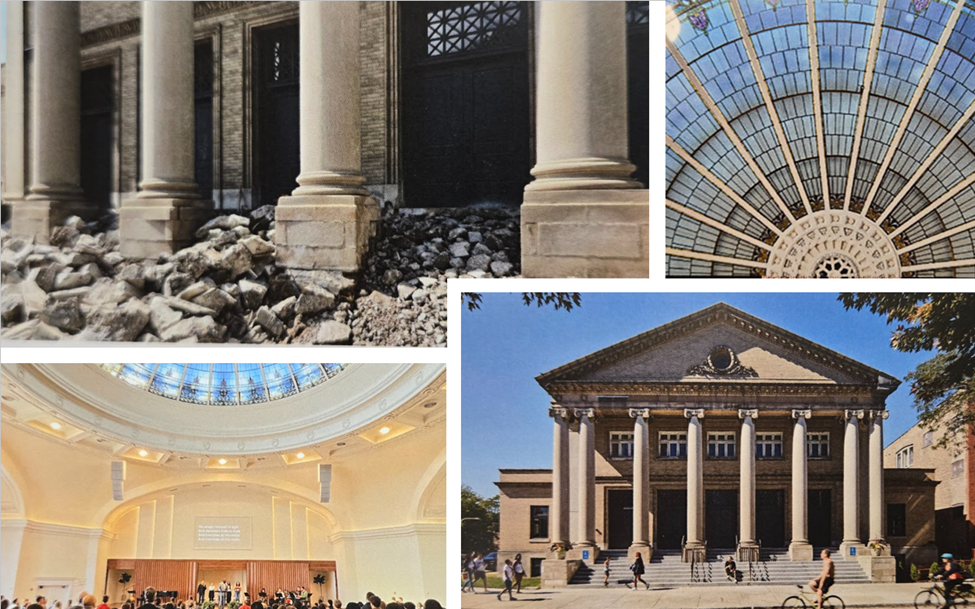
One of THF’s grantmaking priorities is our local work in the Chicagoland area. The grants in our Local category typically go to organizations in the city of Chicago itself or in DuPage County, and they tend to be for humanitarian projects addressing the needs of the most vulnerable in our greater community. We want to be good neighbors, so we invest in ministry close to home, and we want to respond to the biblical mandate to care for those on the margins, so we pay attention to people’s needs in our own neighborhood as well as globally. To paraphrase Oliver Wendell Holmes, we don’t want to be so internationally minded that we’re no locally good. Because of this local commitment, we sometimes can give toward projects that we typically wouldn’t be able to consider. One example was a few years ago when we received a proposal from Christ Church Chicago, which was in the process of purchasing and restoring a historic property. A grant toward a capital campaign is not typical for us, but we made an exception because of the relationships several board members have with church leaders. Earlier this week I received a note from David Helm, the church’s senior pastor, saying, “I am thrilled to send you a report on the progress of the gospel since the purchase and renovation of our building. The generosity of your foundation played a key role in our ability to executive our vision. I hope you and the board will be greatly encouraged!” The report contains great before-and-after photos from the church building, which are fun to see, but even more encouraging are the reports of ministry taking place in Chicago through this church. Church Revitalization is something we invest in globally, so it’s a special privilege to get to invest in it here at home as well and see such a great return.
Sudan in Crisis
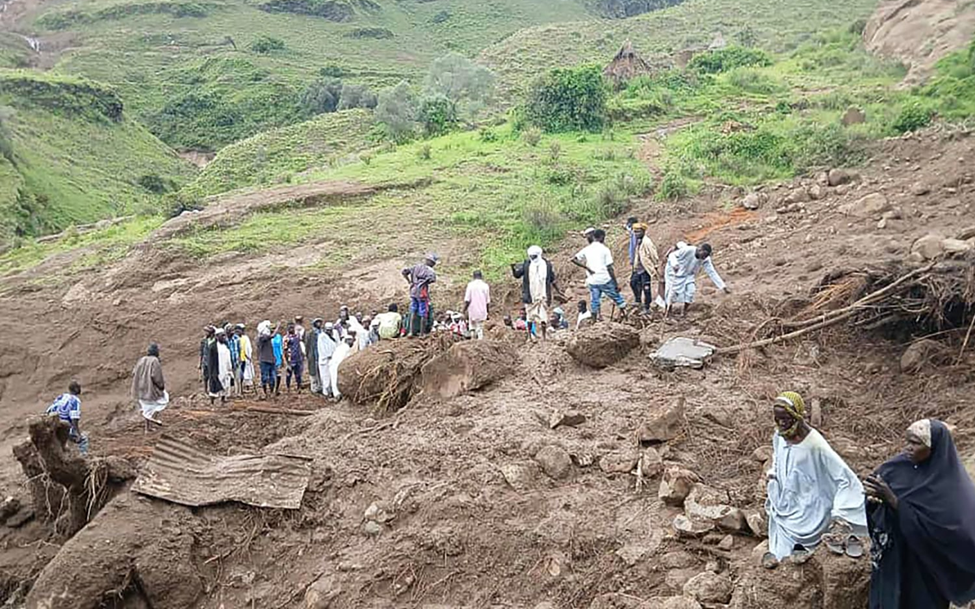
The Sahara Desert covers the northern part of the continent of Africa and is part of the great “desert belt” that extends eastward through the Arabian Desert and on into western Asia. If you look at a map of Africa that shows country borders as well as areas of vegetation, you’ll see Sudan up there in the northeastern part of the continent, mostly covered by desert. However, the southern part of the country is in the fertile band that experiences a rainy season each year. Rains since July of this year have been especially heavy, and on August 31, 2025, saturated land in the mountainous region of Central Darfur collapsed, triggering a massive landslide that took out entire villages. At least a thousand people died in the catastrophe, and thousands more have been displaced with nowhere to go. Making this tragic situation even more heartbreaking is the fact that Sudan was already reeling from civil war, looming famine in the north, and a cholera outbreak. Political instability and government corruption always make things worse, and the Sudanese people have been suffering massively for years as a result. Tyndale House Foundation has multiple partners operating in Sudan, including World Relief, which has already sprung into action to meet people’s urgent physical needs during this crisis. Please pray for the people of Sudan and for our partners who are working to provide humanitarian relief, education, refugee assistance, and other services in Jesus’ name.
Relational Grantmaking
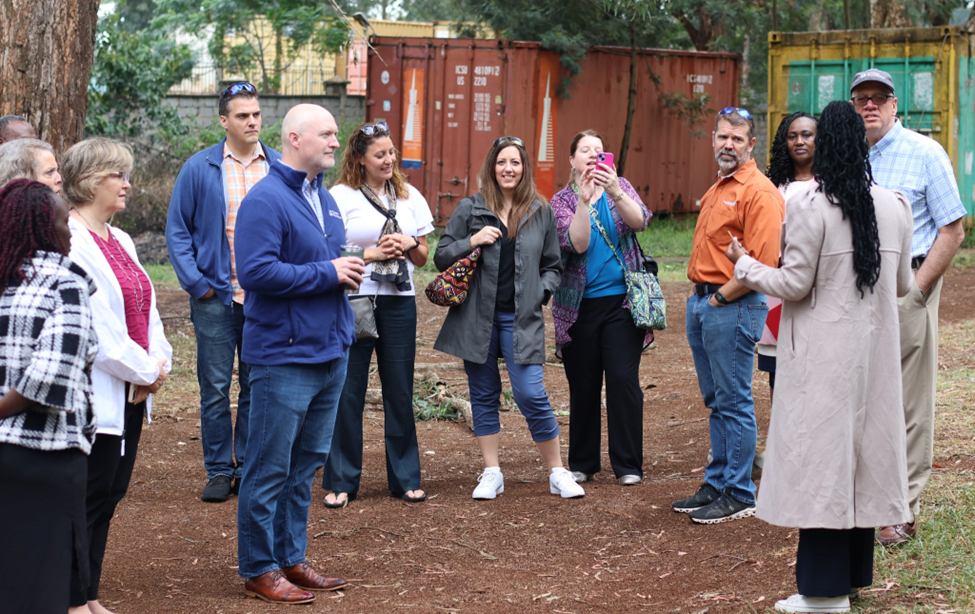
Tyndale House Foundation is somewhat unusual in the world of Christian philanthropy because of how many international grantees we have compared to the size of our staff. Most foundations that are close to THF’s size have maybe a few dozen partners; we have hundreds of active partnerships. The larger Christian foundations have big staffs to go along with their big grantmaking budgets and large number of grantees; we have a team of five. So it takes a lot of intentional effort and time to form and cultivate the kind of relationships we want to have with our partners. We do that through regular meetings, whether in person or on Zoom, through periodic site visits, and through prayer. (Praying for someone is a great way to deepen a relationship with them even if you’re not spending a lot of time together.) Generosity rooted in love is biblical, as 1 Corinthians 13:3 makes clear. Even sacrificial giving loses its eternal value without genuine love for the people we’re engaging with. And the THF board has always preferred to invest as widely as possible in order to maximize the breadth of our impact. That means the role of a THF employee is always going to involve forming gospel-centered relationships and partnerships with a large number of leaders. That’s part of what makes our work rewarding, and that’s the reason we spend more time and energy investing in people than we do investing in projects.
That’s it for this week’s briefing. Please send any questions, comments, and AI-generated descriptions of Relational Grantmaking to [email protected]. Do you enjoy reading the THF Weekly Briefing? Make sure you’re subscribed to the email distribution list to get access to this resource the same day it’s published each week, and feel free to share it with others who may be interested, inside or outside of Tyndale. Thanks for continuing to pray for and support our partners around the world.
Jeremy Taylor
President | Tyndale House Foundation
The THF Weekly Briefing provides information about significant events happening in the wide universe of Tyndale House Foundation partner organizations as well as an occasional peek behind the scenes of THF’s operations. It is available to anyone who’s interested in learning more about Tyndale’s philanthropic commitments, partners, and operations. Was this email forwarded to you? Contact [email protected] to be added to (or removed from) the distribution list.