

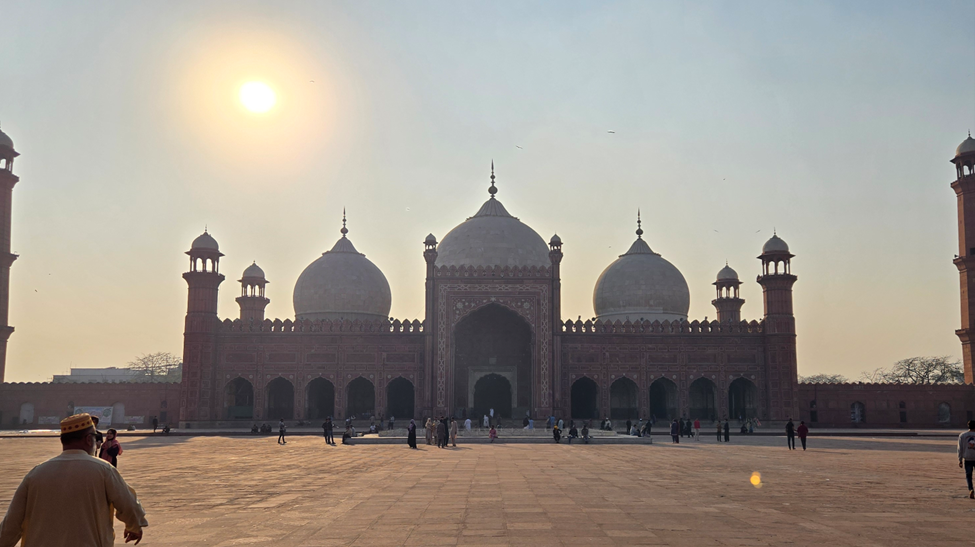
Pakistan in Focus
March 11, 2026What are THF partners doing in Pakistan?
How much do you know about Pakistan?
Hopefully you can find it on a map. It’s just to the west of India, right next to Afghanistan to the northwest and Iran to the southwest. Pakistan also shares a smaller border with China to the northeast. It’s a geographically complex neighborhood, to say the least.
It’s also a geographically strategic neighborhood. Historically, traders and other travelers moving between Europe and Asia on routes like the Silk Road passed through or near the territory now occupied by Pakistan. The country has been called “the gateway to South Asia” (for eastbound Europeans) and “the gateway to Central Asia” (for westbound Asians). It lies right at the juncture of the Middle East, Central Asia, and the Indian subcontinent, making it a crossroads for commerce, culture, and conquest for thousands of years.
For most of recorded history, Pakistan was governed as part of a larger political entity that also included much of what is now India. In the third century BC, Pakistan and India were both part of the Maurya Empire. During the time when the Roman Empire dominated the Mediterranean world, South Asia (including Pakistan) was part of the Kushan Empire. By the Late Middle Ages, when the black plague was terrorizing Europe, Pakistan was part of the Delhi Sultanate along with much of northern India. And in the early-modern period, when the Ming Dynasty controlled much of China, all of Pakistan and India were controlled by the Mughal Empire.
Starting in the mid-1800s, Pakistan was governed as part of British India. Not until 1947 was Pakistan partitioned into its own nation, and in 1971, East Pakistan separated and became Bangladesh. Needless to say, Pakistan, like most of the region in which it lies, has had a complicated history.
Modern Pakistan shares many cultural similarities with northern India, including language, cuisine, music, clothing styles, and customs. When Pakistan became an independent nation in 1947, the region of Punjab was divided between Pakistan and India, triggering one of the largest and most violent migrations in modern history as millions of Muslims moved west into Pakistan and millions of Hindus and Sikhs fled east into India. This means that today, the Punjabi people are divided between India and Pakistan but still share a common language and deep cultural ties.
Pakistan today is a land of great beauty and wonderful culture but also significant tension. As a predominantly Muslim country (about 97 percent), Pakistan has religious freedom written into its constitution, but the everyday reality is complicated. Religious minorities, including Christians, face discrimination and sometimes persecution, and Pakistan currently ranks number 8 on the Open Doors World Watch List. Strict blasphemy laws place significant legal restrictions on speech and religious expression. Breaking these laws can result in prison and even the death penalty in extreme cases.
Pakistan is not mentioned in the Bible (though some scholars think the land of Ophir, known for gold in 1 Kings 9–10, could have included parts of South Asia). But Pakistan has a lot of missiological significance today. Right now, Pakistan ranks number 5 on the list of the world’s most populous countries behind India, China, the United States, and Indonesia. But Pakistan’s population is young, and fertility rates are high, so it is projected to surpass Indonesia in population by around 2047, meaning it will become the world’s largest Islamic nation. It could even pass the USA by the end of the century if current trends continue. That makes Pakistan an important mission field, especially for ministry organizations serving and engaging the country’s majority Muslim population.
The evangelical church in Pakistan is small but growing, and Tyndale House Foundation has several partners serving faithfully there. I had the great privilege of visiting some of these partners two weeks ago, and I returned home encouraged and excited about what God is doing through their efforts in Pakistan. This edition of the THF Weekly Briefing will highlight a few of these partners and the challenges and opportunities they face.
Here’s what’s happening.
Christian Publishing in Pakistan
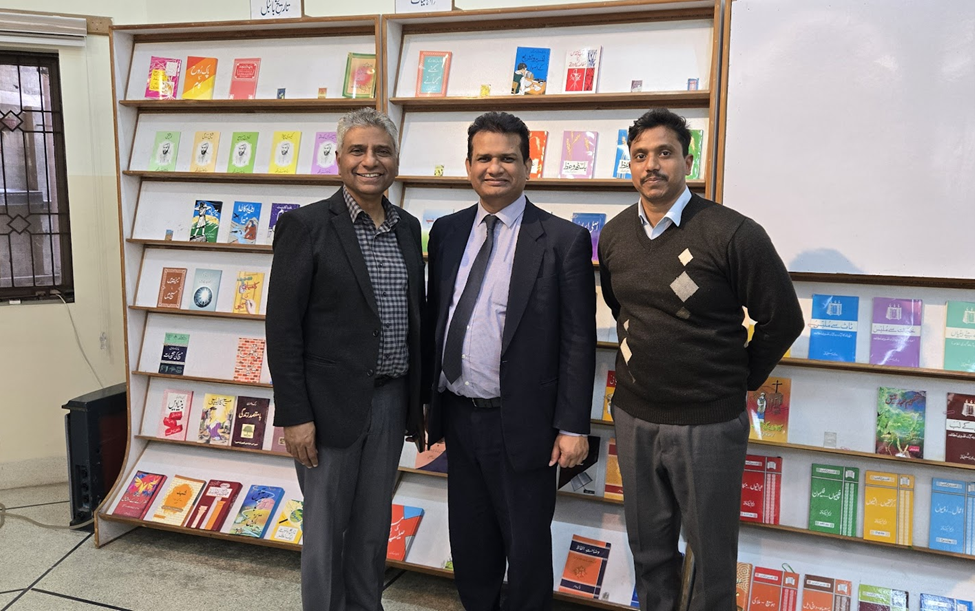
Masihi Isha’at Khana is Urdu for “Christian Publishing House,” an appropriate name for one of Pakistan’s oldest and most prominent producers of Christian literature. MIK was founded in 1948, just one year after Pakistan became an independent nation. The publishing company occupies a new building now, but it exists on the same site in the city of Lahore where it was first started 78 years ago. I got to know Peter Calvin, the executive director, at a publishing conference in Kenya more than a decade ago, and we’ve been good friends ever since. Tyndale House Foundation has given a dozen or so grants to MIK, going back to 2012, with total giving now in the six figures. Most of our grants have been not for publishing operations but for writer training, as MIK has long been committed to developing local authors who can produce high-quality Christian literature to bless the Pakistani church. MIK is also deeply committed to serving its community, and Tyndale has participated financially in MIK’s efforts to provide humanitarian relief during a recent devastating flood and a refugee crisis following a terrorist attack. Christian publishing is difficult everywhere, but particularly so in areas where the church is small. Nevertheless, MIK has maintained consistent growth for many years by publishing excellent books and other resources in Urdu. Every book has a Christian message but never contains any anti-state or anti-Islam content. In 2019, MIK was awarded the Robert B. Reekie Global Publisher Award for excellence in publishing in the Majority World, and they continue to operate with distinction in a part of the globe where the hope contained in the pages of their books is desperately needed.
Christian Education in Pakistan
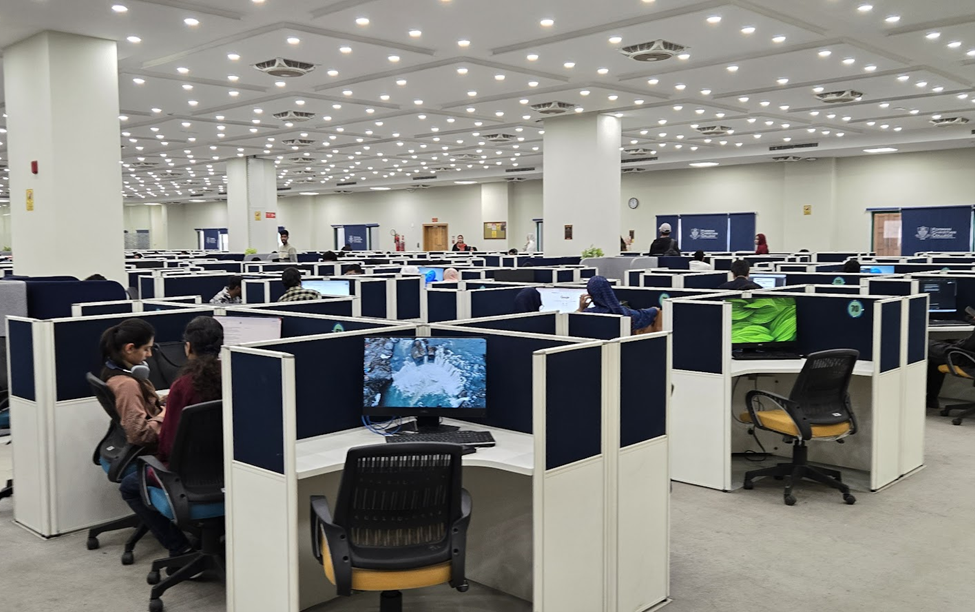
Forman Christian College was founded in 1864, long before Pakistan achieved independence, by a Presbyterian missionary. The first graduating class of 1886 had just 18 students, but enrollment grew quickly, and by 1915, the school graduated 600 students. In 1972, the college was nationalized by the Pakistani government but was returned to church control in 2003 and granted university status the following year. Today, FCC has nearly 10,000 active students and about 220 faculty members across its college and university programs. Approximately 80 percent of FCC’s students and faculty are Muslims, reflecting Pakistan’s large Muslim majority, though senior positions are filled by Christian leaders. This obviously makes campus life complex, but FCC has existed for a long time as a kind of oasis where people from different faith backgrounds can freely and safely interact and intermingle. When my colleague Debbie Pederson and I visited the campus two weeks ago, we spent several hours talking with Dr. Jonathan Addleton, the rector, about his vision and strategy for the institution. We were also treated to a special performance by the campus choir, sat in on a class discussion, and toured the new building that houses the Center for Learning and Training, a new educational center that Tyndale helped start.
Christian Media in Pakistan
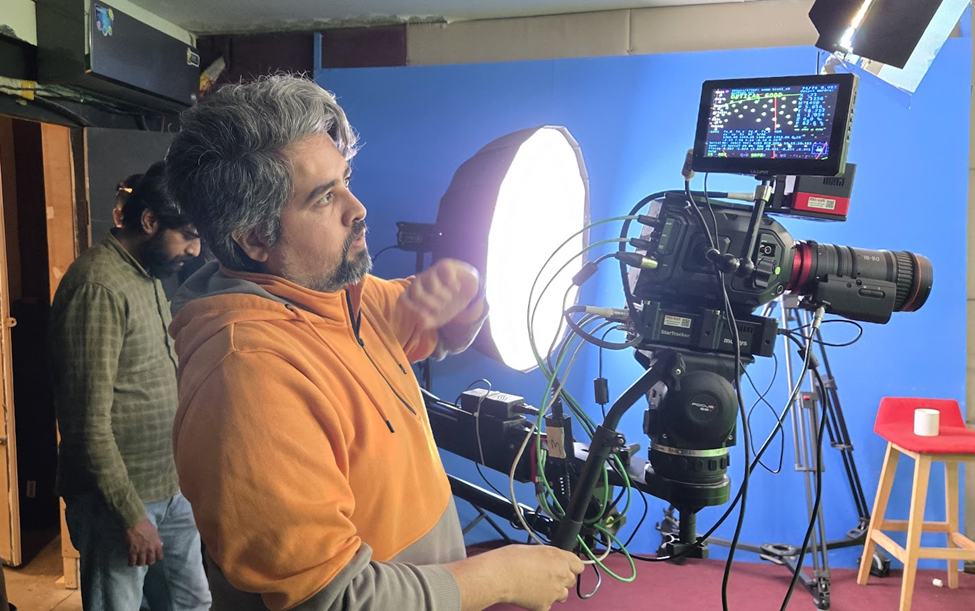
In 2009, 50 Pakistani church and ministry leaders gathered in the city of Lahore to consider whether a satellite television ministry could be effective in Pakistan. The overwhelming consensus was yes, this was a ministry model that could work well in the South Asian context. The vision took shape over the next several years, and PAK7 was officially incorporated in 2018. Initial videos were quickly produced and posted to various social media platforms. Within just six months, PAK7 videos had garnered more than 3 million views. In 2022, PAK7 launched its first 24-hour Christian satellite TV channel, offering round-the-clock content in Urdu to audiences across Pakistan and beyond. That same year, Tyndale House Foundation gave a grant to PAK7 to help fund the creation of a virtual studio in Lahore that could be used for state-of-the-art green-screen filming and production. When Debbie Pederson and I visited the Lahore studio two weeks ago, we were privileged to see the studio fully set up and functioning, helping PAK7 writers and producers create great programming for kids and adults alike. Today, PAK7 reaches millions of viewers online and via satellite TV with content that offers Christian encouragement, theological depth, training, and entertainment. They also offer media training for young people interested in a career in the field, and dedicated social-media teams engage with dozens of people every day who respond to PAK7 programming by reaching out for answers to their deepest questions. With offices and studios in Lahore, Karachi, and Islamabad, PAK7 is truly a national ministry providing a much-needed service to a rapidly growing audience eager for thoughtful, engaging content created from a biblical worldview.
Christian Development in Pakistan
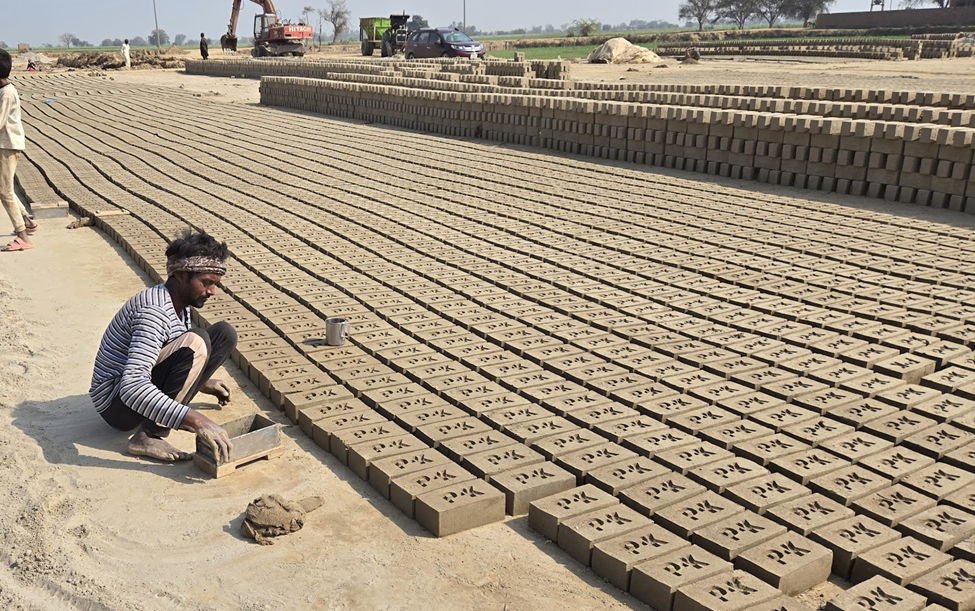
Pakistan is famous for many things—from its delicious food, towering mountain ranges, and vibrant art and music. But Pakistan is also known for some less positive cultural icons, including its infamous brick-kiln villages. Much of the country’s architecture depends on the red bricks produced by large factories where workers labor for up to 12 hours a day, forming bricks out of clay and letting them dry in the sun before placing them in a hot furnace to harden to construction grade. Brick workers are typically very poor, mostly living below the poverty line, and they are often trapped in debt-bondage arrangements with the factory owners who provide them with a place to live and sometimes a financial loan in return for years of hard labor. The disposition of the kiln owners varies. Some are genuinely trying to provide a service to the country and the community, but others are willing to exploit their laborers, even unfairly adding to their debt, ensuring continued servitude. One Christian organization working to alleviate conditions for brick-kiln workers is called Care Channels. By providing services like clean drinking water, indoor bathrooms, and schools for the children of laborers, Care Channels is working to enhance the dignity of people across the full socioeconomic spectrum and care for the most vulnerable. While an indoor bathroom isn’t going to meet all the needs of people working in the hot sun for a couple of dollars a day, the loving care and compassion shown by Care Channels workers sends a clear message to workers that they are seen and valued. And it sends a message to the owners that they too are seen, encouraging greater accountability for fair treatment of workers. The country needs bricks, and the brick kilns provide them, but Care Channels and similar organizations are helping to gradually diminish the systems that allow worker exploitation to persist. And the fact that they’re doing it in Jesus’ name brings much-needed hope to millions caught in spiritual as well as economic bondage.
That’s it for this week’s briefing. Please send any questions, comments, and Chicago-area Pakistani restaurant recommendations to [email protected]. Do you enjoy reading the THF Weekly Briefing? Make sure you’re subscribed to the email distribution list to get access to this resource the same day it’s published each week, and feel free to share it with others who may be interested. Thanks for continuing to pray for and support our partners around the world.
Jeremy Taylor
President | Tyndale House Foundation
The THF Weekly Briefing provides information about significant events happening in the wide universe of Tyndale House Foundation partner organizations as well as an occasional peek behind the scenes of THF’s operations. It is available to anyone who’s interested in learning more about Tyndale’s philanthropic commitments, partners, and operations. Was this email forwarded to you? Contact [email protected] to be added to (or removed from) the distribution list.