

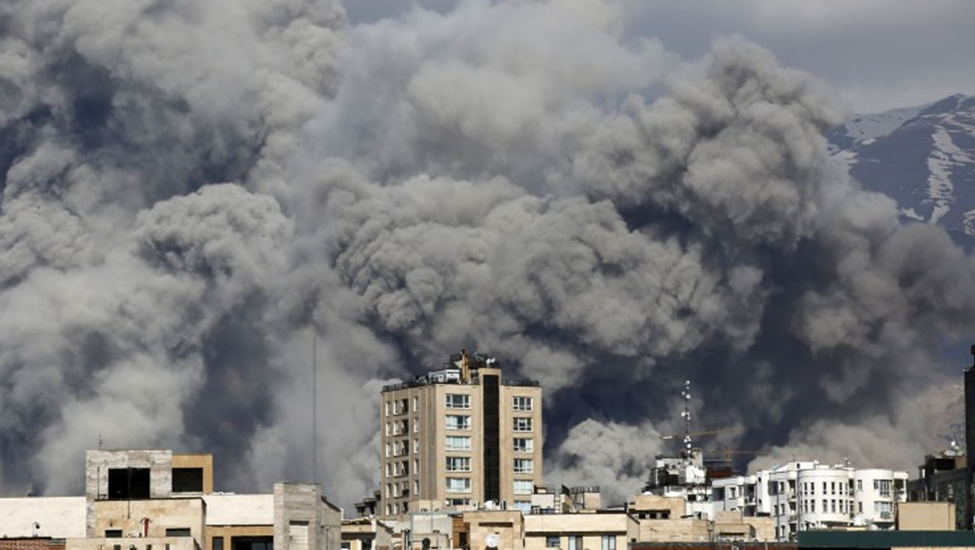
Prophecy or Providence?
March 6, 2026Elam, Iran, Persia, and prophecy
Is the war in Iran a fulfillment of biblical prophecy?
Some commentators think so. The specific passage they interpret as foretelling what appears to be the impending demise of the Iranian regime is Jeremiah 49:34-39. But how strong is the connection between ancient prophecy and today’s headlines?
In case you don’t have Jeremiah 49:34-39 memorized, here’s what it says:
“I will destroy the archers of Elam—
the best of their forces.
I will bring enemies from all directions,
and I will scatter the people of Elam to the four winds.
They will be exiled to countries around the world.
I myself will go with Elam’s enemies to shatter it.
In my fierce anger, I will bring great disaster
upon the people of Elam,” says the LORD.
“Their enemies will chase them with the sword
until I have destroyed them completely.
I will set my throne in Elam,” says the LORD,
“and I will destroy its king and officials.
But I will restore the fortunes of Elam
in days to come.
I, the LORD, have spoken.”
At first glance, this does seem like a pretty accurate description of the current war in Iran. Elam refers to an ancient people group who lived in what is now southwestern Iran before the rise of the Persian Empire. Just how ancient is Elam? Its first mention in the Bible is Genesis 14, so Elam was already a functioning nation with a king in the days of Abraham.
The capital of Elam was the city of Susa, which later became a major administrative center and royal city of the Persian Empire, meaning that the events of the book of Esther took place within the territory of Elam. The fact that celebrations of Purim, the Jewish festival celebrating Israel’s deliverance from the genocidal threat of the Persian Empire under Haman, have been canceled this week in Israel due to Iranian missile strikes against the Jewish State make the surface-level prophetic connection even more intriguing.
But there are weaknesses to the idea that the prophet Jeremiah was foretelling modern events.
For one thing, Elam is not the same thing as modern Iran. It occupied a territory within Iran, but it did not comprise all of Iran. Furthermore, many scholars believe the destruction of Elam took place in stages as Elam was successively conquered by the Assyrians, Babylonians, and Persians. Susa’s elevation to royal status within the Persian Empire could be viewed as a fulfillment of the restoration of Elam in verse 39. Elamites are also listed among the peoples present in Jerusalem on the Day of Pentecost in Acts 2:9, meaning that at least some Elamites would have been among the 3,000 who became followers of Jesus that day, surely a spiritual restoration of Elam.
But many biblical prophecies have both an ancient and a future fulfillment. Couldn’t Jeremiah’s prophecy about Elam be one of these? Couldn’t it have been fulfilled in Jeremiah’s time and be playing out politically and militarily today?
Perhaps. But this prophecy is situated in the middle of other prophecies against nations surrounding Judah (chapters 46–51 are sometimes referred to as the “Oracles against the Nations”) that were fulfilled in ancient times. And it seems significant that the introduction to the prophecy regarding Elam in Jeremiah 49:34 mentions the reign of King Zedekiah, anchoring the prophecy in a particular time when Elam was already in a state of chaos following major devastation under the Assyrian Empire. The prophesied and realized destruction of Elam thus seems more like an extended period of ongoing turmoil and subjugation in antiquity than a single catastrophic event today.
The point of all the prophecies within the Oracles against the Nations is that God ultimately and completely rules all the nations. For the Jews, living in exile in Babylon during Jeremiah’s prophetic ministry, this would have been a tremendous comfort. Despite what seemed like Babylon’s unstoppable momentum, eventually even Babylon would fall under the judgment of God.
What this means to me is that whether or not what’s happening in Iran right now a fulfillment of a specific biblical prophecy, we can rest assured that God is not surprised by what’s happening. I’m not personally convinced that God is using the modern Israeli and American militaries to fulfill Jeremiah’s prophecy. But I am absolutely convinced that it is God, not the Mullahs, who ultimately rules Iran and will determine the final outcome of this and every conflict.
So no, the death of the Ayatollah Khamenei and many other Iranian leaders is likely not a direct fulfillment of biblical prophecy. But yes, God rules the nations, and he is sovereign, and he is in control, even amid the chaos and destruction of war, and that reality absolutely fulfills biblical prophecy.
Meanwhile, we need to continue to pray for the people of Iran, who have faced terrible injustice at the hands of the Islamic regime for decades. The recent mass slaughter of protesters is just the latest in a long series of atrocities. And innocent people in at least 12 other countries are now at risk due to ongoing Iranian missile strikes against its neighbors. THF partners in many of these countries, including Israel, Lebanon, and Turkey, are asking for urgent prayer. Please do pray for peace, wisdom for leaders, freedom for the Iranian people, and the protection of innocent life on all sides.
Here’s what’s happening.
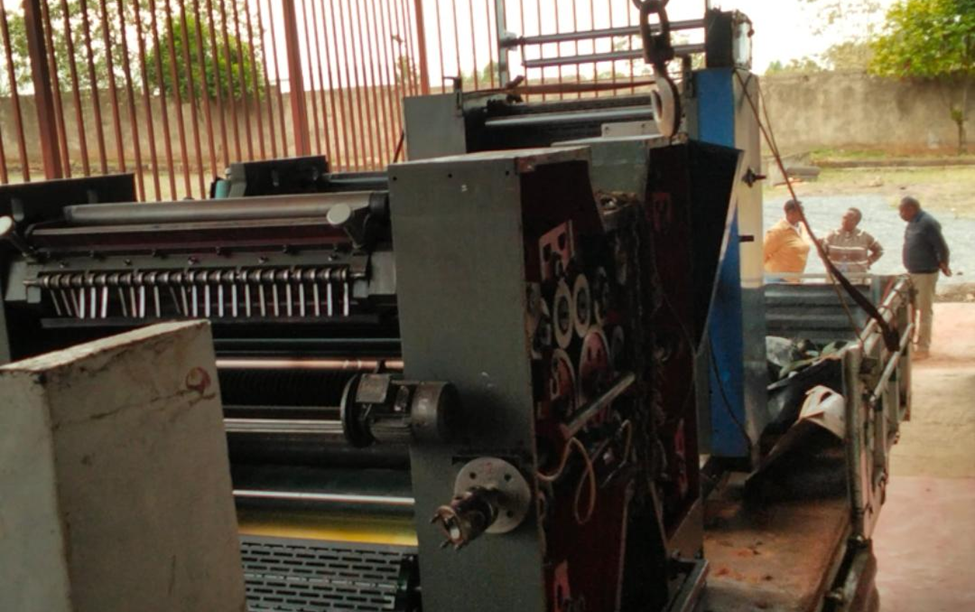
Bibles for Africa
Two weeks ago, a visitor to Tyndale gave me a very special gift—one of the very first Bibles ever printed on the continent of Africa. There are many printers in Africa, ranging from scrappy print-on-demand operations to full-fledged mass-production presses. But Africa has historically had little or no capacity for large-scale Bible printing. Bibles can’t be printed on normal presses, mainly because of the thin paper required. Special equipment is needed. So most if not all of the Bibles currently in use across Africa, in hundreds of languages, were printed elsewhere and shipped to the continent at great cost. If Bibles could be printed in bulk inside Africa, it would be a game changer for Bible distribution. And it seems that day has come. After years of planning and fundraising, a Kenyan company called PrintStar is fully up and running and ready to begin taking Bible orders. The production team at Tyndale House Publishers has been consulting with PrintStar’s leaders, offering professional tips and advice on setup, paper acquisition, print quality, etc. If the Bible I received is an indication, PrintStar is ready to take its place among the world’s Bible printers as a viable option for printing. One THF partner has even referred to this as a “Gutenberg moment” for Africa, as Bibles will be much more readily available than ever before. We’ll have to wait and see what the eventual impact is, but the potential for millions more Africans to have access to a Bible printed on the continent is truly exciting!
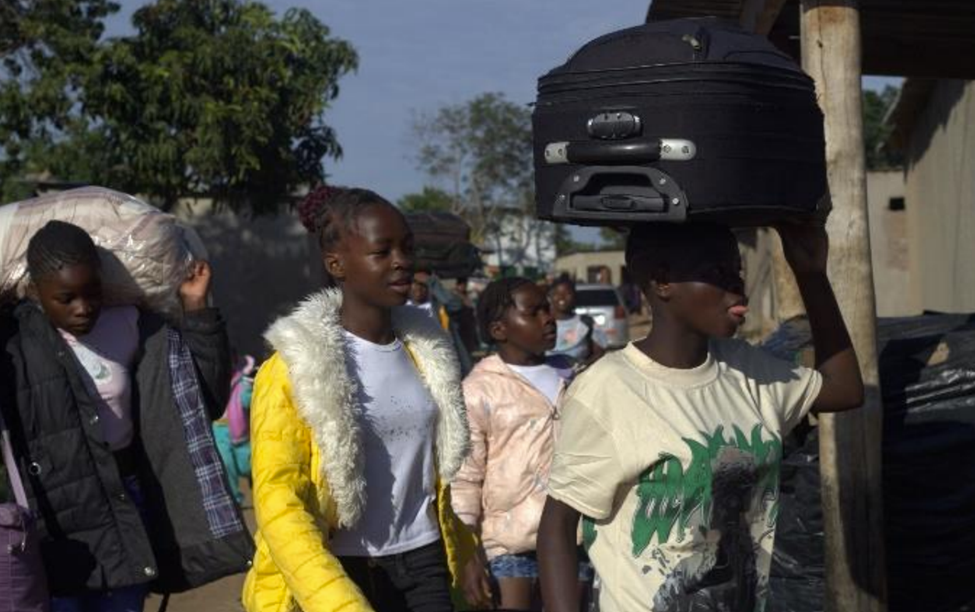
Generational Investment in Zimbabwe
The south-central African country of Zimbabwe is consistently ranked among the poorest in the world. More than two-thirds of the country’s 17 million people live below the poverty line. Many Zimbabweans are subsistence farmers who are susceptible to natural disasters like drought and heavy storms that can destroy crops, leading to food insecurity and spiraling cycles of poverty. Christianity is the predominant religion, but many local churches don’t have pastors or leaders with any theological training, and syncretism is common. Biblical training is desperately needed, especially for young people who represent the next generation of the church in Zimbabwe, and one locally led THF partner organization is committed to providing it. Tarcisio Magurupira, executive director of Firm Foundation, wrote last week to give an update on a recent youth camp in Zimbabwe where hundreds of young people received Bibles, studied God’s Word, memorized Psalm 23, were taught core Christian principles, and learned how to apply the Bible to everyday life. Tarcisio wrote, “During the 5-day camp, it was so humbling to witness many kids committing their lives to Christ.” Given the economic situation in Zimbabwe, most families would ordinarily find it impossible to pay camp fees for their children, but THF support made participation possible for a record number of campers. Tarcisio wrote, “Our gratitude for your grant support goes beyond what normal words can express, and we thank God for partnering with us in reaching African communities with the gospel and maturing African churches, focusing on the largest mission field, the young people.” Please join us in praising God for what he’s doing in Zimbabwe, and pray for more young people to respond to the gospel and for the church there to be strengthened as a result.
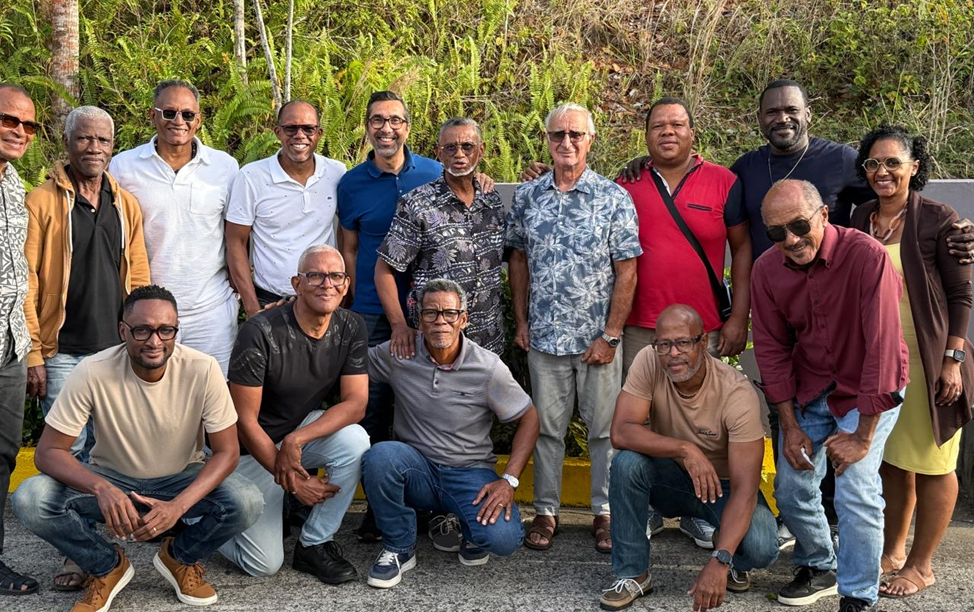
Multiplication in Martinique
What’s the first thing that comes to mind when you think of the Caribbean? It’s probably beach vacations and cruise lines, not church multiplication or leadership development. But THF partner Réseau Dunamis (RD) is working throughout the region to train Christian leaders and evangelists to become effective church planters, and their efforts are yielding significant ministry fruit. Earlier this week, I received a report from Greg Reyes, RD’s executive director, about a new “Learning Community” on the island of Martinique—the first in the Caribbean region. Greg and his local RD partners are forming Learning Communities throughout the French-speaking world to train, resource, and support leaders in Francophone countries to start disciple-making movements, plant churches, and form networks. Over a period of five years, RD trainers invest deeply in local leaders, providing ongoing mentoring and coaching with the goal of fully equipping them for maximum Kingdom impact. Greg and his colleagues have already trained more than 385 leaders throughout Francophone Africa, and now they are working to start new Learning Communities in Guadeloupe, New Caledonia, and French Polynesia. As Greg wrote, these are “among the regions that Jesus called ‘the ends of the earth.’” Many of these island regions have little or no gospel presence, but RD’s vision is that every one of these communities will have an evangelical church within the next few years. Please pray for this partner organization that is working throughout the French-speaking world to bring the gospel to people who have never heard it in any language.
Pakistan at War
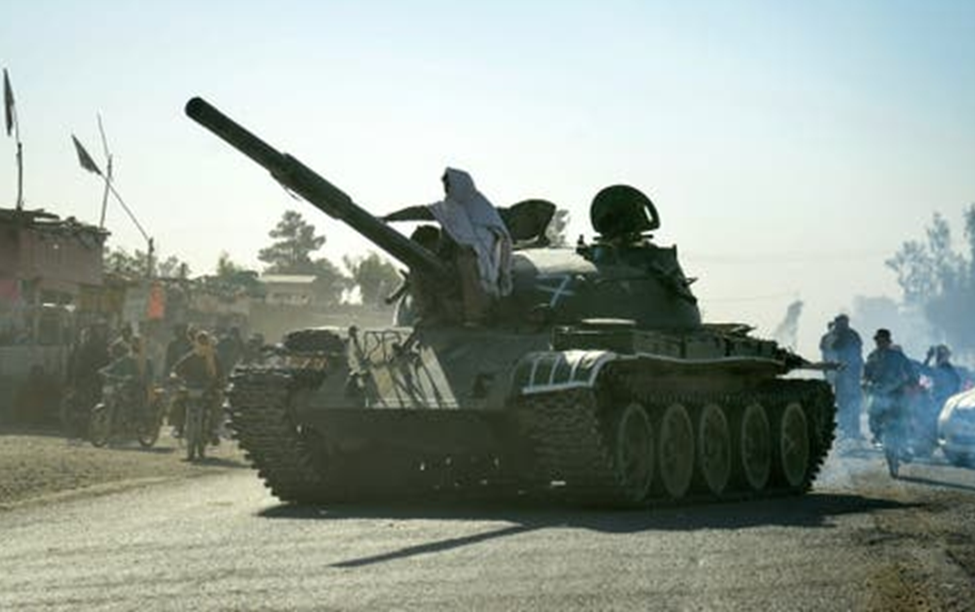
On February 27, 2026, the nation of Pakistan declared that it was in “open war” with Afghanistan, its neighbor to the west. Pakistan sits in a very difficult spot geopolitically; it shares a border with four countries—Afghanistan, Iran, India, and China—and relations with three of those countries (China is the notable exception) are historically tense at best and occasionally hostile at worst. Back in October 2025, Pakistan carried out airstrikes in Kabul and other Afghan cities, targeting leaders of a militant group called Tehrik-e-Taliban Pakistan, which has been responsible for cross-border attacks inside Pakistan. The Taliban-led Afghan government responded by attacking Pakistani border posts, and intermittent clashes continued for the next several weeks, though the conflict was mainly confined to the border region. In February 2026, Pakistan launched additional airstrikes inside Afghanistan against alleged militant camps, prompting retaliatory strikes by Afghanistan. Calling existing conflict “open war” isn’t exactly the same as declaring war on another country, but as long as the two countries continue to exchange blows, de-escalation seems an unlikely outcome in the short term. Earlier this week, THF partner Forman Christian College sent an email to supporters asking for prayer for restraint and wisdom among national leaders, protection of civilians (especially FCC students and their families), and peace. I was just in Pakistan last week along with my colleague Debbie Pederson, and I will have much more to report next week about the situation in Pakistan and what’s happening with our partners there. For now, please pray urgently for peace in the region.
That’s it for this week’s briefing. Please send any questions, comments, and alternative prophetic headline interpretations to [email protected]. Do you enjoy reading the THF Weekly Briefing? Make sure you’re subscribed to the email distribution list to get access to this resource the same day it’s published each week, and feel free to share it with others who may be interested. Thanks for continuing to pray for and support our partners around the world.
Jeremy Taylor
President | Tyndale House Foundation
The THF Weekly Briefing provides information about significant events happening in the wide universe of Tyndale House Foundation partner organizations as well as an occasional peek behind the scenes of THF’s operations. It is available to anyone who’s interested in learning more about Tyndale’s philanthropic commitments, partners, and operations. Was this email forwarded to you? Contact [email protected] to be added to (or removed from) the distribution list.