

Proverbial Poland
June 27, 2025You can learn a lot about a culture by studying its proverbs.
You can learn a lot about a culture by studying its proverbs.
Proverbs are like the collected wisdom of a culture, condensed into a series of pithy sayings that show you what people in that context have been thinking about for generations. Lots of proverbs are cross-cultural; just about every country has its own version of “Practice makes perfect” or “Rome wasn’t built in a day.” Other proverbs are more specific to the particular culture that gave rise to them.
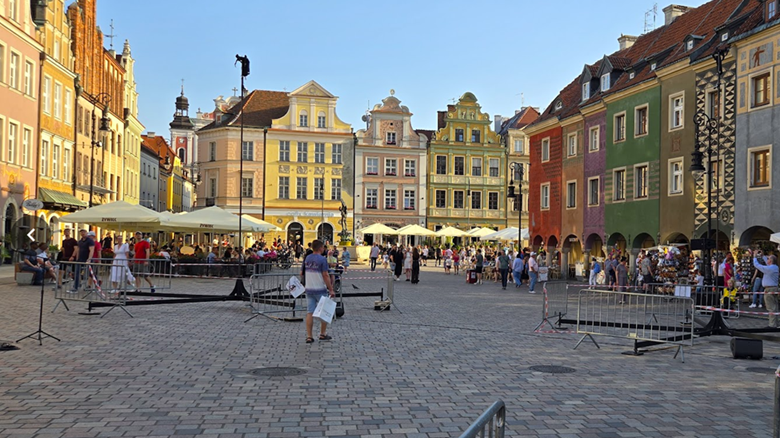
I’m writing this week from Poland, where a team from Tyndale House Ministries has been helping a THF partner organization make renovations to a rural ministry center (a camp, in other words). While we’ve been here, I’ve been enjoying learning some of the local proverbs. I have learned, for example, that in Poland there are over 2,000 proverbs related to weather, which make sense in a country that has been historically dependent on agriculture yet subject to unpredictable weather patterns (maybe that explains why so many Polish people have settled in Chicago over the years—they feel right at home). Our exterior painting and small construction projects have been interrupted many times by short, intense, unforecasted rainstorms. We’ll probably develop some weather-related proverbs of our own before we head home.
A proverb unique to Poland is Polacy nie gęsi lecz własny język mają, which translates to “Poles are not geese; they have their own tongue.” This proverb dates back to at least the 1500s and says something important about how Polish people view their culture. Here’s some background. Poland is in many ways at the heart of Europe. Southern Poland is almost the geographical center of the continent. The country has lots of fertile farmland and no easily defensible borders. So it has been fought over by other European powers many times—Russia, Austria, Germany, and Lithuania have all cast their expansionist eyes on Poland at various times through the centuries. Through it all, the Polish people have maintained and valued their own distinct culture and language, and this proverb highlights and celebrates that fact.
Another popular Polish proverb is Nie mój cyrk, nie moje małpy.) which can be translated “Not my circus, not my monkeys.” Basically this is a way of saying, “That’s not my problem,” or “I’m minding my own business, and you should mind yours.” The English description almost sounds rude, but this proverb too makes sense in a historical context that has featured invasion, conquest, and shifting borders. At a certain point, you kind of learn to keep your head down and worry about what you can control. This proverb also gives a glimpse of Polish irony, sarcasm, and dark wit—all byproducts of surviving hardship and demonstrating cultural resilience over time.
These realities are no doubt part of why it has proven so difficult for evangelical Christianity to gain much of a foothold in Poland. Part of the Polish cultural identity is Roman Catholicism—so much so that for many in Poland, to be Polish is to be Catholic. For centuries, going back to when Poland was partitioned among Russia, Prussia, and Austria in the late 1700s and continuing through Nazi occupation in the 1940s and Soviet rule through the 1980s, the Catholic Church was a pillar of national survival and resistance. Protestantism in general and evangelicalism in particular are often seen as sectarian or foreign, challenging a key pillar of national identity.
Centuries of foreign domination have fostered a cultural reflex of skepticism toward anything viewed as “imported.” The same cultural boundaries that have led to the national value of not meddling in others’ affairs can make people suspicious of a faith tradition that encourages personal testimonies, open invitations, and bold evangelistic proclamation.
Still, there have been periods of openness in Poland, especially just after the fall of Communism, when evangelistic student movements became hugely popular on university campuses across Poland. And another window seems to be opening right now. People we’ve talked to here this week tell us that young people in Poland are demonstrating a hunger for spirituality and especially for the kind of personal relationship with God that is often not emphasized in the Catholic Church.
Part of what evangelistic ministry in Poland means is finding ways to honor the rich legacy of Catholicism while simultaneously communicating that the Catholic traditions most Polish people grew up with aren’t, in and of themselves, the full gospel. When Polish Catholics hear the Good News that they can have a personal relationship with Jesus, not mediated by the church, many of them are hearing it for the first time.
There’s another Polish proverb—Oliwa sprawiedliwa zawsze na wierzch wypływa, meaning “Just oil always ends up surfacing.” The English equivalent would be something like “The truth will come out in the end.” What our friends and partners in Poland are praying is that the truth of the gospel will indeed rise to the surface in this country. We know the gospel transforms lives! May God transform the hearts of many in Poland so that these stalwart, resilient people will find true freedom in Jesus, who overcomes human conflict and breaks down borders in our hearts.
Here’s what’s happening.
Spotlight on Poland
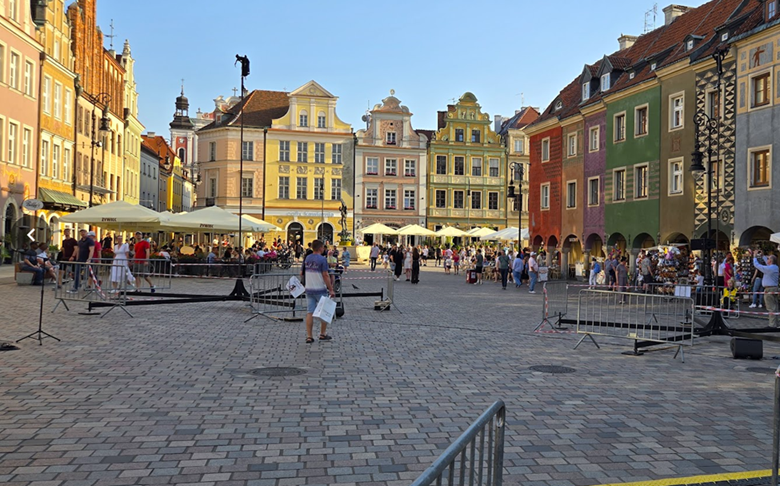
How much do you know about Poland? You’ve eaten the sausages and pierogi; you’ve listened to the Polka music; you probably knew that Pope John Paul II was Polish; if you’re into classical music, you may know that Frederic Chopin was from Poland (the country’s biggest airport is named after the composer). If you’re from Illinois, you’ve probably at least heard of Casimir Pulasky, the Polish soldier who fought in the American Revolution, and appreciated getting a day off school every March in his honor. But what else do you know about Poland? Did you know that Poland disappeared from the map for 123 years between 1795 and 1918? During that time, Poland was partitioned by Russia, Prussia, and Austria and didn’t officially exist as a country. Did you know that Poland is home to the world’s largest castle? Malbork Castle, located in the north of the country, was built in the late 1200s. Not only is it the largest castle by land area, it’s also the largest brick castle by surface area. Do you know what Poland’s currency is? Although Poland is part of the European Union, it never adopted the Euro. The official currency of Poland is the zloty, currently worth about 28 cents. Did you know that Poland never officially surrendered to the Nazis during World War II? The Polish government went into exile, and the Polish resistance movement was one of the largest and most effective in occupied Europe. The Warsaw Uprising of 1944 was the largest resistance effort of the entire war (though it resulted in the near total destruction of Warsaw). Poland is a fascinating country with a long history and amazing cultural depth. The Polish people are some of the friendliest in Europe, and hospitality is a key cultural value. The Tyndale teams have loved learning more about Poland during our time here, and there’s obviously still much more to learn!
Partner Spotlight—Evangelical Poland
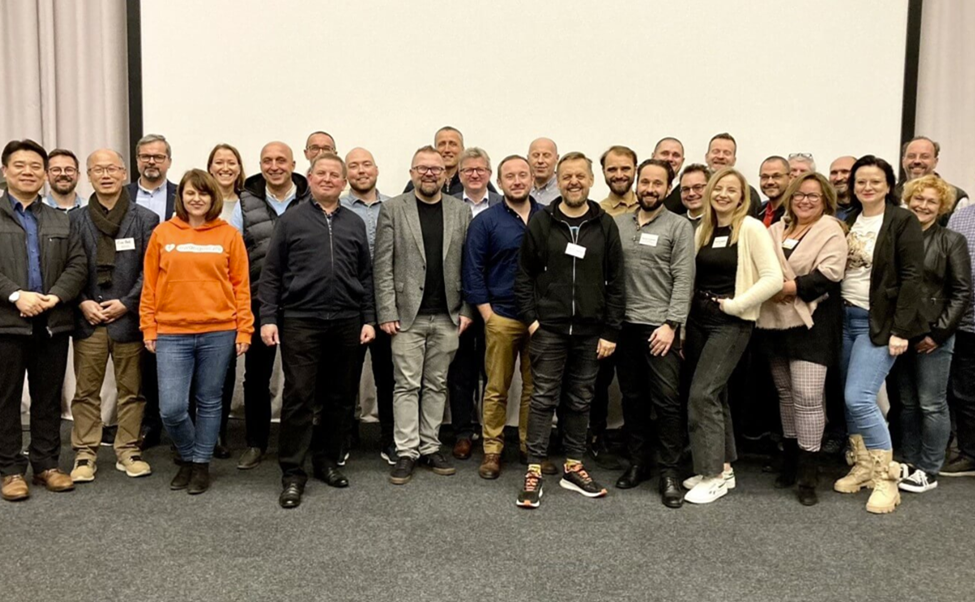
I’m often asked what sorts of things the THF board looks for in a partner. What are the metrics we use when assessing whether to give a grant or invest in a relationship? My standard answer is that we look for evidence that the organization is addressing a real need, evidence of a meaningful strategy to meet the need, evidence of strong organizational leadership, and evidence of other partners. It’s also important for the organization to be missionally aligned with Tyndale and be a strategic fit within one of our grantmaking categories. I first met the leaders of Evangelical Poland at the European Leadership Forum several years ago. It wasn’t a prearranged meeting; I didn’t know anything about the organization, and they had never applied for a grant from Tyndale. I just struck up a conversation with a guy in one of the network sessions I was attending for leaders of Christian organizations, and he told me about his work of planting and connecting churches in Poland. Later that year, another one of the organization’s leaders was visiting Chicago and came to Tyndale to meet with me. Through these conversations, I learned about the need in Poland; although nearly all Polish people identify as Catholic, many are not very observant and do not have a personal relationship with Jesus Christ. That’s the situation Evangelical Poland hopes to change. By planting churches, conducting training sessions for pastors, and creating a network for church leaders, the organization is equipping the church in Poland to communicate the gospel within a culture that despite—or maybe because of—its religious heritage often doesn’t recognize the depth of its spiritual needs.
Building Networks
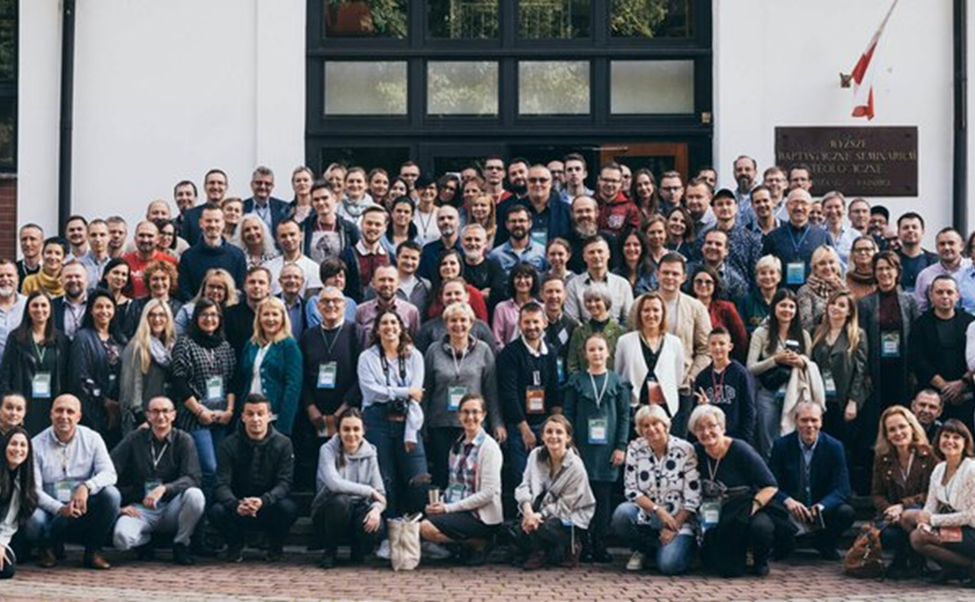
Why are networks important? Why is Evangelical Poland working so hard to create a network of evangelical churches across the country? Andrew Gorski, the organization’s president, has built relationships with just about every evangelical pastor in Poland. Why? What is he hoping to accomplish? I asked him about this the first time we met, and he told me the mission of Evangelical Poland is to raise the percentage of evangelicals in Poland from less than a quarter of one percent to a full one percent. At first glance, that may not seem like a very big goal, but getting to one percent is tremendously difficult. (Getting from one to two percent is much easier.) If this goal is to be accomplished, and Andrew believes it will, with God’s help, it will happen through networking. By creating and helping to resource a network of new and existing evangelical churches, Evangelical Poland can help churches do effective evangelism and discipleship, help train pastors to serve their congregations, and help churches represent Christ well, overcoming social misunderstandings and fears about evangelicals in this largely Catholic country. The European Leadership Forum, a network of leaders from all across Europe that has met annually in Poland for the last decade, is effective because of the way it resources and equips leaders to carry out their mission. Evangelical Poland wants to do the same thing on a national level. The conference center at Lake EPIC, where the Tyndale teams have been working for the past two weeks, will play an important role, providing great meeting and retreat space for church leaders who are part of the network Evangelical Poland is building.

Spotlight on Publishing
Is there still a need for printed books in a digital world? Do people even read anymore? Is there any future for Christian publishing? I get asked these kinds of questions when people are curious about what Tyndale does, and I’m happy to answer them from my American perspective (the answer is yes!), but you could get a global perspective just by looking at a list of THF partners involved in publishing. So far in 2025, we have given grants to Christian publishers operating in Azerbaijan, Brazil, Burkina Faso, Cambodia, the Czech Republic, Georgia (the country, not the state), India, Italy, Kenya, Peru, South Africa, South Sudan, Spain, Türkiye, and Ukraine. What every one of these partners has in common is a strong belief that books—including and especially printed books—are a key training and discipleship tool, useful for the church, and helpful, if not essential, for personal growth. We invest in indigenous Christian publishing because we believe local authors, published by local publishers, for the benefit of the local church, are part of what makes up a thriving evangelical culture. That’s also why we’ve spent hundreds of thousands of dollars on our Africa Speaks program, helping to create a flourishing Christian publishing industry in Africa. God has used Tyndale House Publishers to bless the world since 1962, and we believe continued publishing of books and other kinds of Christian literature is part of God’s plan for continuing to bless the Global Church. Is there a future in Christian publishing? Yes! And we get to be part of it.
That’s it for this week’s briefing. Please send any questions, comments, and left-over pierogi to [email protected]. I send out this email resource most weeks primarily for a Tyndale audience, but you should feel free to share it with others who may be interested, inside or outside of Tyndale. Thanks for continuing to pray for and support our partners around the world.
Jeremy Taylor
President | Tyndale House Foundation
The THF Weekly Briefing provides information about significant events happening in the wide universe of Tyndale House Foundation partner organizations as well as an occasional peek behind the scenes of THF’s operations. It is available to anyone at Tyndale who’s interested in learning more about the Foundation side of the organization. Was this email forwarded to you? Contact [email protected] to be added to (or removed from) the distribution list.