

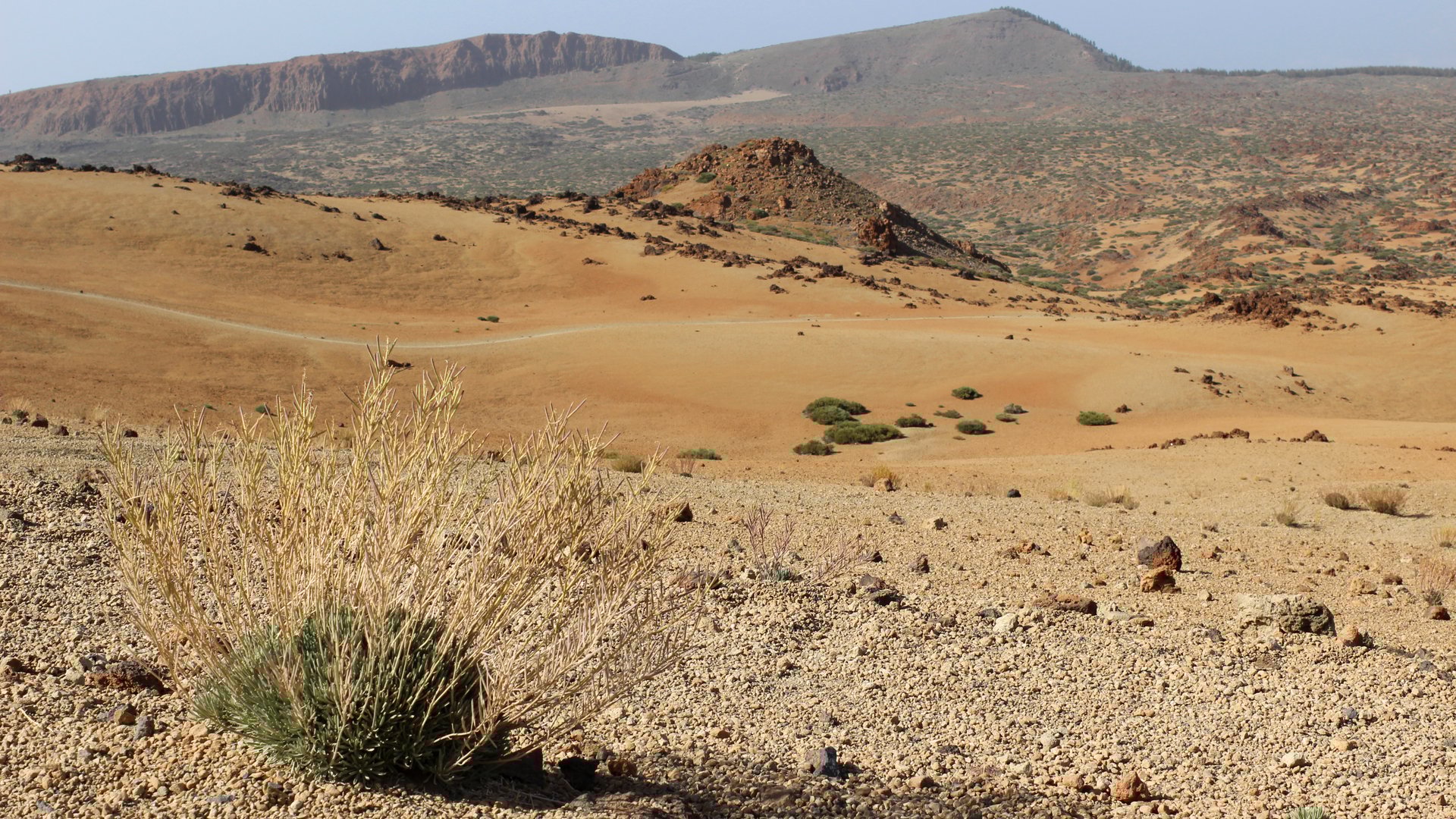
Provision in the Wilderness
June 12, 2025It is in our times of greatest desperation that God’s abundant provision is most visible.
Have you ever had a wilderness experience?
In biblical or Christian circles, we define “wilderness experience” as a season of difficulty, testing, or isolation. We get our imagery from Old Testament stories like Israel’s 40 years of wandering in the wilderness after leaving Egypt and the prophet Elijah’s flight to the wilderness in search of safety from the wicked King Ahab and Queen Jezebel. With these as our primary examples, no wonder we think of a wilderness experience as a time of severe testing.
If I were to say to you that I’m currently in the midst of a wilderness season, you would be rightly concerned. You might think I’m struggling with a personal crisis of some kind—a health challenge or a career transition. You might imagine I’m in the middle of a period of marital or other relational difficulty. You could reasonably wonder whether I’m facing a time of spiritual dryness or doubt. All of us spend time in the wilderness, whatever that means for us. In our hearts, we know God can use these times to strengthen our faith and increase our perseverance, but it’s no fun to be in the middle of it.
Jesus, too, had a wilderness experience. In Matthew 4, Jesus was “led by the Spirit into the wilderness to be tempted by the devil.” For 40 days, the Lord fasted from food and water, supernaturally preserved from death even as he grew more and more tired and desperately hungry. Yet when Satan tried to get Jesus to abandon his long-term goals in favor of immediate relief, Jesus persevered and emerged from the experience fully prepared for his three intense years of earthly ministry. And afterward, he was cared for by angels.
Surely Jesus’ disciples knew about this extended period of extreme hardship and trauma in the not-so-distant past. So in Mark 6—only about a year and a half later—they must have been surprised when he said to them, “Come, let’s go off by ourselves to a place in the wilderness to rest awhile.”
Wait—what?! He wants us to go into the wilderness? That’s the place where bad things happen, the place of starvation and crisis. Why would we go there to rest?
The text explains, “He said this because there were so many people coming and going that Jesus and his apostles didn’t even have time to eat.” Fair enough—Jesus and his disciples were on the edge of burnout. A time of rest was overdue. But why would they go to the wilderness—a desolate place where food would be difficult or impossible to come by? What kind of rest could they possibly find in a place of testing and hardship?
The answer is both simple and profound when you think about it. Jesus knew the Old Testament better than anyone. He knew the Israelites had faced hardship in the wilderness, but he also knew God had miraculously provided manna and quail for them to eat and had brought forth water from a rock for them to drink. He knew Elijah had suffered an intense spiritual crisis in the wilderness and had even prayed for death, but he also knew God had comforted and fed the prophet and even showed himself to the prophet in the wilderness. For Jesus, the wilderness was not merely a place of testing; it was a place of provision. He had experienced that himself in the wilderness, and he wanted his disciples to get a taste of God’s generous provision themselves.
And as it turned out, that’s exactly what happened. Jesus and the disciples “left by boat for a place in the wilderness, where they could be alone.” That part of the plan turned out to be a bust, as the crowds figured out where they were going and ran along the shore to arrive ahead of them. So much for the isolated place of rest.
Jesus had compassion for the crowd and began to teach them. But late in the afternoon, the disciples grew concerned. “This place is a wilderness,” they said to Jesus. “Send the crowds away so they can go to the nearby farms and villages and buy something to eat.”
But Jesus had other plans. This wilderness was God’s place of provision, and provision is what not only the disciples but the entire crowd of thousands experienced, as Jesus miraculously multiplied five small loaves of bread and two fish into enough food to feed the multitude—with 12 baskets left over!
Jesus invited his followers into the wilderness because he knew that the wilderness is where we are most dependent on God’s provision—and it is in our times of greatest desperation that God’s abundance is most visible.
Maybe you’re in the middle of a wilderness experience right now. If you aren’t, you will be eventually. There’s no question that such times are difficult. But the wilderness is the place where we encounter God’s provision. And Jesus invites us there to find rest in the abundance of God.
Here’s what’s happening.

Bible Translation Committee Update
Imagine joining a weeklong in-depth Bible study with some the world’s top biblical scholars. That’s essentially what’s happening this week in Branson, Missouri, as the Bible Translation Committee for the NLT is meeting to discuss revisions to Mark, 1 Corinthians, Judges, Ruth, Deuteronomy, and Jeremiah. The discussions that take place during the semiannual BTC meetings are intellectually stimulating and spiritually rich, but 90 percent of the work takes place between meetings. Here’s how it works. Each book of the Bible is assigned to a General Reviewer—an expert in that book or biblical genre who is a member of the BTC. The GR works with a specially selected team of scholars to carefully assess every verse of the book, ensuring that the meaning of the original text is communicated as accurately as possible. The scholars make their recommendations for revision to the NLT text, which are then sent to the entire BTC for review. The other BTC members read the revised text, do their own research and study, and give feedback. All the comments are collated, and a new draft is created for further polishing by the primary scholar team and the stylists. When the scholars have assessed and responded to the feedback, a third draft is ready for general review, and this process repeats. Not until the fifth draft (at least) is the book considered ready for final review at the next in-person meeting of the full BTC. Meanwhile, a special document with general discussion items is compiled for further conversation at the meeting. (The exhaustive comments in the text and the details of the general discussion items could be the basis for a future commentary series or maybe a new NLT Study Bible.) The scholars and stylists strive for unanimity as they discuss and debate, and every minute of every meeting is bathed in prayer. The multigenerational BTC scholars are truly world-class, and the textual changes to the NLT text will make what is already the world’s most understandable and accurate meaning-for-meaning translation even more precise. The third major revision of the NLT won’t be ready for release for several years, but I guarantee it will be worth the wait.
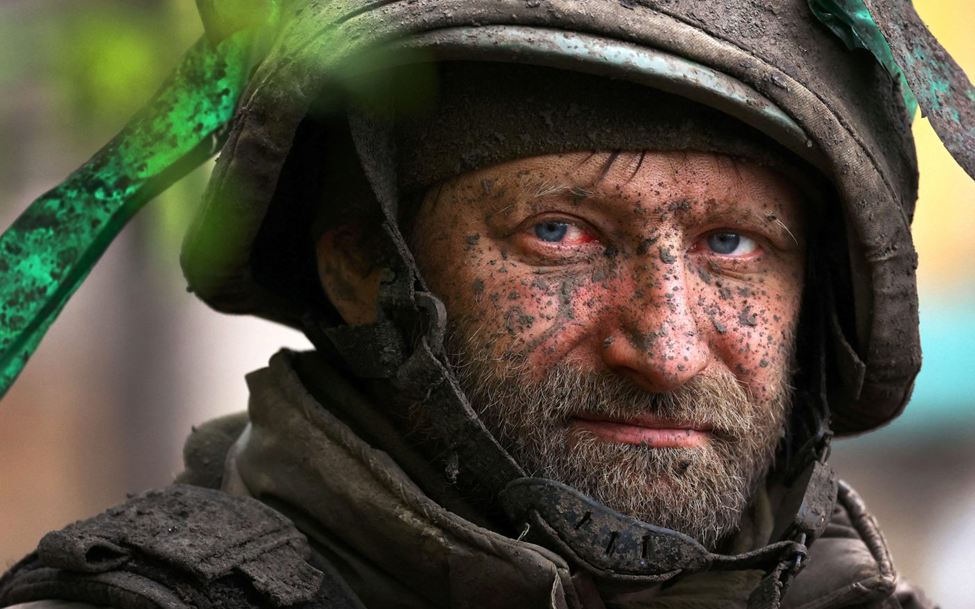
Fighting Fatigue amidst Ongoing War
The full-scale war in Ukraine has now been raging for more than 1,200 days. For our partners in Ukraine, the war is not some faraway conflict; it’s a daily reality, and it’s very personal. THF partner Taras Dyatlik wrote this week about what life is like for Ukrainians after almost three and a half years of war: “I often hear people say, ‘Taras, you’re tired. You need to rest.’ Yes, I am tired. But what appears from the outside as simple fatigue is now our reality—it has become our new lifestyle, and it’s here for the long haul. And this is not just my personal exhaustion. I am one of dozens of thousands of our people, including seminary leaders, professors, pastors, and volunteers, who serve our Church, our country, and our society—not only through pious singing and prayers, but through many other forms of active ministry. I am one of hundreds of thousands of families who have lost their loved ones. Personally, I pray that my fatigue will not stop me from helping our defenders, assisting those in need, and supporting volunteers and seminarians. I am not ashamed to ask you for prayer as well as for financial support. My request to you: please don’t be offended by us. Pray that despite our fatigue, God will send us those Simons of Cyrene who will help us carry the cross to the place of our crucifixion and embodiment of God’s mission. This is not about rejecting rest or saying vacations aren’t needed. This is about something deeper, endurance in calling when endurance and fatigue themselves become part of the calling, the calling itself for the time of war. Even when we stumble, fall, or fail in your eyes, we try to stand up, stay, and move on to our Hill of Mission. Peace be with you, and keep your children away from war.”

Generational Needs in Global Mission
In a recent article published by the Lausanne Movement, a THF partner, Indian theologian John Frederick David describes Gen Z as “the wildfire the South Asian church can’t ignore.” He writes, “Here’s the beautiful tragedy of Gen Z: They’re simultaneously the most connected and the loneliest generation we’ve ever seen.” Gen Z is typically defined as the generation born between 1997 and 2012. They were the first generation to grow up with smartphones and social media as part of daily life. They are now the generation shaping the workplace, communities, and the church. According to David, “They have been written off as the generation that traded human connection for digital likes, faith for skepticism, tradition for rebellion.” Yet Gen Z represents a tremendous opportunity for mission, especially in the Majority World. David’s article highlights three things Gen Z desperately wants that culturally aware churches can supply: authenticity, trust, and mentorship. Tyndale House Foundation works with many partner organizations that are ministering to Gen Z along exactly these lines. Organizations like Hope Walks, Project MedSend, and World Relief are building trust through holistic ministry that meets people’s physical and social needs as well as spiritual needs. HowToLife Movement is an evangelistic ministry founded and led by Gen Z leaders who have a passion to reach their own peers with the authentic gospel. Parfums de Vie, Village Schools International, and ACTS Burkina Faso focus on relational development as a means of gospel proclamation. Forum of Christian Leaders, Resource Global, and Taylor Global Consult are focused on mentoring as an effective means of leadership development. All of these partners (and many others) are working through local churches as well as global networks to give Gen Z exactly what they’re looking for in a ministry setting. Please pray that young people will increasingly find Jesus as the ultimate answer to the questions they’re asking as a generation.

Ministry Innovation
I’ve written before about the organization building a soundproof room for radio and podcasting ministry in a hostile context. THF gave a special grant earlier this year to help with this project, and the construction work is now almost complete (see the photo above). This is just one of many examples of THF partners finding creative ways to do ministry in highly diverse environments. Other examples include Congo Initiative and Crossroads Kids Clubs, both building apps for ministry in East Africa and Latin America, respectively. Asia Leadership Development Network is starting a podcast to reach young people in Mongolia, where there were no known believers as recently as the early 1990s. Today, tens of thousands of Mongolian believers are part of a vibrant and growing indigenous church movement there. SAT-7 is using satellite TV to bring seminary-level education to leaders of underground house churches in Iran. The Evangelical Alliance Mission is partnering with Trans World Radio to conduct radio-based Discovery Bible Studies for seekers in North Korea. A team of IT professionals is using networks of AI-powered cellphones to circumvent internet filters and spyware set up by the Chinese government and creating connections with Unreached People Groups in China. Davar Partners is creating audio Bibles for oral cultures. Operation Agape is planting churches in deaf communities in India. I could keep going! The bottom line is that many of the people and organizations we work with are not only brilliant and committed, but they’re also creative and innovative and willing to work outside traditional ministry boundaries as they seek to expand God’s Kingdom on earth.
That’s it for this week’s briefing. Please send any questions, comments, and wilderness provisions to [email protected]. I send out this email resource most weeks primarily for a Tyndale audience, but you should feel free to share it with others who may be interested, inside or outside of Tyndale. Thanks for continuing to pray for and support our partners around the world.
Jeremy Taylor
President | Tyndale House Foundation
The THF Weekly Briefing provides information about significant events happening in the wide universe of Tyndale House Foundation partner organizations as well as an occasional peek behind the scenes of THF’s operations. It is available to anyone at Tyndale who’s interested in learning more about the Foundation side of the organization. Was this email forwarded to you? Contact [email protected] to be added to (or removed from) the distribution list.