

Street Cred
September 30, 2025Just how important is reputation anyway?
In Costa Rica this week, I met a man who recently attended his own funeral.
No, he didn’t come back from the dead, and it wasn’t a case of mistaken identity or anything like that. The story is that when he turned 60, he decided that instead of a birthday party, he would have a funeral, giving friends and family members the opportunity to celebrate his life while he’s still alive.
Throwing yourself a funeral is unusual and maybe a little eccentric, but it kind of makes sense to me. A sentiment you often hear at funerals is how much nicer this celebration of life would be if only the deceased could be there to enjoy it. So why not have the party while the person is still alive and around to participate in the festivities?
There’s also something appealing about the idea of hearing what all the people who would show up to your funeral would say about your life. All of us know what we hope people would say about us. But how closely does that align with our actual reputation?
This is worth thinking about in a ministry context as well as in a personal context because in ministry, reputation leads to partnerships, and partnerships lead to impact. How people feel about your ministry goes a long way toward determining whether they’re willing to partner with you. There’s a good reason foundation grant officers ask ministry leaders about their partners; they want to know if you’re the kind of person who’s easy to work with. If you don’t have any other partnerships, there’s probably a reason for that. Trying to do ministry all alone is a red flag because either it means you think you can do everything yourself, or it means no one else is willing to work with you. Either way, it’s a problem. Is reputation important in ministry? Clearly it is.
The Bible has plenty to say about the importance of reputation on a personal level. Proverbs 22:1 is a good example—“Choose a good reputation over great riches; being held in high esteem is better than silver or gold.” Or Ecclesiastes 7:1—“A good reputation is more valuable than costly perfume.”
In the New Testament, the apostle Paul listed having a good reputation among “people outside the church” as one of the qualifications for being a church leader (1 Tim. 3:7). The first deacons were chosen by identifying “men who are well respected and are full of the Spirit and wisdom (Acts 6:3). It wasn’t enough for leaders to be wise and godly; they also needed to be well thought of by others. Their wisdom and godliness needed to be evident in the way other people regarded them. And that’s still true today. Wisdom is not theoretical; it’s proven in how others describe and respond to leadership.
At the same time, leaders must not hold their reputation in too high a regard. In Galatians 1:10, Paul wrote, “Obviously, I’m not trying to win the approval of people, but of God. If pleasing people were my goal, I would not be Christ’s servant.” He says something similar in 1 Thessalonians 2:4—“Our purpose is to please God, not people. He alone examines the motives of our hearts.” And the apostle John warns against being the kind of people who “loved human praise more than the praise of God” (John 12:43).
To some extent, reputation is aspirational. I know what I want people to say about me, and so I try to live in a way that makes my desired reputation a more likely outcome. I can’t control what anyone else thinks or says about me, but I can control what I do and say that other people pay attention to.
Far better, however, than having a carefully cultivated reputation based on our own actions is having a reputation that points to the work of Christ in our lives. Ephesians 2:7 says that because of the new life in Christ we experience when God in his mercy rescues us from our sin, “God can point to us in all future ages as examples of the incredible wealth of his grace and kindness toward us, as shown in all he has done for us who are united with Christ Jesus.” Now that’s a reputation I want to have—not how great a person I am (not a possible reputation anyway in my case) but how great God’s grace and mercy is and how apparent it is in my life.
I’ll never be perfect. I won’t be remembered as an extraordinary evangelist or a bold preacher or even the kind of person who’s quirky enough to throw a funeral instead of a birthday party. But whether my funeral takes place before I die or afterward, I hope what people say about me is that I am a person God saved, a person he can point to in future generations as an example of his grace. That’s the reputation I want to cultivate.
Here’s what’s happening.

Focus on Costa Rica
I’m going to go out on a limb and assume most Americans probably could not identify Costa Rica on a map. Even those who at least could narrow it down to Central America might have trouble identifying where Costa Rica fits in with Guatemala, Belize, El Salvador, Honduras, Nicaragua, and Panama (here’s a hint: it’s north of Panama and south of Nicaragua). Beyond its location, though, there are many other things worth knowing about this remarkable country. Costa Rica is internationally known for its extraordinary biodiversity. It is a literal birdwatcher’s paradise with over 900 species of birds. Its lush forests are home to sloths, jaguars, and monkeys, and its many volcanoes, cloud forests, and pristine beaches on two oceans make it one of the most sought-after tourist destinations in the Western Hemisphere. Politically, Costa Rica stands out from its neighbors in not having had a standing military since 1948, and it is unique in Central America in that it has never been governed by a communist dictator. Of course, like any nation, Costa Rica has its problems, including persistent poverty, especially among immigrant communities (approximately a fifth of Costa Rica’s population of 5 million is made up of Nicaraguan refugees and economic migrants). Government services, while steadily improving, have been slow to meet the needs of the poorest citizens and non-citizen residents, and income inequality is a growing issue. Yet these challenges also open doors for the church. Local congregations and Christian NGOs are stepping in to meet people’s physical and spiritual needs in their local communities. Costa Rica is a fascinating and beautiful country filled with wonderful and welcoming people, and I’m delighted that Tyndale has been able to invest in ministry here through organizations like Casa Viva (meeting the needs of children), Letra Viva (a network of Christian publishers), and others for so many years.

Prayers for Church Unity
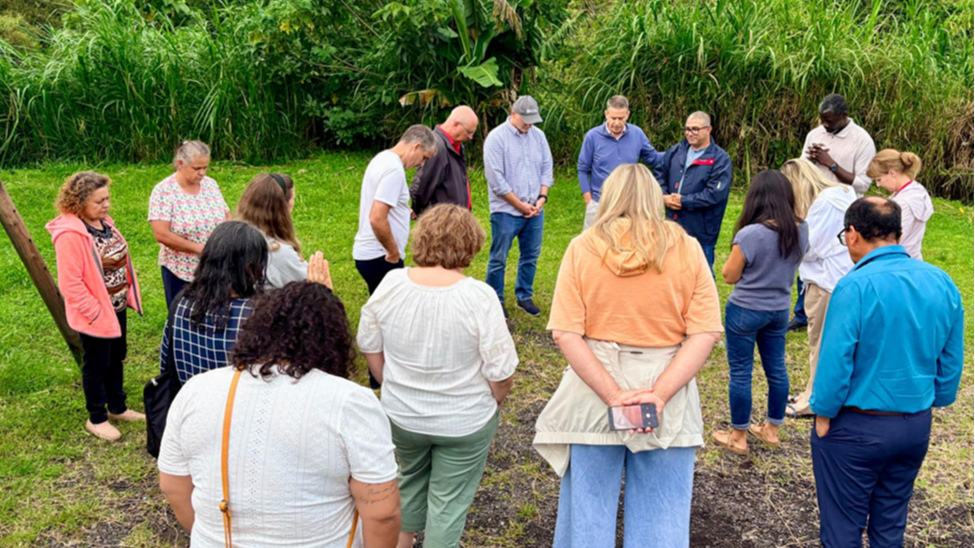
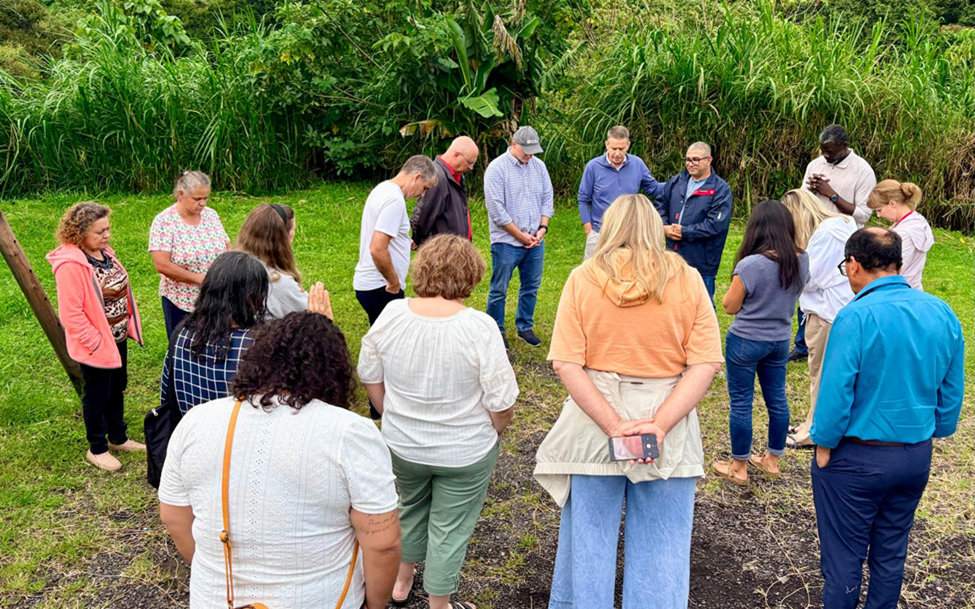
In San José, there are several precarios—informal settlements, or slums. The word comes from the Spanish for “precarious,” and the title fits because the people who live in these areas are indeed living on the edge of extreme poverty. Houses and shacks are built on land without any legal ownership or title, so people could be evicted at any time. Most structures are built by their occupants using limited materials, so they’re unlikely to withstand earthquakes or mudslides or heavy rains. Infrastructure systems such as water, electricity, sewage, and paved roads are partial at best or simply absent at worst. Precarios are areas where large numbers of people live in close proximity, and because government structures are often just as rudimentary as physical structures, they tend to be high-crime areas. When the Tyndale executives visited a church on the outskirts of one of these precarios, the pastor told us that people typically travel in large groups to avoid being targeted by gangs. For example, when a bus enters a precario at night, all the people get off at once. Walking by yourself is an invitation to be mugged, or worse. Even walking in a group is sometimes not enough protection, as gangs have been known to single out a particular person to harass, letting the rest go free, at least for the moment. Things have been getting better in recent years, thanks in part to the infrastructure investments this church and others have made in their own neighborhood, but the precario is still a rough place by any metric. Yet when we asked how we should pray for the people who live there, the pastor didn’t ask for prayers for stability or safety or freedom from violent crime. He said, “Please pray that the churches will be united.” I love that! In John 17:20-21, Jesus prayed for unity among believers “so that the world will believe you sent me.” Infrastructure projects and government-funded welfare may be helpful in some contexts, but the ultimate solution to the problems in the precario is Jesus, and Jesus is made known through the unity of his followers. Please do pray for unity of the churches working in and around San José’s precarios so that more and more people will experience freedom from spiritual poverty as well as relief from physical poverty.
Start with Celebration
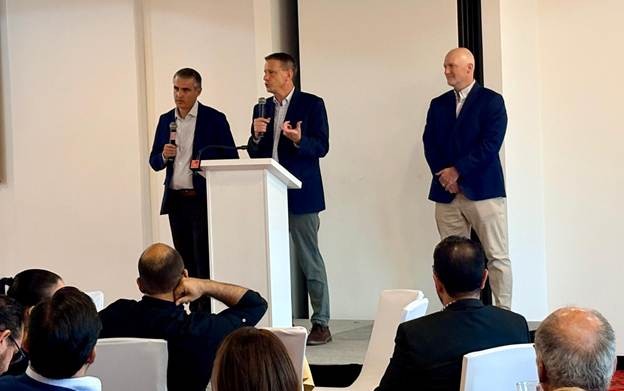
One question that kept coming up during our meetings with Casa Viva leaders this week was how they communicate to well-meaning ministry leaders who operate children’s homes that there’s a better way to help children. When someone has invested years of their life and very often the majority of their own resources to construct, fund, and run an orphanage, what’s the right approach to tell them that children are better off in families than in institutional care? For Phil and Jill Aspegren, founders of Casa Viva, the short answer is, “We don’t.” Phil said, “We never tell anyone they’re doing children’s ministry wrong. Instead, we start by celebrating all the things they’re doing right.” Caring for orphans and other at-risk children is a biblical mandate, and whenever churches and ministries are responding to that call, however imperfectly, that should be cause for celebration and thanksgiving. Only after a relationship is formed on the basis of shared commitment to caring for children, in a context of mutual trust and respect, do the leaders of Casa Viva invite other leaders to learn more about the benefits of family-based care. I see parallels to this approach in many areas of life. When you’re giving an employee a performance review, you start with all the things that are going well before diving in to areas for improvement. When you’re writing a manuscript review, you start with the book’s strengths. In his letter to the church in Ephesus in Revelation 2:1-7, Jesus listed the all the church’s praiseworthy aspects before leveling his complaint in verse 4. Starting with celebration is not only wise, it’s effective, and Casa Viva’s growing international influence is a clear example of the impact that can come from this approach. Whenever we’re having hard conversations, we can almost always find some point of common ground, something to agree on and give thanks for together. By starting with celebration, we remind ourselves that whenever people are trying to help meet a need, that’s biblical love in action. We can and perhaps should differ on specific methodology, but we can be grateful whenever the people around us are trying to help.
How to Help Everybody
One of my Tyndale colleagues who was with me in Costa Rica made the observation that it must be difficult for foundation representatives to say no. After you spend time with an organization, get to know the leaders, and see firsthand the good work they’re doing, how can we possibly say no when that organization asks for funding? This is definitely an occupational hazard for foundation leaders and board members. The reality is that even the very biggest foundations have limited funds to give away. At Tyndale House Foundation, every year we receive many more proposals than we can fund. Saying no is the hardest part of the job, but it happens a lot, by necessity. In board meetings, it’s almost a mantra that we “can’t fund all grants.” We wish we could help everyone, but we can’t. Or can we? No, we can’t give money to every organization that applies for a grant, but we can and do meet with just about everyone who asks for a meeting. Meetings often lead to connections with other organizations that are doing similar work, so we’re able to help organizations build their networks. Sometimes these connections lead to a Tyndale grant or possibly a lead on some other funding source. And we can always pray for the organizations we get connected with. One of our firm commitments at Tyndale is that we pray for every organization that submits a proposal. Maybe they won’t get a grant, but they’ll get our full attention and our prayers. And ultimately, we honestly believe connections and prayer are more useful than a grant in the long run. Giving money is important, but it’s arguably the least helpful way we engage. So yes, we can help everybody, even when we have to say no to financial support.
That’s it for this week’s briefing. Please send any questions, comments, and cute sloth photos to [email protected]. Do you enjoy reading the THF Weekly Briefing? Make sure you’re subscribed to the email distribution list to get access to this resource the same day it’s published each week, and feel free to share it with others who may be interested, inside or outside of Tyndale. Thanks for continuing to pray for and support our partners around the world.
Jeremy Taylor
President | Tyndale House Foundation
The THF Weekly Briefing provides information about significant events happening in the wide universe of Tyndale House Foundation partner organizations as well as an occasional peek behind the scenes of THF’s operations. It is available to anyone who’s interested in learning more about Tyndale’s philanthropic commitments, partners, and operations. Was this email forwarded to you? Contact [email protected] to be added to (or removed from) the distribution list.