


Stupid Prizes
August 20, 2025Stupid is as stupid does.
“Play stupid games, win stupid prizes.”
That was the response given by a woman who posted a video showing a couple’s reaction to being displayed on the “Kiss Cam” at a Coldplay concert a few weeks ago. They were going to all kinds of lengths to avoid being seen together on the big screen, but it was too late. Everyone in the arena saw them, and soon enough, just about everyone on the internet saw them too. It turned out the couple were married—just not to each other, and the publicity ruined their lives. The stupid prizes won from playing the stupid game of infidelity turned out to be wrecked marriages and destroyed careers.
As is the case with just about all internet phenomena, the Kiss Cam Scandal had its moment and then faded into the background of our collective consciousness, but the consequences of public sin remain. The stupid prizes are still very much in effect for the couple even though they are no longer the subject of constant online speculation and castigation. The damage has been done.
What can the rest of us learn from this very public fall? In a recent article for Chief Executive, leadership expert Patrick Lencioni writes, “It’s important to acknowledge that, in spite of all the memes and jokes that this incident provoked, this is a tragic event for at least two families, and to a lesser extent, one company. It’s also necessary to confront a second uncomfortable reality: it could happen to just about any leader, and any company.”
I might amend: it could happen to any pastor, any author, any international nonprofit executive, any foundation leader. It could happen to you. It could happen to me.
How?
Lencioni explains, “I understand how well-intentioned leaders can, little by little, put themselves in a position to risk the destruction of their families, and their businesses. And it starts when they believe one particular lie.”
What’s the lie? It’s that you’re special and deserve special treatment. It’s a lie that’s particularly easy for leaders to believe because people tend to treat them as if they’re special. Lencioni writes, “I know it sounds cliché, but the reality is that people laugh harder at a CEO’s jokes, speak to him (or her) with greater respect and admiration, and lavish him with more praise than he deserves. Cliché or not, it’s a reality that can corrupt the humblest of leaders who don’t get the same treatment from their spouses or children.”
There’s a running joke among foundation leaders that we ask the best questions, because people tell us that all the time. Anyone who doubts that there’s a power differential in a grantor/grantee relationship should listen in on one of my Zoom meetings sometime and count the number of times someone I’m interviewing says, “That’s a great question.”
Would you like to guess how many times in an average evening my wife and kids say, “Wow, honey—wow, Dad—you ask the best questions!”
Lencioni goes on to describe a situation where a leader leaves work “after nine or ten hours of difficult, even dramatic conversations and decision-making, having experienced mutual recognition and admiration from their colleagues. When they arrive home, they are confronted by a spouse who isn’t trying to impress them, and kids who don’t usually run into their arms and thank them for the sacrifices they are making for the family.”
This can lead to leaders feeling like they’re better off spending more time at work than at home. After all, that’s where they get affirmation, instantaneous positive feedback, and maybe, in some work environments, attention from attractive colleagues. “Of course,” Lencioni hastens to add, “it’s largely fiction, or perhaps exaggeration. But it feels good, and it stands in starker and starker contrast to life at home.”
It’s important to point out that Lencioni is not casting blame on the spouses and kids for failing to act like adoring subordinates or complimentary colleagues (or grantees). The solution is not for family members to become fawning flatterers. Rather, Lencioni recommends that leaders make it abundantly clear to themselves and everyone around them that their families are more important than their work. He concludes, “It needs to be recognized that leaders who are faithful at home are more grounded, trustworthy, and effective in the workplace. Strong families and strong organizations go together.”
At Tyndale, executives and other leaders regularly pray with and for one another that we will be protected from thinking more highly of ourselves than we ought. Remember that humility is a third of God’s blueprint for righteous living in Micah 6:8. Sure, flattery feels good. (You think I mind when people tell me what great questions I ask?) But none of us should think for one second that we’re immune to the kind of moral failure that can come from believing every nice thing people say about you. We’ve all seen it happen way too often, including in the church.
Of course, integrity plays a role here too. People who lack a strong moral compass are no doubt more susceptible to the kind of attitudes and activities that would be embarrassing or devastating if displayed on a monitor for all to see. It’s how we act when there’s no one watching that shows our true character.
Here’s what’s happening.
No Deal Yet for Ukraine
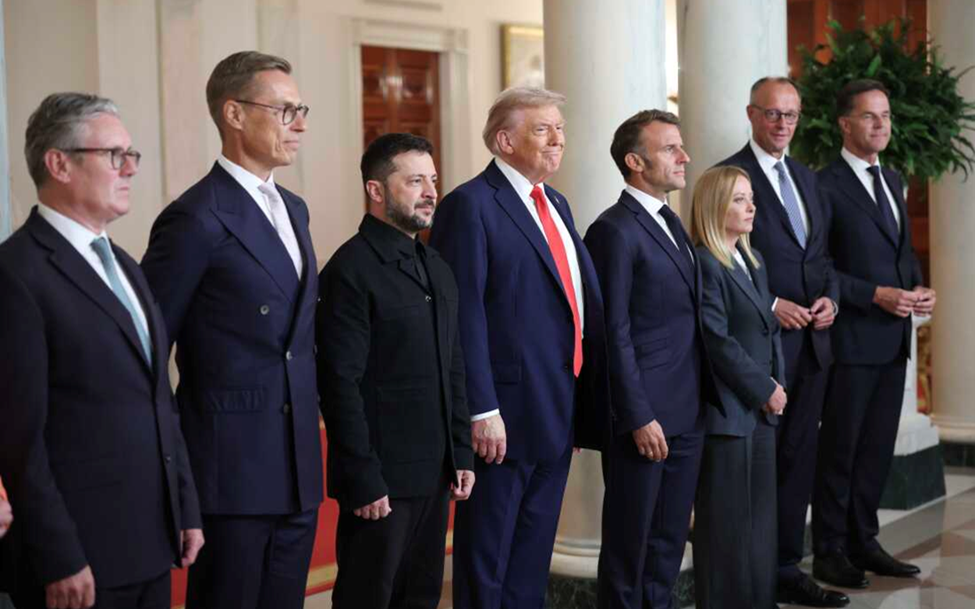
The war in Ukraine has now been raging for three and a half years. Despite repeated calls for peace from governments, churches, aid organizations, and international evangelical networks, Russia shows no sign of stopping the invasion or altering its tactics of targeting civilian infrastructure. Hundreds of thousands of military personnel have died in the fighting (significantly more on the Russian side than on the Ukrainian side), and millions of people have been displaced. A much-anticipated summit in Alaska between U.S. President Donald Trump and Russian President Vladimir Putin last Friday ended without an immediate ceasefire or much hope of an end to the fighting in the near future. A follow-up meeting in the White House between Trump and Ukrainian President Volodymyr Zelenski on Monday was significantly more civil than the previous meeting back in February and was attended by seven other key European leaders showing a united front in support of Ukraine. Now there are talks of a meeting between Zelensky and Putin, possibly within the next two weeks, but it’s not yet clear what an agreement could look like that will be acceptable to both sides. THF partners in Ukraine are understandably unhappy with the idea of ceding land to Russia, which will probably be part of any eventual deal. They want the fighting and killing to stop, but they also want justice, without which peace is tenuous at best and meaningless at worst. It’s increasingly obvious that human ingenuity alone is not going to solve this dilemma; only God can bring an end to this war. Please continue to pray for the Lord’s intervention in what seems like an impossible situation.
THF Program Update
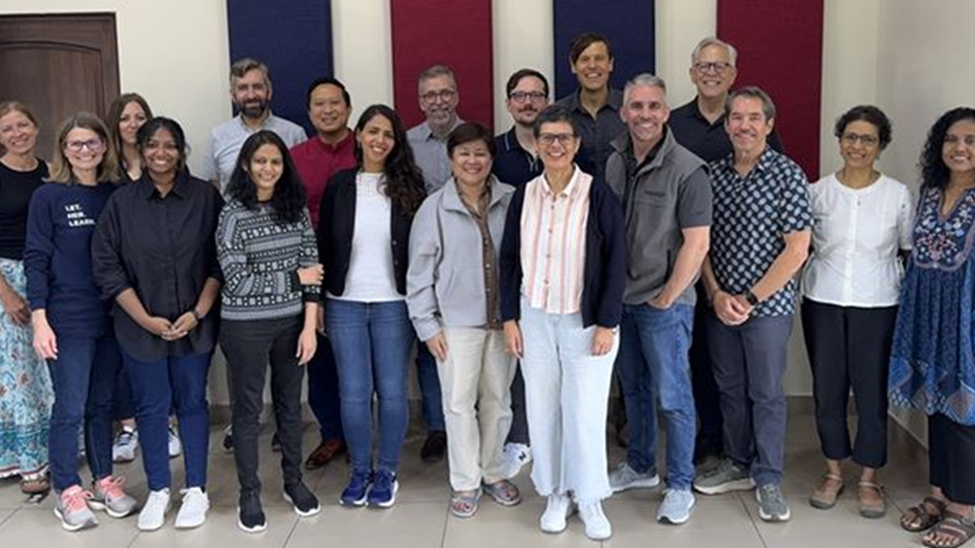
During the month of August, I’m highlighting a different THF program each week. Programs are a way for us to engage proactively and collaboratively with certain partners to meet specific needs. This week we’ll look at our No More program. No More is a collaboration between multiple foundations and field partners, aimed at educating and equipping global leaders to eradicate sexual misconduct in churches, denominations, and seminaries worldwide. It’s not a very nice topic, and we don’t like to talk about it in polite Christian circles, but sexual harassment, abuse, and even assault can and do happen on Christian campuses. Sometimes misconduct takes the form of male professors soliciting sexual favors from female students in return for a better grade. Other times maybe it’s course jokes or inappropriate remarks. In extreme circumstances, there may be sexual violence involved. All of this is unacceptable, and we believe Christians shouldn’t ignore the problem but should take the lead in confronting and getting rid of abuse. The No More program harnesses several THF partners’ expertise in theological education and aims to equip and encourage theological leaders at various levels of society to confront abusive practices. Our hope is to provide Christian leaders with a full theological understanding of the proper biblical way to view women and men in relationship to one another and to God within Christian communities. With this in mind, a global team of scholars has been assembled that are already working on developing curriculums for use in seminaries and churches, all with the goal of saying “No More!” to sexual misconduct on campuses.

THF by the Numbers
The THF staff are working hard to review a record number of grant proposals for the October grantmaking cycle. Since we switched from one cycle to two a couple of years ago, we’ve been able to respond more quickly to needs and opportunities, which is good, but it means everyone is very busy with grant review for a couple of months twice a year instead of just once. It’s worth it, but it’s a lot of work, and I’m very grateful for the efforts of all the staff. Here are some numbers to consider. We received 150 proposals this cycle. Each proposal takes, on average, 30 minutes for a single staff person to thoroughly review and summarize. The entire staff then spends maybe 10 minutes discussing and 5 minutes praying for each organization. The 150 applying organizations are looking for funding for projects in at least 68 countries. Not all these proposals will make it to the board-review stage; part of the staff’s role is to select the most strategic proposals for the board to consider. It’s much harder to say no than it is to say yes, so the winnowing process is an agonizing one. And even then, not every organization will get a grant, and those that do sometimes get less than they asked for, because our funds are limited. So far we’ve reviewed 99 proposals, so we have 51 to go, with 6 review meetings scheduled during the next 4 weeks before the board begins their final review. As you think of it, please pray for the THF staff as we are running this review marathon!

From the Bookshelf
I met Christian Mungai for the first time in the security line at Krakow International Airport. We were both on our way home from the European Leadership Forum in Poland, and he somehow recognized me. “Aren’t you with Tyndale?” he asked as we were both removing our shoes and belts and watches and taking our laptops and liquids out of our briefcases. “Yes,” I said, surprised. I had never seen him before, I was quite sure. “My name is Christian,” he said. “I’m from Kenya, but now I’m serving as a missionary in California. I’m thinking of writing a book about global missions, and I’d love to talk with you about my idea.” This kind of conversation is an occupational hazard in publishing, and I usually find a way to demur, but in this case, something prompted me to say, “Okay, send me an email, and I’ll give you some feedback.” Several weeks later, I received not only an email but the first half of a manuscript for a book called People Are the Wealth. I read the whole thing in one sitting and immediately forwarded it to Tyndale’s Acquisitions department with a note saying, “I think you may want to take a look at this.” It took a few meetings, but eventually Tyndale decided to publish the book, and now I’m excitedly recommending it. Christian’s central message is that effective mission work is best done in, through, and among communities. As a missionary himself, he proposes new mission strategies as he examines mission theology, philosophy, ethos, and practice. I recently gave away copies of this book at a global publishing conference because it’s a great example of global publishing—a Kenyan writer who lives in California, whom I met in Poland, published by a company in Chicago. Plus it has a message that is absolutely relevant to the Global Church today. Perhaps it’s a conflict of interest for me to recommend a Tyndale book, but I’m doing it anyway!
That’s it for this week’s briefing. Please send any questions, comments, and examples of stupid prizes to [email protected]. I send out this email resource most weeks primarily for a Tyndale audience, but you should feel free to share it with others who may be interested, inside or outside of Tyndale. Thanks for continuing to pray for and support our partners around the world.
Jeremy Taylor
President | Tyndale House Foundation
The THF Weekly Briefing provides information about significant events happening in the wide universe of Tyndale House Foundation partner organizations as well as an occasional peek behind the scenes of THF’s operations. It is available to anyone at Tyndale who’s interested in learning more about the Foundation side of the organization. Was this email forwarded to you? Contact [email protected] to be added to (or removed from) the distribution list.