


The Importance of Getting Things Done
April 15, 2025Procrastination is always problematic, especially in our spiritual lives.
It’s Tax Day in America!
I’m certain that all readers of the THF Weekly Briefing are responsible planners who filed their tax returns weeks ago (and several are citizens of other countries for whom this doesn’t apply anyway), so today’s deadline is no big deal. But for millions of Americans, today is the day they will finally dust off their bank statements and dig out their TurboTax passwords and get to work figuring out how much they owe the government (or, in about two-thirds of cases, how much the government owes them back).
There are no doubt many reasons why people wait till the last minute to do their taxes, but the most common reason people give for delaying the inevitable is that the process is cumbersome and annoying. Given the choice on a rainy afternoon in March between analyzing your W2 and 990INT forms and doing pretty much anything else, people are going to choose the latter. In a 2018 survey conducted by CBS News, 51 percent of people said they’d rather serve jury duty than face their tax burden, and nearly 25 percent said they’d get an IRS tattoo if it meant they didn’t have to do taxes.
Putting off unpleasant or uncomfortable tasks until the last minute is human nature. It may not be wise, but it’s at least understandable. We all do it.
This is not a new phenomenon. Procrastination and avoiding hard tasks have been problems for us for thousands of years. King Solomon, nearly 3,000 years ago, wrote in Proverbs 6:9-11, “How long will you sleep? When will you wake up? A little extra sleep, a little more slumber, a little folding of the hands to rest—then poverty will pounce on you like a bandit; scarcity will attack you like an armed robber.”
A thousand years or so later, James put it even more succinctly: “Remember, it is sin to know what you ought to do and then not do it.”
To my knowledge, neither the ancient king nor the apostle were talking specifically about paying taxes on time, but the principle applies. Not doing something we know we’re going to have to do eventually is not just bad policy; it can lead to destruction and ruin. Solomon again: “Farmers who wait for perfect weather never plant. If they watch every cloud, they never harvest” (Eccl. 11:4).
Jesus had a lot to say the importance of not putting off important things that should be done now, especially when it comes to spiritual matters. In Matthew 25, he told a story about ten bridesmaids who fell asleep waiting for the bridegroom to finally make his appearance. Five of them were prepared and had brought along extra oil for the lamps; the other five had procrastinated and weren’t ready when the time came. The message is clear: Be ready! Get your spiritual house in order now—don’t wait for an uncertain future.
In John 9:4, Jesus again makes the point that now is the time to do what must be done: “We must quickly carry out the tasks assigned us by the one who sent us,” he said. “The night is coming, and then no one can work.”
In April 2020, during the early days of the Covid pandemic, the IRS made the decision to delay Tax Day until July 15. With all the uncertainty in the world, the government decided people could use an extra three months to get their tax returns filed. That was nice of them, but that’s generally not how things work in real life—especially our spiritual lives. The bridegroom in Jesus’ story didn’t say, “Oh, I can see you’re overwhelmed with all the pressures of the wedding feast; I’ll give you an extra three months to get ready.” No, he said to the five unprepared bridesmaids, “Believe me, I don’t know you!”
As I said, I’m sure all THF Weekly Briefing readers are well-prepared people who are ready to face whatever comes their way—especially deadlines we know about well in advance. I pray all of us will likewise be prepared for the unexpected challenges life throws our way.
And by the way, if you haven’t filed your taxes yet, better get on it.
Here’s what’s happening.
Church Planting and Soundproofing
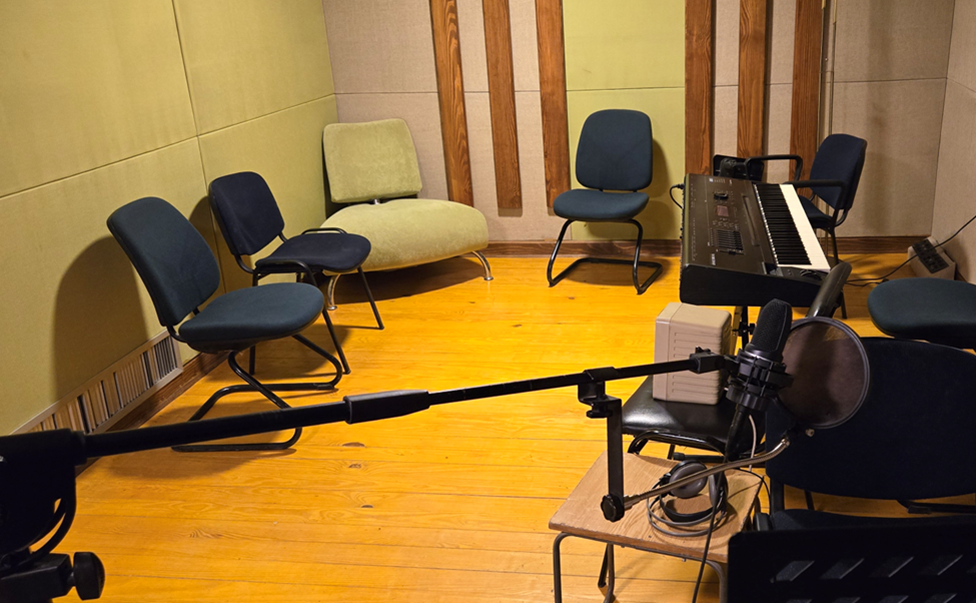
Apologies for the cryptic language in this post, but I feel the need to be vague in order to protect the identity of partners who live in a potentially dangerous context. I met Zephani (not his real name), founder of an organization called IDEA (not his real org name) on a trip to Malaysia (not his real country) a couple of years ago. Zephani was part of a panel of presenters talking about innovative church-planting methods, and I was intrigued by his strategy of going into communities that have experienced devastating storms and other disasters, providing education for children whose schools have been closed (or never existed in the first place), and developing relationships with families, all with the eventual goal of planting a church. I stayed in touch with Zephani for the next year, meeting with him on Zoom a couple of times. At my invitation, he submitted a proposal to THF, and we gave an introductory grant of $10,000 in 2023. I next saw Zephani in South Korea at the Lausanne Congress last September, and we enjoyed getting caught up. A few months later, I read in an IDEA prayer letter that the organization desperately needed to create a soundproof room in their office (not the one pictured above) in order to record podcasts and conduct business without the neighbors hearing them and perhaps reporting them to the police. The entire budget for this project was $6,000, and Zephani was struggling to raise the necessary funds. So at the end of March, the THF board authorized a special grant to cover the entire cost of the project. Zephani wrote me last week to say, “Praise God—we received your donation to build the sound-proof room, and we are on progress to complete it soon. God bless abundantly.” I love it when a relatively small gift can have an outsized impact! Please pray for Zephani and his team as they continue to plant churches in rural Malasia and—soon—record podcasts in their new soundproof studio.
Evangelical Seminary Moving North
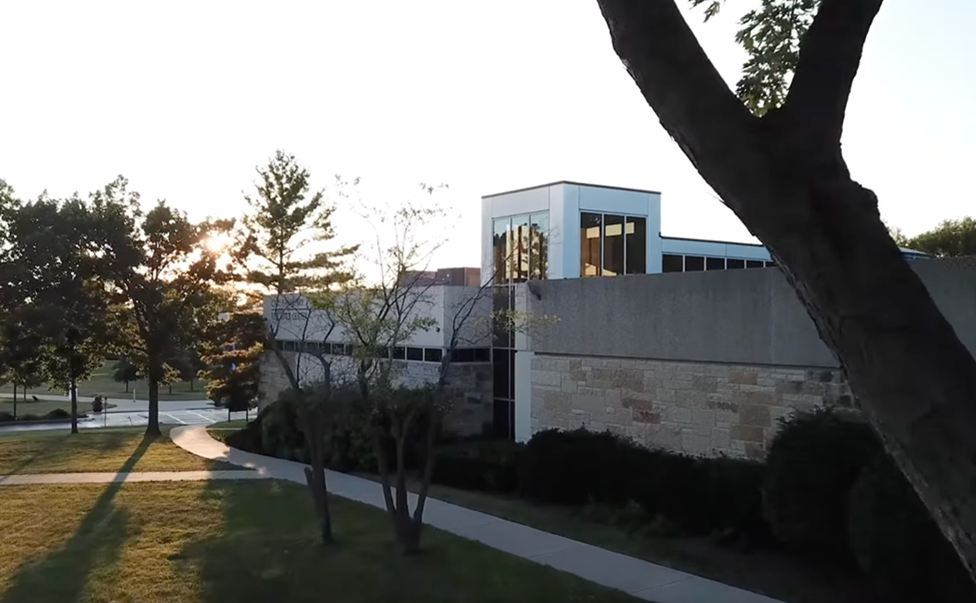
Back in early March, one of the NLT Bible Translation Committee members who teaches at Trinity Evangelical Divinity School (TEDS) made a comment about some future uncertainty. I wasn’t sure what that meant until I saw this Christianity Today headline last week: “Trinity Evangelical Divinity School Moving to Canada.” I had known the institution was facing financial difficulties, but this news came as a surprise. Tyndale House Foundation has had a small but meaningful financial partnership with TEDS, with our most recent grant given in 2023. Several current and former faculty members at TEDS have been involved with various Tyndale projects, including our Africa Leadership Study. In 2018, we hosted the first Africa Speaks conference on the TEDS campus in Bannockburn. And there are many, many TEDS graduates in various leadership positions at THF partner organization around the world. TEDS has been widely renowned for a long time as one of the preeminent institutions of evangelical theological education, so its move to the campus of Trinity Western University in British Columbia next year will be a loss for the American evangelical church. The financial woes the school has experienced in the last decade are mirrored by many other theological education institutions in the US and worldwide, so hopefully this move is a unique solution to a particular problem and not the start of a new global trend of seminaries having to close their doors.
BEPA Impacting Francophone Africa
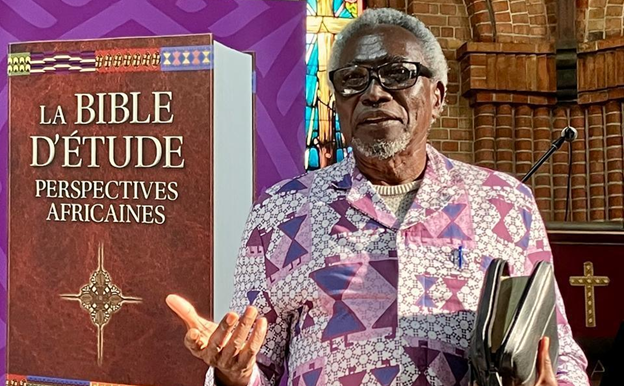
You’ve probably heard about the Africa Study Bible, and maybe you’ve read about the significant impact this resource, written by Africans for Africans, has made. But did you know there’s a French translation called La Bible d’Étude: Perspectives Africaines (BEPA)? Translation of the ASB study notes into French began even the English version was officially launched in 2017, and the launch of the French version a couple of years ago has been a tremendous gift to pastors in Africa and in expat communities throughout Europe. Tyndale House Foundation was a significant financial partner in the development of the English version and in the translation and launch of the French version. Oasis International, publisher of the ASB, has been a longtime THF partner, and many of the scholars on the translation team are friends and partners of ours as well. Here’s an interesting factoid related to BEPA—in August 2022, I visited Benin to attend a cultural festival put on by THF partner Africa Sings. In preparation for my visit, I asked Matthew Elliott, president of Oasis, if he had a copy of BEPA, which had been printed but yet been shipped to any of Oasis’s distribution centers in Africa. Matthew came through, and I was able to present Africa Sings founder Daniel Dama with what I believe was the very first BEPA anywhere in Africa. A couple of months ago, Dama was visiting with the former president of Benin and felt led to give him that same copy. So the former president of Benin is now a proud BEPA reader. You just never know what may happen when you give Bibles to ministry partners!
Rescuing Trafficking Victims in Chicagoland
If you aren’t paying attention, it’s easy to assume that human trafficking is something that happens somewhere else and not in your own community. That use to be Simone Halpin’s assumption, but that was shattered ten years ago when she met a woman on the streets of Chicago who had been forced into prostitution. Simone wrote, “I really had no concept that women were being forced to sell their bodies on the same streets and in the same neighborhoods where I was raising my family and driving my kids to school.” According to some estimates, between 16,000 and 25,000 women and girls are trafficked annually in the Chicagoland area. More than half of them are under 18; a third are under 15. So in 2016, in partnership with The Moody Church, Simone founded an organization to provide housing and care for women escaping the sex trade in the Greater Chicago Area. She called the ministry Naomi’s House, named for the Old Testament character in the book of Ruth who suffered profound loss, hardship, and disappointment but later experienced redemption. Today, Naomi’s House has grown to serve more than 250 women each year. Many influential voices in Western culture today are calling for not only dignifying but glorifying the sex trade in its various forms, and there’s a temptation to dismiss the problem of trafficking as no big deal. But according to Naomi’s House executive director Blythe Struck, 84 percent of those involved in prostitution are under third-party control. In other words, they need help, and the church should be first in line to provide it. There’s nothing glamorous about the sex trade or sex trafficking, despite what Hollywood seems to want us to think. I’m thrilled THF has been able to partner with Naomi’s House to assist so many women and girls who need help to find a life after escaping from trafficking right here in our own backyard. In a recent letter to the THF board, Blythe wrote, “Thank you for providing an opportunity for survivors to find true strength, hope, and trust in the healing power of Jesus.”
That’s it for this week’s briefing. Please send any questions, comments, and stories of presidential Bible presentations to [email protected]. I send out this email resource most weeks primarily for a Tyndale audience, but you should feel free to share it with others who may be interested, inside or outside of Tyndale. Thanks for continuing to pray for and support our partners around the world.
Jeremy Taylor
President | Tyndale House Foundation
The THF Weekly Briefing provides information about significant events happening in the wide universe of Tyndale House Foundation partner organizations as well as an occasional peek behind the scenes of THF’s operations. It is available to anyone at Tyndale who’s interested in learning more about the Foundation side of the organization. Was this email forwarded to you? Contact [email protected] to be added to (or removed from) the distribution list.