

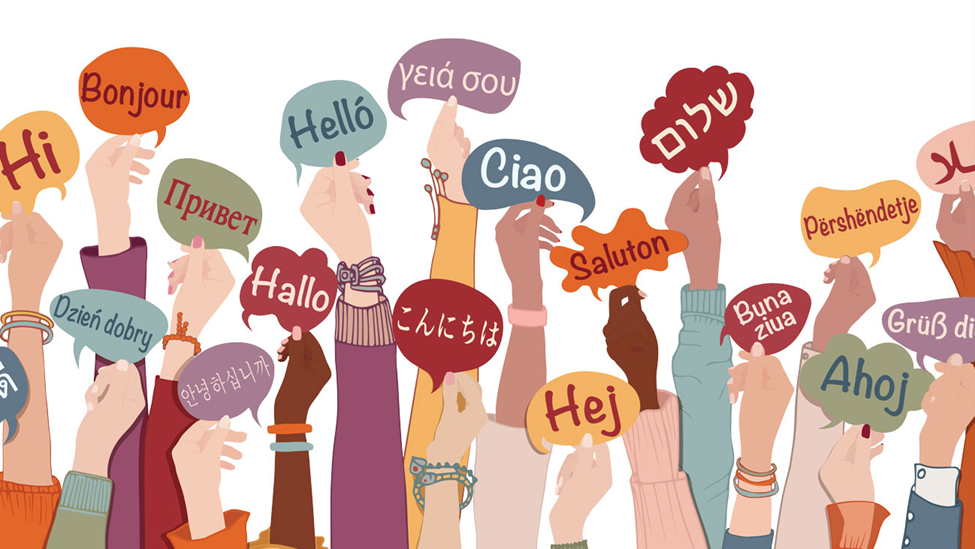
The Language Guy
March 20, 2026Something about hearing familiar speech brings profound joy.
Have you seen “the Language Guy”?
I came across his videos on YouTube recently, and because I watched one all the way through, the algorithm decided I must really like this content and started serving me a lot more of it.
And the thing is, I do like it! What this guy does is walk up to random people in cities around the world. When he tells them that he can speak their language, people are very skeptical at first, but he keeps asking, and eventually they say a few words in their mother tongue. And the Language Guy speaks back! He is conversant in something like a dozen languages and somehow knows at least a few words in just about every language you’ve ever heard of.
What makes these videos enjoyable is seeing the look of astonishment and pure happiness on people’s faces when they hear their own language in an unexpected place, from an unexpected person. They absolutely light up. They smile and laugh. Some even start crying. Language is a deeply human thing, and there’s something about hearing familiar speech that brings profound joy, especially when you’re not anticipating it.
I’ve witnessed this myself. Once I was in Ethiopia and went out for dinner with a friend from Kenya. On our way into the restaurant, my friend saw a woman he instantly knew was from his tribe. He didn’t know her, had never met her, but somehow he could tell. And when he began speaking to her in Kikuyu, she very nearly started jumping up and down. She rushed over, gave this complete stranger a big hug, and kept the excited conversation going until our table was ready while I stood there not understanding a word but loving every second.
I think this must be kind of what Bible translation is like. We see photos all the time from partners who are involved in translation work—groups of people holding up their new Bibles and grinning like they’ve just been told the greatest news ever. Which, of course, they have! You’ve probably heard some version of the story where someone gets a Bible in their heart language for the first time and says something like, “Before today, I never knew God spoke my language!”
The thing is, God does speak your language. More than that, he is the inventor of language. He not only speaks every human tongue but created every human speaker. And he did it with his own words and is himself the Word!
If encountering a stranger on the street who can speak your language brings unexpected joy, how much better is it to realize that the God of the universe not only knows your heart language but can speak directly to your heart? No wonder people in the photos are smiling.
Our heart language is part of our identity. When we understand and are understood by others, there’s an instant connection. So it’s a wonderful privilege to be involved with so many partners who are making God’s Word understandable in every language, ensuring that people from every tribe and tongue can hear God speak.
Here’s what’s happening.
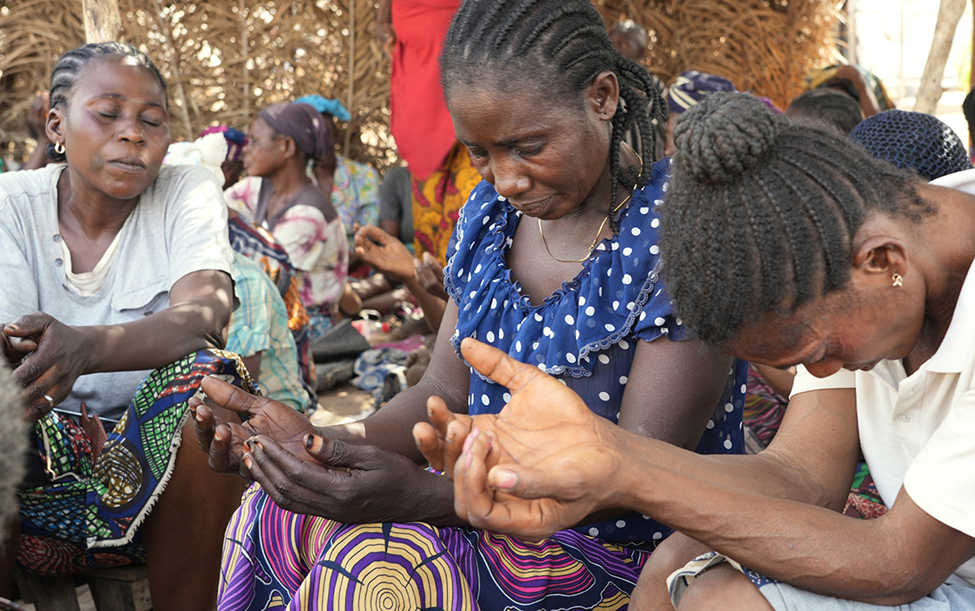
Tragedy in Maiduguri
On March 16, 2026, a quiet evening in the northeastern Nigerian city of Maiduguri was shattered by explosions as four suicide bombers struck crowded civilian locations in a coordinated attack. At least 23 people were killed and more than 108 injured, according to a THF partner serving in the city. Maiduguri lies near the epicenter of terrorist activity by the Islamic militant group Boko Haram, and these acts of violence have provoked renewed concerns about a resurgence of violent attacks in the region. Nigeria currently is ranked number seven on the Open Doors World Watch List, placing it among the top ten most dangerous countries in the world for Christians. The number and scale of lethal attacks in Nigeria makes it one of the worst countries for extremist violence, especially (but not exclusively) against Christians. Our partner in Maiduguri has asked for prayer for bereaved families, for the injured, for hope in the devastated community, and for believers there to serve as a channel of God’s light and encouragement despite the incredibly challenging circumstances.
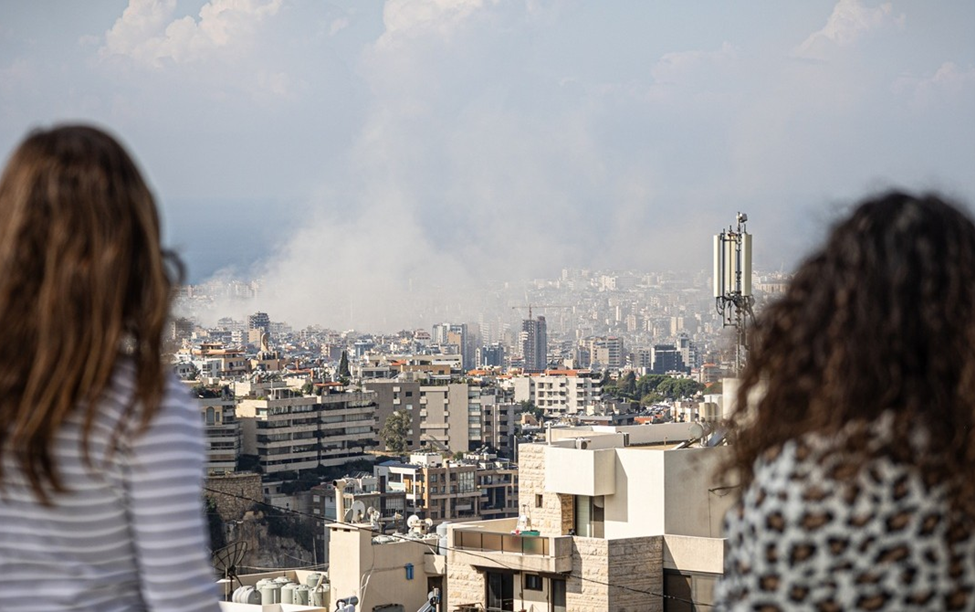
Being the Church in War
The war in Iran has now entered its fourth week. Nearly every day brings new promises from the US military about the heaviest day of strikes yet. The increasingly fragile Iranian regime has responded by firing missiles at virtually every other country in the region and shutting off shipping traffic in the Strait of Hormuz. Israel has launched a ground invasion into Lebanon, attacking what remains of Hezbollah. More than 500,000 people in Lebanon have been displaced within a matter of days, adding to a refugee crisis that was already near catastrophe levels before the war began. In Pakistan, Iran’s southeastern neighbor, tensions are running high, with anti-Western protests breaking out in multiple cities in response to the attacks on Iran. In many Muslim-majority countries, Christianity is often perceived as a “Western” religion, and anger at Western powers sometimes turns into anger and even violence toward local Christians and churches. Despite the difficulties, THF partners in these countries are responding not by cowering from danger but by turning toward it, and Tyndale House Foundation has given several emergency grants to help. In Iran and Pakistan, Christians are proclaiming the gospel boldly to their neighbors and on media channels. In Lebanon, THF partners are setting up emergency shelters and handing out aid supplies. In Israel, Christian students are sleep-deprived from constant bomb sirens but resolved to show Christ’s love to those around them. The church is being the church, serving as the hands and feet of Jesus, even in the midst of war. Please pray for peace and for the protection of innocent life throughout the region.
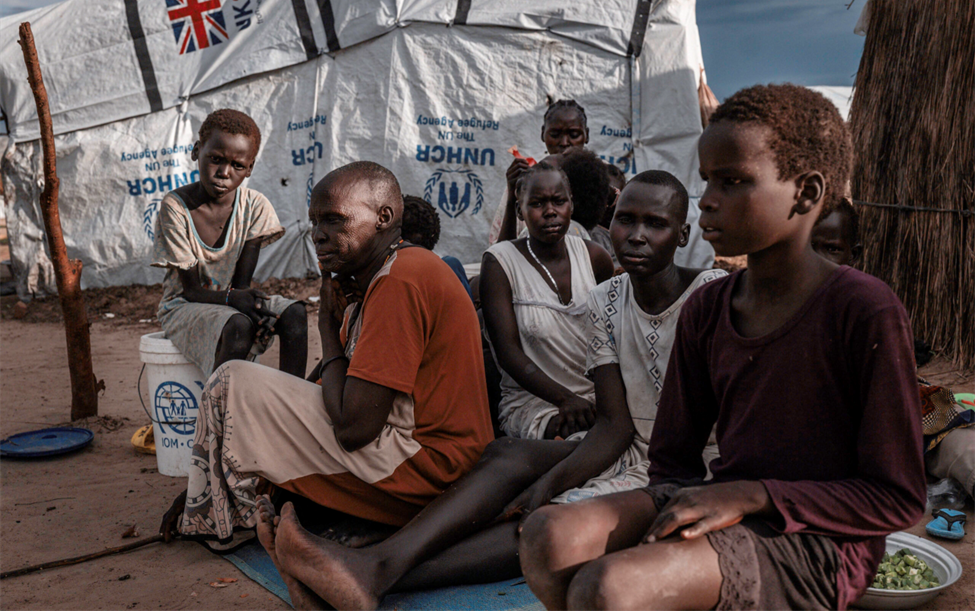
Refugee Crisis in South Sudan
Since the outbreak of major conflict in Sudan in April 2023, hundreds of thousands of people have fled south into South Sudan, creating one of the most urgent but underreported refugee crises in the world. Many arrivals have crossed the border with little more than whatever they can carry, settling in overcrowded transit centers and informal camps in already fragile regions, including Upper Nile State, where THF partners are working. South Sudan was already struggling to recover from years of internal conflict and economic instability and is now having difficulty absorbing the influx of displaced people. Limited infrastructure, food shortages, and inadequate medical care have compounded the humanitarian strain. Our partners warn of rising malnutrition, disease outbreaks, and protection risks, especially for women and children. Tyndale House Foundation recently sent an emergency grant to the Episcopal Diocese of Malakal to help with care for refugees, and Archbishop Joseph Atem of the Upper Nile Internal Province wrote, “Thank you very much for the grant awarded to Malakal Diocese. Your gifts always make a real difference in the lives of our people. This grant for refugees in Malakal means a great deal to us and to those who will receive this relief. Thank you for standing with us and the people we serve.” Please join us in praying for the many vulnerable people facing desperation in South Sudan and for our partners there to be effective agents of both compassionate care and faithful gospel witness.

Converging Trends
Two very different studies have been released recently that shed light on some of the world’s toughest challenges and what can be done to address them. In 2025, the Gallup research organization interviewed people from 107 countries and compiled findings into a report released in early 2026 in partnership with the World Governments Summit. The Gallup report indicates that the highest number of people (23%) in all researched countries said the economy is the top national problem. The second largest group (10%) identified work-related issues like unemployment and working conditions as the most important problem their country faces today. The other two concerns in the top tier are politics/government (8%) and safety/security (7%). Meanwhile, in January 2026, the Center for Effective Philanthropy released a report called “Foundation Governance Today: How Boards and CEOs Are Navigating Risk, Accountability, and a Shifting Landscape.” According to the CEP report, almost all foundation leaders (87%) report that leading a foundation is more challenging than in the past and identify tension between being responsive to rapid change and remaining focused on existing priorities as exacerbating factors. Since many foundations, including Tyndale, are focused at least in part on precisely the kinds of issues that people believe should be top priorities according to Gallup, these two reports are linked. People’s needs are intensifying, and foundations are under pressure as they navigate how to respond. Tyndale and other Christian foundations sit at that intersection as we do our best to view economic realities and humanitarian crises through a biblical lens. As we respond to the world’s greatest problems, we endeavor to treat people with dignity, empower local leaders and churches to reach their own communities, and above all, pray. I’m very grateful to have such a large group of stakeholders and supporters standing with us as we strive for genuine gospel impact.
That’s it for this week’s briefing. Please send any questions, comments, and stories of surprise linguistic encounters to [email protected]. Do you enjoy reading the THF Weekly Briefing? Make sure you’re subscribed to the email distribution list to get access to this resource the same day it’s published each week, and feel free to share it with others who may be interested. Thanks for continuing to pray for and support our partners around the world.
Jeremy Taylor
President | Tyndale House Foundation
The THF Weekly Briefing provides information about significant events happening in the wide universe of Tyndale House Foundation partner organizations as well as an occasional peek behind the scenes of THF’s operations. It is available to anyone who’s interested in learning more about Tyndale’s philanthropic commitments, partners, and operations. Was this email forwarded to you? Contact [email protected] to be added to (or removed from) the distribution list.