


You Have to Go Home
July 22, 2025Five guidelines for coming home from a missions trip
Are short-term missions trips helpful? Or harmful?
Short-term trips have long been a popular and meaningful way for Christians who are not called to career missionary service to engage with international missions efforts. For generations, young people and adults on serving on trips organized by churches and sending agencies have provided aid, shared the gospel, encouraged missionaries on the field, and brought back stories of amazing things God was doing among the nations. Many who didn’t previously think they were called to missions have ended up on the field in long-term service after a short-term trip.
But starting in the 1980s and 90s, a growing number of missiologists began expressing caution about this method of global engagement, questioning whether short-term trips really provide lasting change or positive outcomes, either in those going or among the populations supposedly being helped. Some have decried short-term trips as promoting cultural insensitivity or consumerism in the Majority World and argued that even well-intentioned short-term efforts can ultimately lead to dependency and disempowerment among indigenous communities.
At Tyndale, we believe a solid biblical case can still be made for both short-term and long-term engagement. As a foundation, we tend not to directly support short-term efforts, preferring instead to focus on partnerships aimed at long-term discipleship and indigenous leadership development. But as a publishing company, we continue to send teams of employees on short-term trips to help THF partners around the world in their efforts to meet people’s physical and spiritual needs. We navigate the missiological complexities by only sending teams in response to specific invitations or requests, so we’re not promoting our own agenda but rather are providing meaningful partnership where it is needed and solicited.
As I’ve been thinking about how, where, why, and whether to send short-term teams, one thing I’ve been wondering is whether long-term impact from a short-term trip could be facilitated by focusing more on what happens after a trip. So on Tyndale’s recent missions trip to Poland, I suggested ten guidelines for how to return home from a missions trip. I present the first five here for your consideration and comment. I’ll conclude with the other five next week.
- Take good things home with you. In Luke 9:28-36, Peter tried to freeze the moment of Jesus’ transfiguration, suggesting that the disciples build shelters for the glorified Christ and his heavenly companions Elijah and Moses. But mountaintop experiences aren’t meant for our benefit alone; we need to go back to our regular lives and bring with us the good things we have learned and experienced so that others can benefit too.
- Expect a crash. In 1 Kings 18 and 19, Elijah experienced a major spiritual victory, triumphing over the prophets of Baal and triggering a spiritual revival among the people of Israel. But just days later, he was all alone in the wilderness, fleeing from the nation’s tyrannical rulers and praying for death because his hardships were too difficult to bear. We should expect a low after we experience a spiritual high. These are moments when we are most susceptible to spiritual attack. We need to be ready.
- Focus on God’s mercy, not your personal sense of justice. When the prophet Jonah finally obeyed God’s instructions to preach to the people of Nineveh, the response was a dramatic spiritual revival. What was Jonah’s reaction? He didn’t praise God for working a miracle in the hearts of the Ninevites; he expressed disappointment that God hadn’t followed through on his threat to destroy the city. Jonah was elevating his own sense of justice above God’s desire to show mercy. We need to subjugate our imperfect sense of justice to God’s perfect justice and God’s amazing mercy. And we need to view the injustices we do encounter through the lens of God’s plan, not our own indignity.
- Returning to routines isn’t failure. In John 21, after Jesus’ crucifixion and resurrection, the disciples weren’t sure what to do. So they went fishing, returning to the life and patterns they knew best. The same thing is going to happen to us after any significant spiritual experience. This is natural and okay. Returning to our routines is a good thing. But we also need to be willing for Jesus to redirect us, just like Peter and the other disciples were when they received a new mission from the risen Lord.
- Stay sensitive to others who didn’t share your experience. When David returned home with the Ark of the Covenant in 2 Samuel 6, he allowed his overwhelming joy to get the better of his cultural sensitivities, earning him scorn from his wife. Not that her reaction was correct! But we should remember that not everyone will necessarily share our excitement for what we experienced on a short-term trip. Communication should be invitational, not dominated by personal celebration. Make sure you’re telling stories of genuine impact and transformation, not inside jokes.
There’ll be more next week. Meanwhile, if you, or people you know, are heading out on a short-term missions trip anytime soon, in addition to preparing for service on the field, you may want to think about how best to return home afterward as well.
Here’s what’s happening.
Answered Prayers in the DRC
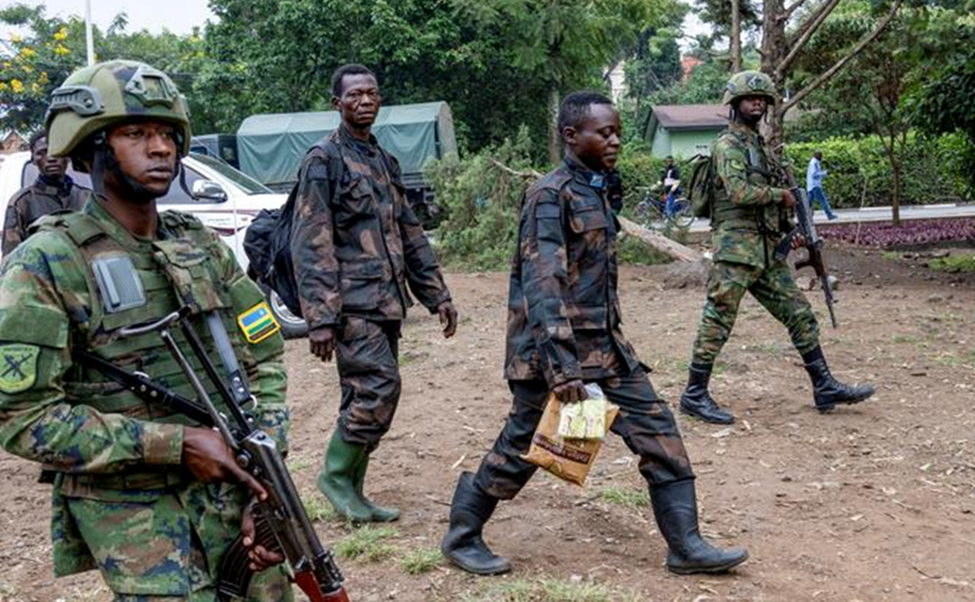
Last week I devoted the entire Weekly Briefing to the situation in the Democratic Republic of Congo. I heard from many readers in multiple countries that they were prompted to pray for the DRC, the city of Goma, and the THF partners who live and work in harm’s way. This week I received another update from the same partner I shared about last week. He wrote, “Last night, armed bandits attacked our neighbors around midnight, holding them hostage for about 30 minutes under the threat of automatic weapons. They managed to break the bedroom window of the parents. The threats escalated—they even considered throwing in a grenade to burn down the house unless the family surrendered cash and two phones. Moments later, the gang turned its attention toward our house. My wife was startled by the sound of boots crunching across the hardened lava outside. The assailants circled the house, then stopped at the boys’ bedroom window, smashed the glass, and began shouting threats. In that terrifying moment, my wife raised her voice and cried out loudly, ‘Father God, protect us!’ She doesn’t even remember the exact words of her desperate prayer—only its force and urgency. After a long stretch of tension and fear, the shouting ceased. The sound of boots on lava resumed, then faded slowly into the night’s shadows. It was about one in the morning. A powerful deliverance from the Lord! Prase be to our Father!” Amen. Please keep praying.
Impact in Ghana
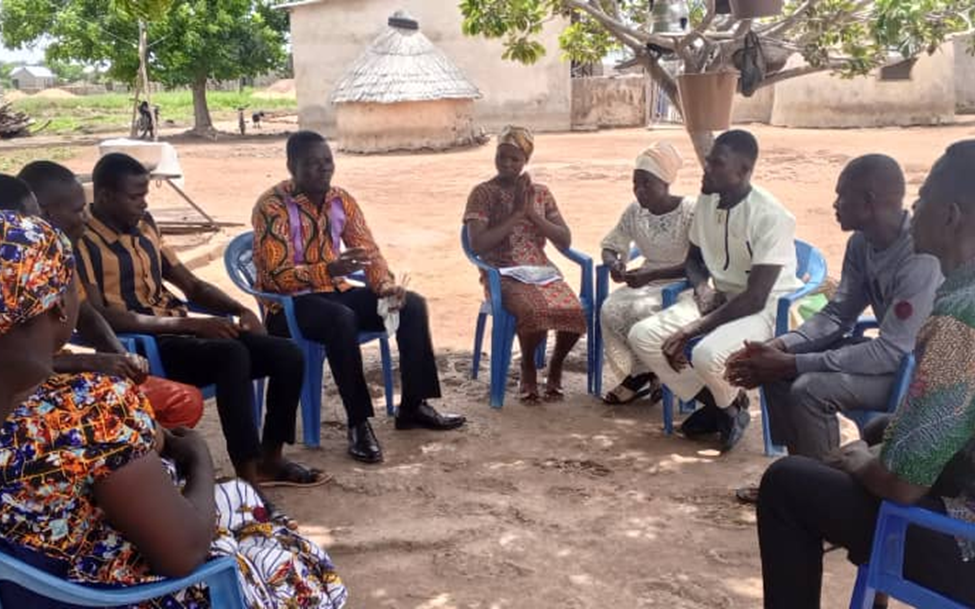
In 1957, the West African country of Ghana became the first sub-Saharan African country to gain independence from colonial rule. Today Ghana is a stable democracy with a growing economy, known for its vibrant culture. Although most Ghanaians are Christians (around 70 percent), there are still multiple Unreached People Groups in rural areas. Some of these areas can be treacherous for missionaries due to the threat of kidnapping and terrorism especially in the northern part of the country. Last week we received encouraging updates from two THF partners operating in Ghana. Rita is an indigenous field worker with Worldwide Discipleship International. She reports that several groups of young people in her area have formed cohorts to be trained in Next Gen campus ministry. The groups are working through WDA’s curriculum and are making great progress toward becoming disciplers themselves, ready to invest in the next generation of Ghanaian church leadership. Ray is the Ghanaian director of OneWay Ministries, another THF partner engaged in evangelism and ministry training in northern Ghana. He recently reported that almost 1,200 leaders attended two discipleship training sessions, one of which took place at the organization’s brand-new training center. Praise the Lord for the exciting impact these partners are making in areas of Ghana where the gospel is still being heard by many for the first time.
Spotlight on India
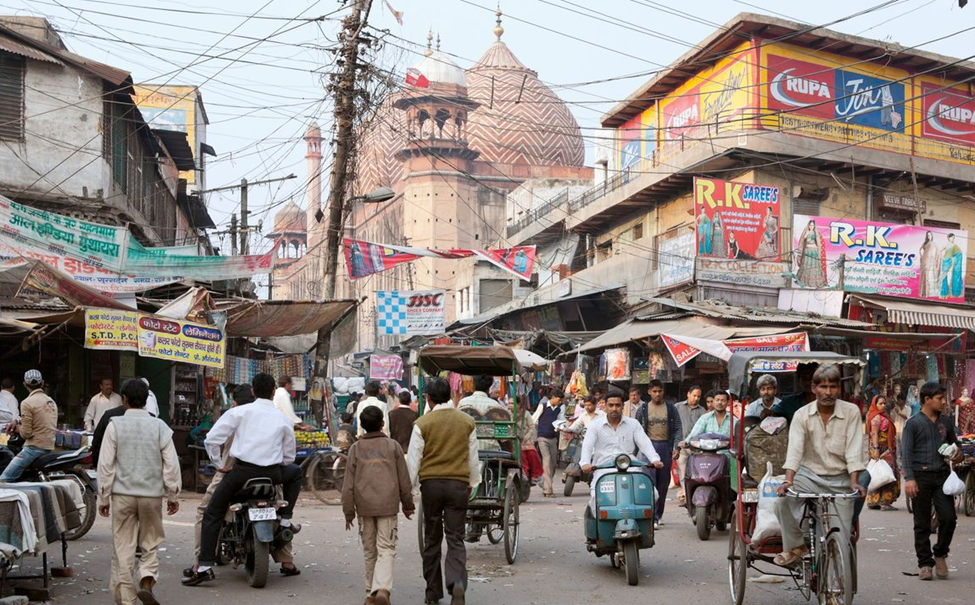
India is home to more than 1.4 billion people, making it the world’s most populous country. It is also the world’s most ethnically diverse country with over 2,500 people groups and 22 official languages. India is rapidly becoming a global economic powerhouse with a booming technology sector, a growing manufacturing base, and a massive, youthful workforce driving innovation and development. But prosperity isn’t the only thing on the rise in India, which is now ranked number 11 on the Open Doors list of countries where religious persecution is rampant and growing. The Indian government has given plenty of lip service to religious freedom while consistently taking the side of religious extremists who make life very difficult for the country’s 73 million Christians (and other minorities). We know from history that the church tends to grow in environments of extreme opposition, and this is certainly true in India today. THF partners involved in Bible translation report thousands of people responding to God’s Word as it is newly available in their heart language. Other partners report that hundreds or even thousands of churches have been planted in formerly unreached communities as Church Planting Movements have grown rapidly in recent years. Next month at an event in Colorado, I’ll meet with one Indian publishing partner who has told me that there is an unprecedented demand for Christian books, magazines, and other literature. Still other partners are ministering to people’s physical needs, providing humanitarian relief to people affected by natural disasters and proclaiming the gospel at the same time. God seems to be doing something in India, and our partners are serving on the front lines of ministry activity there. Please pray for increasing openness to the gospel and the growth of the church in India.

Seeds of Hope in Saudi Arabia
A recent headline from global accounting firm Deloitte declared, “Middle East youth are rewriting the rules of success, seeking money, meaning, and well-being.” The changing generational values and priorities of young people are making waves in countries throughout the region but perhaps nowhere as dramatically as Saudi Arabia, where roughly two-thirds of the population is under the age of 30. One THF partner who recently returned from a ministry trip to Saudi Arabia told me last week that he had encountered many young people not wearing traditional Muslim dress or adhering to traditional cultural norms. Though the Saudi government maintains tight control over religious expression in the country, there seems to be a new openness especially among younger Saudis to spiritual ideas outside of Islam. Other THF partners are working on new Bible translations into various Saudi dialects in hopes of fueling Church Planting Movements among historically Muslim communities. Every generation changes the world in important ways; could it be that the rising generation in the Middle East and especially Saudi Arabia will change their own region in ways that will be advantageous for the spread of the gospel? Please pray that young Saudis will find the Truth as they increasingly seek answers to the questions about meaning and purpose—questions Islam is unable to adequately answer. The people of Saudi Arabia need Jesus, so let’s pray that they will find him.
That’s it for this week’s briefing. Please send any questions, comments, and favorite Chicago-area Indian restaurant recommendations to [email protected]. Do you enjoy reading the THF Weekly Briefing? Subscribe to the email distribution list to get access to this resource the same day it’s published each week. The THF Weekly Briefing is written primarily for a Tyndale audience, but you should feel free to share it with others who may be interested, inside or outside of Tyndale. Thanks for continuing to pray for and support our partners around the world.
Jeremy Taylor
President | Tyndale House Foundation
The THF Weekly Briefing provides information about significant events happening in the wide universe of Tyndale House Foundation partner organizations as well as an occasional peek behind the scenes of THF’s operations. It is available to anyone at Tyndale who’s interested in learning more about the Foundation side of the organization. Was this email forwarded to you? Contact [email protected] to be added to (or removed from) the distribution list.