


You Have to Go Home, Again
July 28, 2025Five more guidelines for coming home from a missions trip
Let’s talk some more about short-term missions trips.
Last week I outlined my first five suggested guidelines for how to return home from a missions trip. This week I’ll share the other five. I’ve been thinking about this because I’ve wondered whether some of the missiological shortfalls when it comes to short-term missions could be alleviated by paying a bit more attention to what happens after the trip is over.
Obviously paying attention to how we return home won’t address all of the issues, but I think it could address some. And in any case, carrying our intentionality and planning all the way through to our homecoming can only be a good thing, right?
This matters to us at Tyndale because we send teams of employees on short-term trips. Last month we sent two teams of 12 employees from lots of different departments on weeklong trips to Poland. In September, Tyndale’s executives (also a team of 12, as it happens) will travel to Costa Rica for a week of ministry work with a longtime partner there. In the past, we have sent teams to Brazil, Haiti, the Faroe Islands, and elsewhere. These trips are a way to help our employees think internationally and bless our partners at the same time. Could we improve our effectiveness by paying attention to how we return home? I bet we could.
So here are guidelines 6 to 10 for how to return home from a missions trip.
- Don’t neglect gratitude. Luke 17 tells the story of Jesus healing ten lepers from their terrible disease. Leprosy was maybe the worst disease there was in first-century Judaism because its victims were completely cut off from the community. Yet after being healed, only one of the ten returned to thank Jesus. We are bound to experience God’s power on short-term trips. We will see amazing things and interact with remarkable people. As we return home, we need to give thanks to God for the privilege of getting to participate in what he is doing in the world.
- Pursue transformation, not glory. There’s an interesting gap in the narrative of Paul’s early ministry in Acts 9. After his dramatic conversion on the Damascus road, the text says he went to Jerusalem, and then the story shifts to focus on Peter for the next several chapters. But in Galatians 1:17, Paul says he first went to Arabia, where presumably he engaged in prayer and reflection and received divine revelation from Christ. Maybe he did some preaching there too as he had done in Damascus, but it’s clear what he did not do was rush back to Jerusalem as a new apostle, ready to take his rightful place in leadership of the early church. He wasn’t focused on his own elevation but rather on his transformation. Sometimes the return from a spiritual encounter involves a season of preparation. We may not see immediate impact from our short-term mission activities, and that may be part of God’s plan for longer-term impact.
- Let your story point others to Jesus. The first person to see the risen Christ after his resurrection was Mary Magdelene, in John 20. And her first instinct was to find the disciples and tell them what had happened in obedience to Jesus’ instruction in verse 17. As believers, we, like Mary, are changed and commissioned after we encounter the risen Lord. When returning from a missions experience where we will certainly encounter Jesus, we should be witnesses of what we have seen and heard, and the stories we tell should point others to Christ, just like Mary’s story did.
- Expect God to provide abundantly. In Mark 6, the disciples return from their short-term missions trip excited but exhausted, and Jesus, who sent them out in the first place, welcomes them home with an invitation to go to a quiet place in the wilderness where they can be refreshed. When we return from a missions trip, we too will be fired up and excited about all we have seen and experienced. And we will be tired from travel and ministry work. We will need rest, and that’s okay. We need to allow Jesus to invite us to a place where God can provide abundantly in our time of renewal.
- Be ready for God to change your life. In Isaiah 6:8, after seeing God’s glory and being symbolically cleansed, the prophet Isaiah’s entire life direction changed. Why? Because he was willing to be used powerfully by God. When we head out on a short-term missions trip, we are answering a specific call from God as well. And when we’re called back into our regular lives, our answer should be the same as Isaiah’s: Here I am. Send me. God can and will use our experiences in ways we can’t even imagine—if we respond with obedience. Are we willing for God to change the direction of our lives as a result?
There’s much more that could be said about this topic, obviously, but I hope these ten guidelines at least provoke some thought and discussion about how we can return home from our short-term trips in ways that enhance the ministry effectiveness of the entire endeavor as we communicate to others what we saw, what we did, why it matters, and how we have been changed as a result.
Here’s what’s happening.
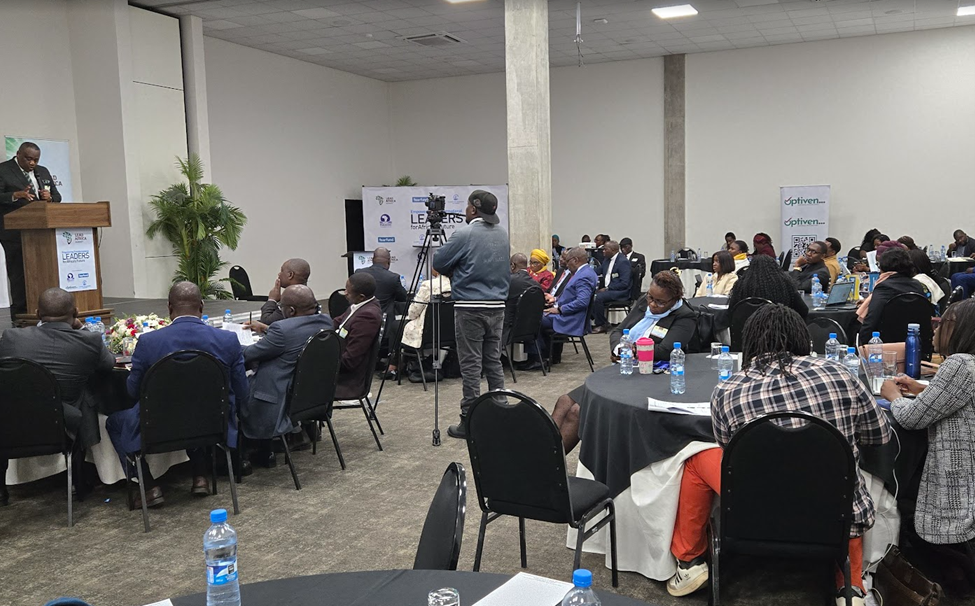
Leadership Conference in Zambia
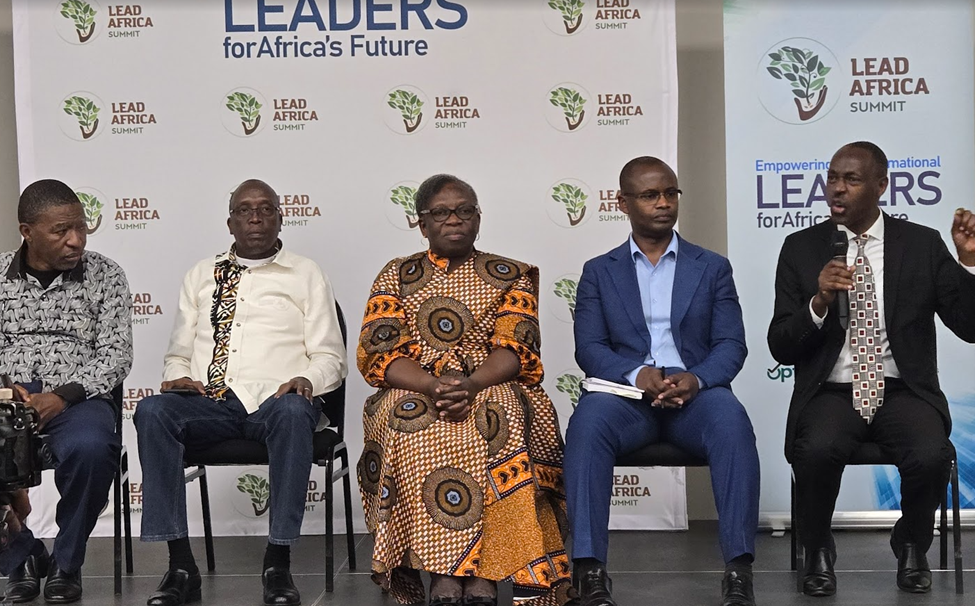
Kalee Perlman and I represented Tyndale at an exciting event in Zambia last week. I think I can state with a reasonable degree of certainty that most Americans couldn’t even identify Zambia on a map. It’s pretty much right in the geographical center of southern Africa, north of Zimbabwe and south of the DRC, if that helps. Zambia achieved independence from colonial Britain in 1964 and has been a constitutionally Christian nation since 1991. The official statistics from the government indicate that more than 95 percent of Zambians identify as Christian. The median age is about 18. There are 73 languages spoken in Zambia—most people there speak at least three—but the official trade language is English. In other words, Zambia is a perfect illustration of what missiologists have been saying about Africa in general for years: its people are young, Christian, English speakers. To me, Zambia reflects the reality that the future of the global evangelical church is not in the West; it is in Africa. On the other hand, what Zambia lacks—something else missiologists have been saying about Africa for years—is well-trained leaders for the growing church. Last week’s conference was hosted by an organization called LEAD Africa, which is focused on creating and resourcing vibrant leaders for Africa’s future. Kalee and I were the only Americans there; the other 70-plus participants were current and emerging leaders from at least 10 African counties. The conference started with a keynote address from Vice President Mutale Nalumango of Zambia, which generated extensive local news coverage. I’ll have more to say about the state of leadership in Africa in future briefings, but for now I’ll just say I’m excited and optimistic about the impact LEAD Africa can have and our role to play as partners.
Africa Leadership Study Team
If you’ve ever talked to any THF staff or board members for any length of time, you’ve likely heard about the Africa Leadership Study (ALS), a decade-long research project commissioned by Tyndale that involved thousands of surveys conducted in three African countries in three languages. The findings were published in book form in 2017 (also in three languages), and an extensive online database was created that is completely open-source and available for future research. In 2020, during the COVID crisis, the lead ALS researchers drew on their knowledge and experience and created another book, called The Resilient Christian Leader. (The foreword to the book was written by Lazarus Chakwera, the president of Malawi.) Nearly all of the senior ALS leadership team attended this week’s LEAD Africa conference in Zambia—the first time this group had been together in person in several years. They used the occasion to strategize together about ongoing ALS-related projects, including writing a series of white papers detailing current challenges and opportunities for leadership in Africa. They also presented on the study’s findings in one of the main conference sessions. I say all the time that the best part of my job is getting to interact with so many amazing people from around the world, and the ALS leaders are some of the top examples. It was a joy to see them all and get updated on their lives and ministry work, and it was especially gratifying to see how what they are doing today has been impacted and advanced by all the time, effort, and resources we put into the Africa Leadership Study for so many years.

War and Peace in Southeast Asia
I don’t know how much attention you pay to news coming out of Southeast Asia, but last week’s conflict between Cambodia and Thailand created a lot of headlines. There has been tension between the two countries for a long time, going back to centuries-old territorial disputes during the Khmer (Cambodia) and Siamese (Thailand) kingdoms. On July 24, 2025, the tension suddenly became violent—more so than at any other time during the past ten years. After a border skirmish over a temple claimed by both countries, Thailand targeted Cambodian military sites with airstrikes, and Cambodia fired rockets in response and filed a formal complaint to the UN Security Council blaming Thailand for starting the whole thing. There was lots of concern about a serious regional conflict erupting. At least 36 people died—most of them civilians—and more than 200,000 people were displaced from border provinces on both sides. Earlier today, after significant international pressure including financial intervention from President Trump, the two nations agreed to an immediate and unconditional ceasefire. This is good news, but we still need to pray for people and leaders in both countries. Tyndale House Foundation has significant partners in both Cambodia and Thailand, and they are understandably concerned about their nations but also hopeful that the uncertainty that always accompanies sudden conflict will lead to spiritual openness in these countries where most people have been largely resistant to the gospel for a very long time.

Is AI Messing with Your Mind?
Much has been written about—and sometimes written by—the various artificial intelligence tools that have burst into our collective consciousness seemingly out of nowhere in the last few years. Reactions include elation, alarm, and everything in between. Most reasonable people seem to be expressing cautious optimism; AI can do a lot to help us in nearly all aspects of life, but if it takes our jobs or spreads disinformation or ends up enslaving or exterminating the human race, that wouldn’t be great. I use AI (ChatGPT, mainly) almost every day. I ask it questions, gain useful information, and sometimes treat it like a thought partner when I’m writing something. It does a reasonably good job of editing written content, and it does an extraordinary job of summarizing content. It’s useful for summarizing grant proposals, for example. I’m sure some of our applicants—especially those for whom English is not their first language—use it to write portions of their proposals as well (I can usually tell when AI is involved in writing). I would never use ChatGPT to create content for me, but I definitely use it to fact-check and polish content I’ve already written. The problem with relying too much on AI tools for writing is that writing is a skill, and if a computer does all your writing for you, it won’t be long before your ability to write on your own diminishes. That’s not just conjecture; a new study from MIT confirms exactly this phenomenon. Researchers measured the brain activity of students who used AI to write their essays over a period of several months as well as students who wrote their own essays. When the test period was over, guess which group got lazier in their writing, underperformed linguistically, barely remembered what they had written, and had less pride in their work? If you need me to tell you the answer, you’ve probably been using AI too much yourself. I hope all THF Weekly Briefing readers take enough pride in their work that they would never allow a computer to do their writing or their thinking for them. But it’s clearly a danger we all need to be aware of.
That’s it for this week’s briefing. Please send any questions, comments, and suspicious essays possibly written by ChatGPT to [email protected]. Do you enjoy reading the THF Weekly Briefing? Subscribe to the email distribution list to get access to this resource the same day it’s published, and feel free to share it with others who may be interested, inside or outside of Tyndale. Thanks for continuing to pray for and support our partners around the world.
Jeremy Taylor
President | Tyndale House Foundation
The THF Weekly Briefing provides information about significant events happening in the wide universe of Tyndale House Foundation partner organizations as well as an occasional peek behind the scenes of THF’s operations. It is available to anyone who’s interested in learning more about the philanthropic activities of Tyndale House. Was this email forwarded to you? Contact [email protected] to be added to (or removed from) the distribution list.